Education is rapidly moving toward digital platforms, and businesses are increasingly investing in scalable learning solutions. However, managing large volumes of content, tracking learner progress, and ensuring engagement can become complex without the right system.
A learning management system (LMS) solves this by offering a centralized platform to manage, deliver, and track learning activities. Today, with the rise of AI in education, LMS platforms are evolving into intelligent systems that go beyond content delivery.
AI-powered LMS platforms are helping organizations automate processes, personalize learning, and improve outcomes at scale. According to Grand View Research, the global e-learning market is expected to grow significantly, driven by the increasing adoption of AI and digital learning platforms.
In this blog, we will explore what an LMS is, how LMS platforms work, and how AI-powered LMS development services are reshaping the EdTech industry.
Key Takeaways
- LMS platforms centralize and streamline digital learning
- AI-powered LMS solutions enable personalized learning experiences
- Organizations can improve engagement, productivity, and scalability
- AI in EdTech helps automate workflows and reduce operational costs
- Early adoption of AI LMS platforms creates a competitive advantage
What Is a Learning Management System (LMS)?
A learning management system (LMS) is a software application designed to create,manage, and deliver educational content through digital platforms. It plays a critical role in modern online learning platforms and corporate training systems.
With an LMS, organizations can:
- Create and manage courses
- Deliver training programs online
- Track learner performance in real time
- Automate assessments and certifications
- Improve communication between instructors and learners
Instead of relying on manual processes, LMS platforms provide a scalable and efficient way to manage learning. This is why many organizations are investing in LMS platform development to support their long-term growth.
What Is the Role of LMS in Education and Business?
1. Content Delivery
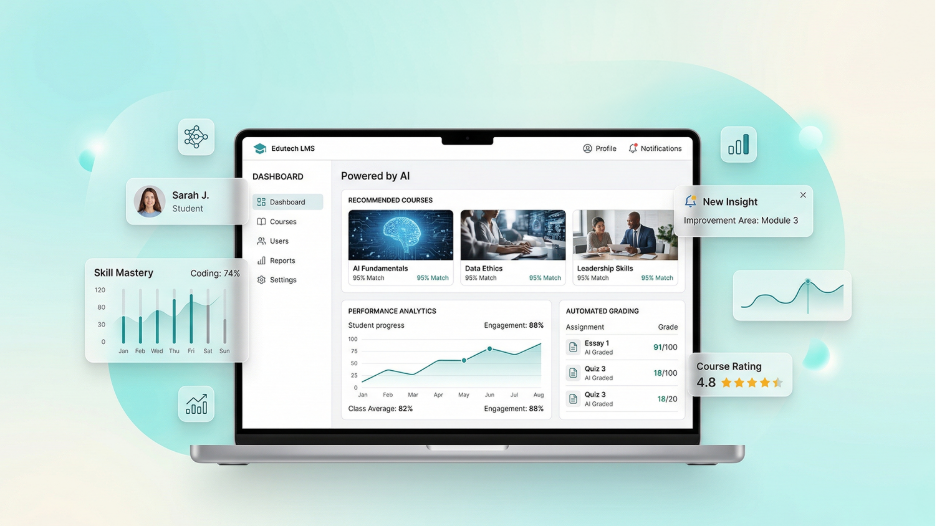
An LMS enables seamless delivery of digital learning content such as videos, documents, and interactive modules. Learners can access materials anytime, making online learning platforms more flexible and accessible.
2. Employee Training and Upskilling
Businesses use LMS platforms for onboarding, compliance training, and employee development. This ensures consistent training across teams and reduces dependency on physical sessions.
3. Progress Tracking and Analytics
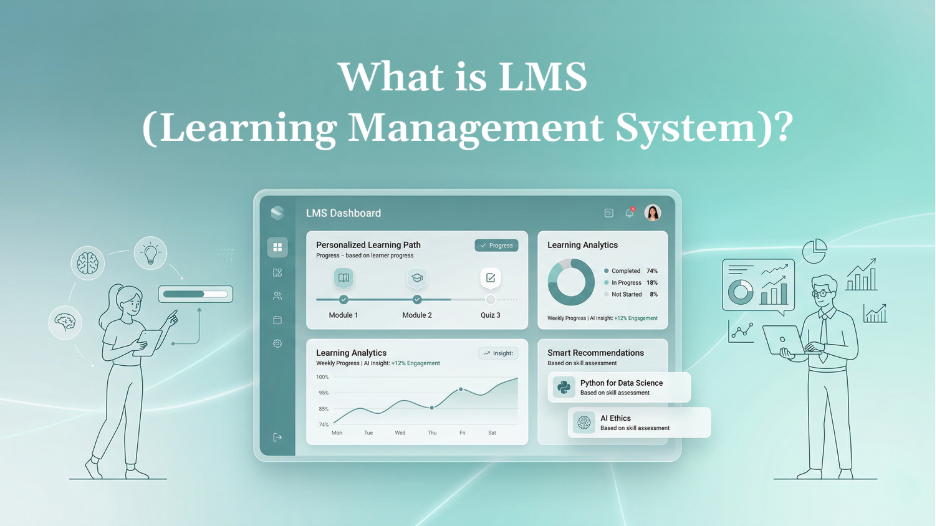
Modern LMS platforms provide dashboards and analytics to monitor learner performance.
Organizations can use this data to improve training strategies and learning outcomes.
4. Assessments and Certification
LMS systems allow automated quizzes, assignments, and certification programs.
This simplifies evaluation and ensures scalable assessment processes.r.
5. Collaboration and Engagement
Features like discussion forums, chat systems, and notifications improve engagement and interaction. This makes learning more collaborative and effective.
Why Are Organizations Adopting LMS Now?
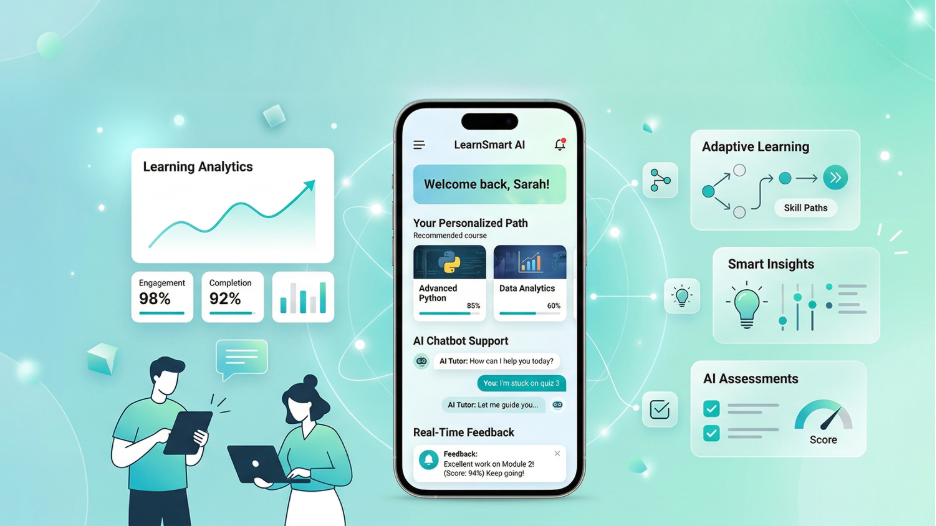
- Traditional training methods are not scalable
- Remote work and digital learning are increasing
- Businesses need continuous skill development
- Centralized learning improves efficiency
- Digital transformation is driving LMS adoption
- Growing demand for AI-powered learning platforms
How AI is Transforming LMS and EdTech
1. Personalized Learning Experiences
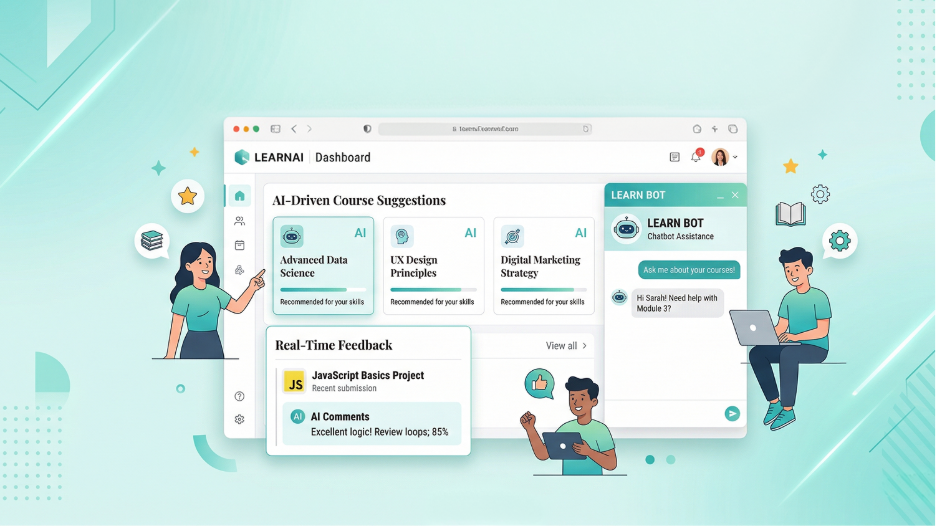
AI-powered LMS platforms analyze user behavior, preferences, and performance to deliver personalized learning paths.
This ensures that learners receive content tailored to their skill level and pace, improving engagement and retention.
2. Intelligent Content Recommendations
AI suggests courses, modules, and learning materials based on user activity.
This improves user experience and keeps learners engaged with relevant content.
3. Predictive Analytics and Insights
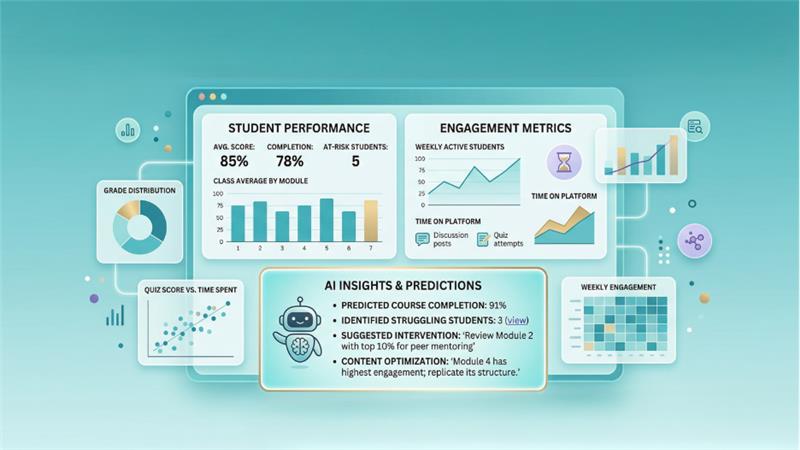
AI uses data to predict learner performance and identify potential challenges.
This allows educators and organizations to take proactive steps to improve outcomes.
4. Automation of Learning Processes
AI automates tasks such as grading, reporting, and course management.
This reduces manual effort and increases operational efficiency.
5. AI Chatbots and Virtual Learning Assistants
AI chatbots provide instant support to learners, answering queries and guiding them through courses.
This improves user experience and reduces support workload.
6. AI-Driven Content Creation
AI can generate quizzes, summaries, and learning materials automatically.
This helps organizations scale content creation and maintain consistency.
Advanced Applications of AI in LMS
1. Adaptive Learning Systems
AI dynamically adjusts course content based on learner performance.
This creates a more engaging and effective learning experience
2. Intelligent Assessments
AI-powered assessments adapt in real time to evaluate knowledge accurately.
This improves the quality of learning outcomes.
3. Data-Driven Decision Making
AI analyzes large datasets to generate actionable insights.
According to an article by McKinsey AI-driven insights are helping institutions improve student performance and optimize teaching strategies.
4. Natural Language and Voice-Based Learning
AI enables voice interaction and natural language processing in LMS platforms.
This enhances accessibility and improves the learning experience.
Real-World LMS & EdTech Applications
AI-powered LMS platforms are already transforming how education is delivered. For example, Cognitaz AI uses intelligent algorithms to create personalized learning paths, ensuring that users receive content tailored to their learning behavior.
Similarly, LifeHub Education showcases how a structured LMS ecosystem can streamline course management and improve student engagement across institutions.
In the non-profit education space, N – Foundation demonstrates how LMS platforms can scale learning access and reach underserved communities effectively.
These real-world implementations highlight how AI-powered LMS development services are driving innovation in EdTech.
Challenges of AI-Powered LMS
1. Data Privacy
Problem: Handling sensitive learner data securely
Solution: Implement strong security protocols and compliance measures
2. High Implementation Cost
Problem: AI LMS solutions may require higher initial investment
Solution: Use scalable LMS development approaches
3. Technical Complexity
Problem: AI integration requires expertise
Solution: Partner with experienced LMS development companies
4. User Adoption
Problem: Users may resist new technology
Solution: Focus on intuitive UI/UX and training programs
What Is Next for LMS and AI in EdTech?
- AI will become a core feature in LMS platforms
- Learning will become more personalized and data-driven
- Automation will expand across all learning processes
- Integration with AR/VR will enhance engagement
- Continuous learning models will dominate
According to Statista, the number of users in online education platforms is expected to grow steadily, increasing demand for AI-powered LMS solutions.
How DEVtrust Helps
DEVtrust provides LMS development services tailored to businesses and educational institutions. We focus on building scalable, AI-powered learning platforms that improve efficiency and engagement.
Services
- Custom LMS platform development
- AI-powered EdTech solutions
- Workflow automation and system integration
Conclusion
A learning management system (LMS) is now a critical component of modern education and corporate training. It enables organizations to deliver scalable, structured, and efficient learning experiences.
With the integration of AI in EdTech, LMS platforms are becoming more intelligent, adaptive, and personalized. Businesses and institutions can now improve learning outcomes while reducing operational effort.
As digital learning continues to grow, investing in AI-powered LMS development services will be essential for staying competitive in the evolving EdTech landscape.
Ready to Build an AI-Powered LMS Platform?
If you are planning to develop or upgrade your LMS, now is the right time to leverage AI.
DEVtrust can help you design and build scalable, intelligent LMS platforms tailored to your business needs.
Connect with our team today to start building your next-generation EdTech solution.
How AI is Transforming LMS Platforms
AI-powered LMS platforms enable personalized learning, automate workflows, and improve decision-making. They help organizations scale efficiently while delivering better
user experiences.
Ready to Build Your Next Digital Product?
Book a strategy session with our experts to explore ideas, solutions, and growth opportunities.
Book a Strategy Call