Financial software development has always been a complex process. Companies handle massive volumes of data, stringent compliance requirements, and increasing user expectations for speed and personalization. Whether it is banking platforms, fintech apps, or enterprise financial systems, the pressure to deliver accurate, secure, and fast solutions continues to grow.
Traditional development approaches often struggle to keep pace with these demands. Manual workflows, rigid systems, and delayed data processing can slow down innovation. As a result, businesses face longer development cycles, higher operational costs, and difficulty scaling their systems efficiently.
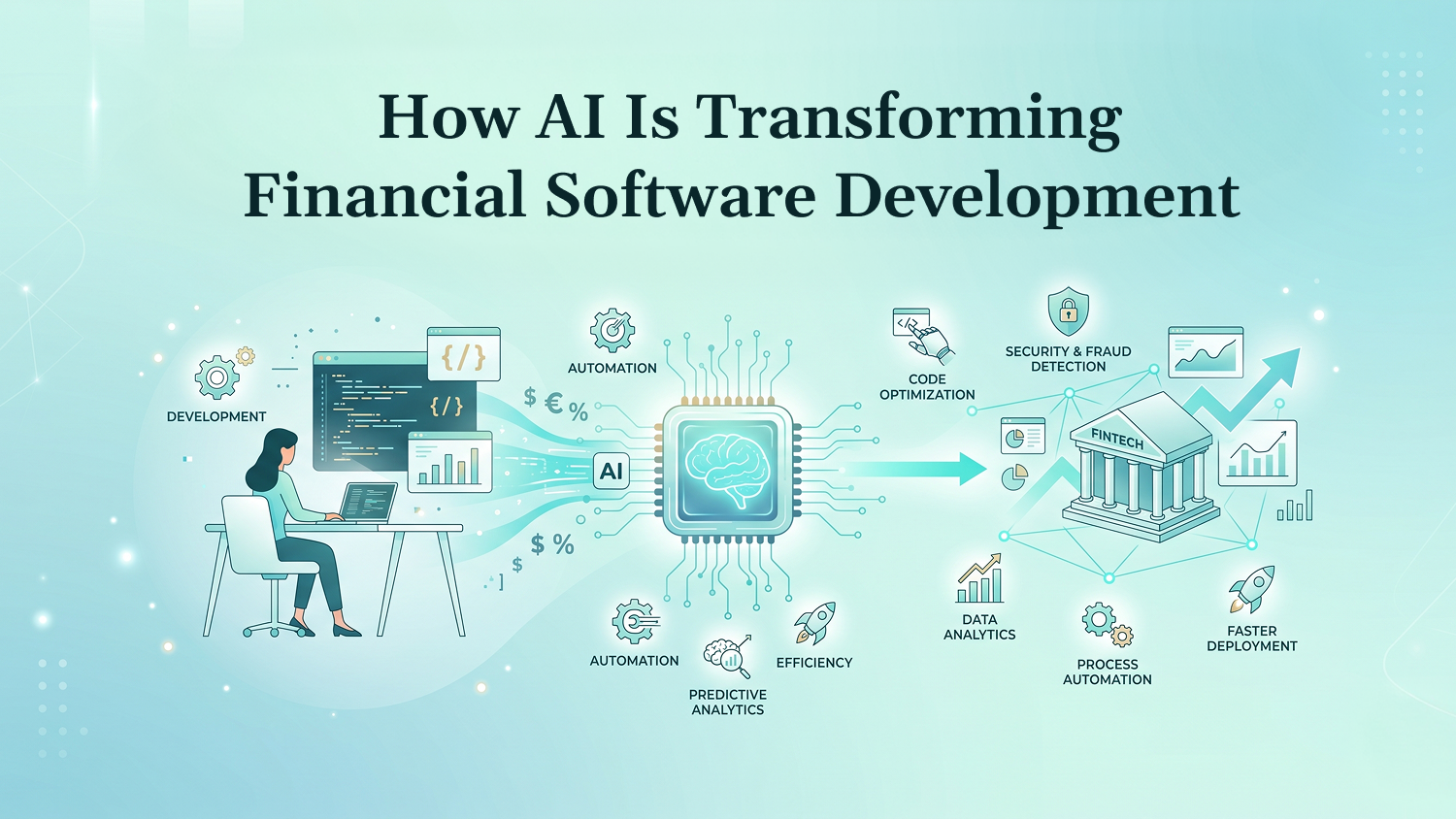
Artificial intelligence is changing that. It is helping financial platforms become faster, smarter, and more efficient. From automating backend processes to improving customer experience, AI is now playing a central role in how financial software is built, deployed, and maintained.
In the following sections, we explore how AI is impacting financial software development, highlight the key areas of value, and examine what these changes mean for businesses aiming to stay competitive.
Key Takeaways
- AI is improving efficiency in financial software development by automating repetitive processes
- It enhances decision-making through real-time data analysis
- Financial platforms are becoming more personalized and user-focused
- Businesses adopting AI early gain a strong competitive edge
Before we dive into specific applications, it helps to understand what AI means in the context of financial software development.
AI in financial software development refers to the use of machine learning, data analytics, and automation tools to build smarter financial applications that can adapt, learn, and improve over time.
These systems rely on large datasets, including transaction history, customer behavior, market trends, and financial records. By processing this information, AI identifies patterns, detects anomalies, and generates insights that would otherwise take significant time and effort to uncover manually.
The result is software that is not only faster but also more intelligent. It can handle complex operations, reduce human intervention, and continuously improve performance as it processes more data.
What Is the Role of AI in Financial Software Development?
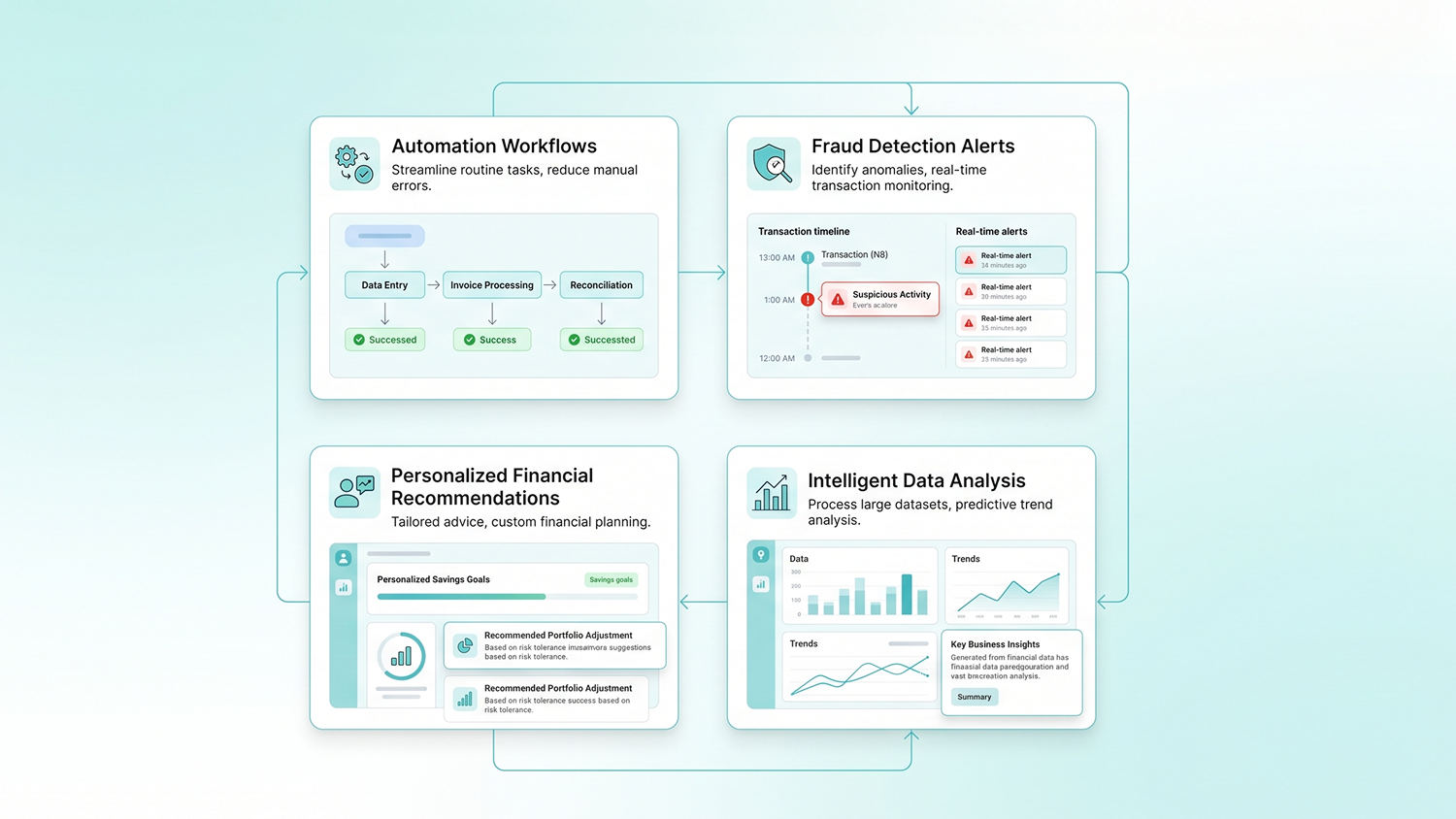
Automation of Financial Processes
AI automates time-consuming tasks such as data entry, reconciliation, reporting, and compliance checks. These processes are essential but often repetitive and prone to human error.
By using predefined rules and learning historical data, AI systems can handle these tasks quickly and consistently. This reduces processing time and minimizes errors, allowing teams to focus on analysis, strategy, and decision-making rather than routine work.
Fraud Detection and Risk Management
Fraud detection has always been a critical part of financial systems. Traditional methods rely on rule-based systems, which can miss new or evolving fraud patterns.
AI improves this by analyzing transaction data in real time. It identifies unusual behavior, flags suspicious activities, and alerts systems instantly. Over time, it learns new data and becomes more accurate.
This not only reduces financial losses but also strengthens trust between businesses and their customers.
Personalized Financial Services
Modern users expect financial platforms to understand their needs. AI makes this possible by analyzing user behavior, transaction history, and preferences.
It can suggest investment options, provide spending insights, and recommend financial actions based on individual patterns. This level of personalization improves user engagement and builds stronger customer relationships.
Intelligent Data Analysis
Financial systems generate vast amounts of data every day. Without the right tools, this data can be difficult to process and use effectively.
AI simplifies this by analyzing large datasets and generating meaningful insights, summaries, and forecasts. Businesses can use these insights to respond to market changes, identify risks, and make informed decisions without spending hours manually reviewing data.
Code Generation and Development Support
AI is also improving the development process itself. Developers can use AI tools to generate code snippets, identify bugs, and optimize system performance.
This reduces development time and improves code quality. It also allows teams to build and deploy financial applications faster while maintaining high reliability and security standards.
Why Are Industry Leaders Adopting AI Now?
- Traditional financial systems are not designed for real-time processing and decision-making
- The availability of large-scale financial data allows AI systems to perform more accurately
- AI tools and platforms have become more accessible and easier to integrate
- Businesses are seeing clear improvements in efficiency, speed, and cost management
- Customers now expect faster services and personalized experiences
- Regulatory requirements require continuous monitoring and accurate reporting
AI is no longer seen as an experimental technology. It has become a practical solution for solving real business challenges in financial software development.
Advanced Applications of AI in Financial Software Development
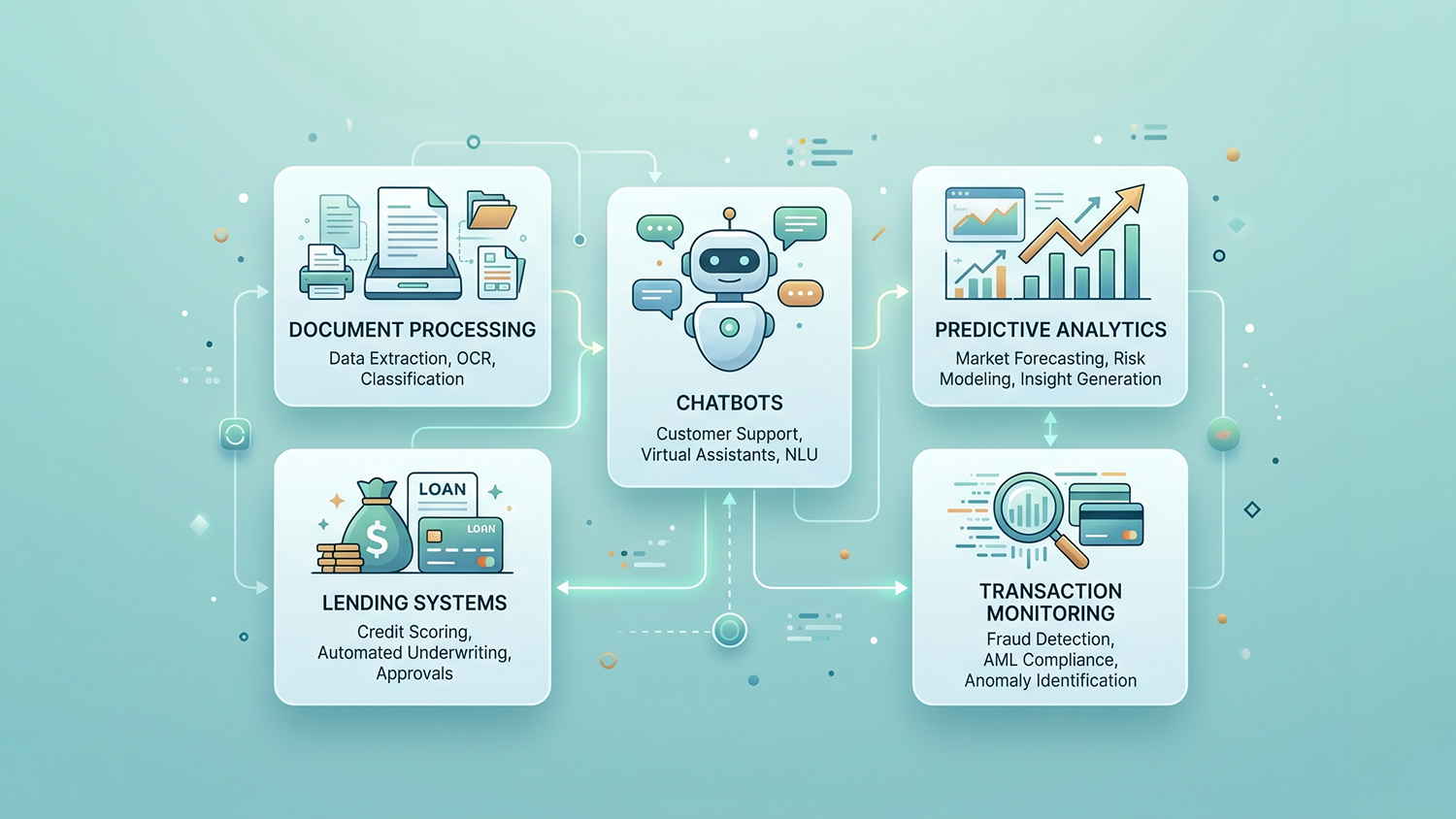
Intelligent Document Processing
Financial organizations handle a large volume of documents, including invoices, contracts, and reports. Processing these manually can be slow and error prone.
AI can automatically read, extract, and organize data from these documents. It understands both structured and unstructured formats, making it easier to process information quickly and accurately.
AI-Powered Chatbots and Assistants
Customer support is a key part of financial services. AI-powered chatbots can handle common queries, provide account information, and assist with transactions.
These systems work around the clock, improve response time, and reduce the workload on support teams. At the same time, they ensure customers receive quick and consistent assistance.
Predictive Analytics
AI uses historical data and market trends to predict future outcomes. This is particularly useful in finance, where decision-making often depends on forecasting.
Businesses can use predictive analytics to assess risks, plan investments, and optimize financial strategies. It provides a clearer view of potential outcomes and helps reduce uncertainty.
Automated Lending and Credit Scoring
Traditional credit scoring models rely on limited data. AI expands this by analyzing a broader range of information, including alternative data sources.
This allows lenders to make faster and more accurate decisions. It also helps extend financial services to individuals who may not have a traditional credit history.
Real-Time Transaction Monitoring
AI monitors transactions as they occur, identifying suspicious activities instantly. This is essential for preventing fraud and ensuring compliance.
Real-time monitoring allows businesses to act quickly, reducing potential losses and maintaining system integrity.
How Industry Leaders Are Using AI
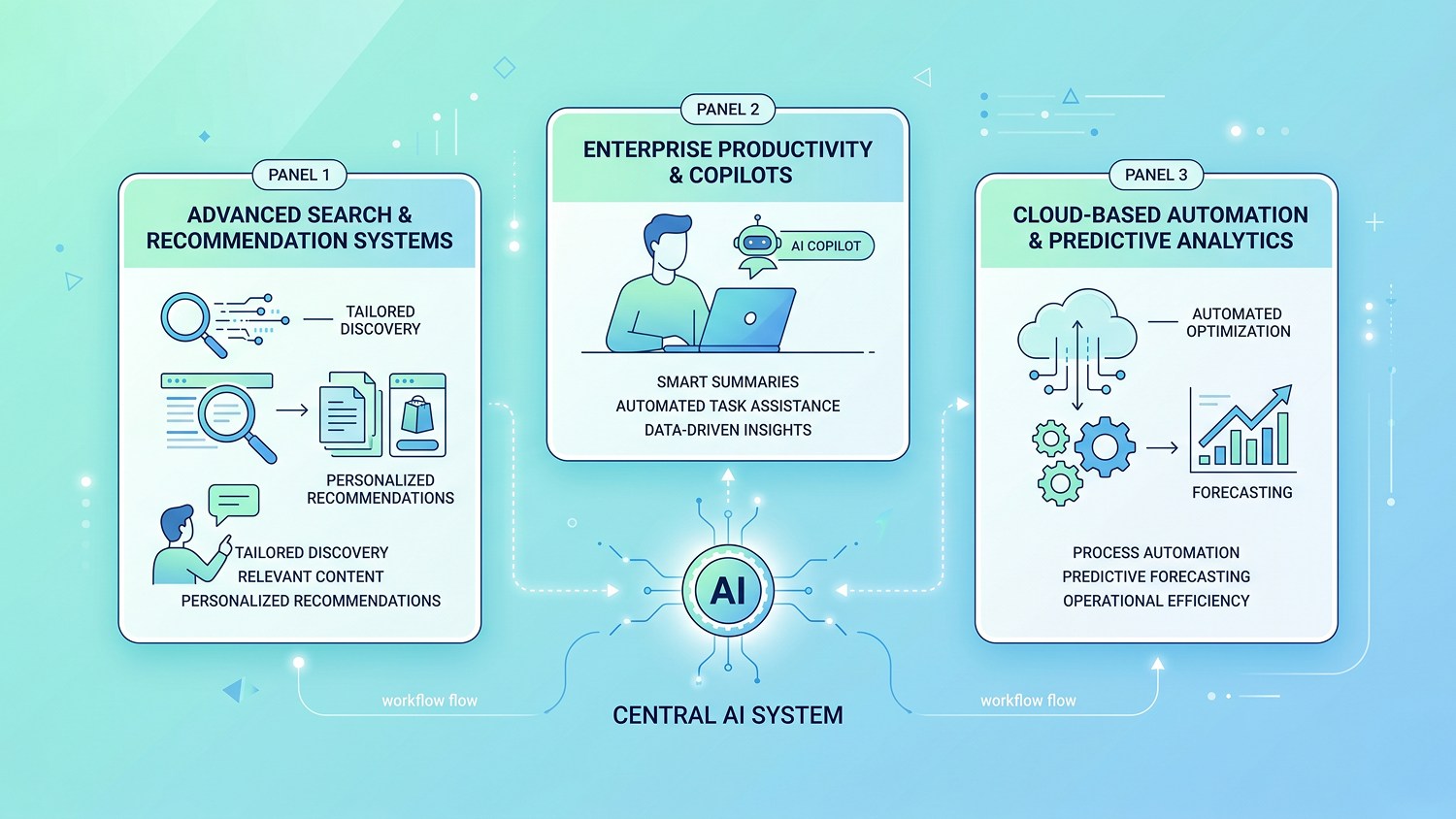
Google uses AI to improve data processing and make financial information more accessible. Its systems help users find relevant insights quickly using natural language tools.
Microsoft
Microsoft integrates AI into its platforms to automate workflows and improve productivity. Financial teams use these tools to manage data, generate reports, and streamline operations.
Amazon
Amazon uses AI to improve customer experience through recommendations and operational efficiency. Its systems analyze user behavior to provide relevant suggestions and optimize processes.
These companies show how AI can be applied at scale to improve both performance and user experience in financial systems.
Challenges of AI Adoption in Financial Software Development
| Challenge | Problem | Solution |
|---|---|---|
| Data Quality Issues | Incomplete or inconsistent data can affect AI performance | Invest in clean, structured, and unified data systems |
| Regulatory and Compliance Risks | Financial software must comply with strict regulations | Build AI systems with transparency, audit trails, and compliance checks |
| Integration Challenges | Legacy systems may not support AI integration easily | Use modern architectures and scalable integration strategies |
| Skill Gap | Many organizations lack in-house AI expertise | Partner with experienced development teams |
| Security Concerns | Financial systems handle sensitive data | Implement strong security protocols and governance frameworks |
What Is Next for AI in Financial Software Development?
| Trend | Description |
|---|---|
| AI as a Standard | AI will become a core component of financial platforms |
| Faster Development | Development processes will become more automated and efficient |
| Human-AI Collaboration | Teams will work alongside AI systems rather than replacing them |
| Smarter Decision-Making | Tools will become more advanced and data-driven |
| Personalization Growth | Financial services will continue to become more tailored to users |
How DEVtrust Helps
DEVtrust helps businesses build AI-powered financial software that is scalable, secure, and aligned with business goals.
Services
- Custom financial software development
- AI integration into existing systems
- Workflow automation tools
- Data analytics and intelligent dashboards
Real-World Example
A fintech client needs to automate loan processing and improve risk assessment.
DEVtrust developed an AI-powered system that analyzed user data, automated approvals, and significantly reduced processing time.
Result: Faster approvals, lower operational costs, and improved customer satisfaction.
Conclusion
AI is helping businesses rethink how financial software is developed and used. It brings speed, accuracy, and efficiency to processes that were once time-consuming and complex.
As competition continues to grow, relying on traditional systems can slow progress. Businesses that adopt AI now will be better prepared to innovate, scale, and meet changing market demands.
Taking early steps toward AI adoption can create long-term advantages and open new opportunities for growth.
How AI Is Transforming Financial Software Development
AI is improving financial software development by enabling automation, enhancing decision-making, and creating better user experiences. It helps businesses build faster, more efficient, and scalable financial systems.