
Businesses today are under constant pressure to produce more content, respond to customers faster, and manage operations more efficiently. Traditional methods often involve manual effort, slow turnaround times, and higher operational costs, which makes scaling difficult.
Generative AI helps solve these challenges. It allows businesses to create content, automate repetitive work, and improve productivity without increasing team size. Companies can now move faster while maintaining quality.
This blog takes a closer look at generative AI, how it actually works, what is driving its popularity, and how businesses are using it in real scenarios.
Key Takeaways
- Generative AI helps businesses reduce content creation time significantly
- It improves productivity by automating repetitive tasks
- Companies can lower operational costs while maintaining output quality
- Early adoption helps businesses gain a competitive advantage.
What Is Generative AI in Business?
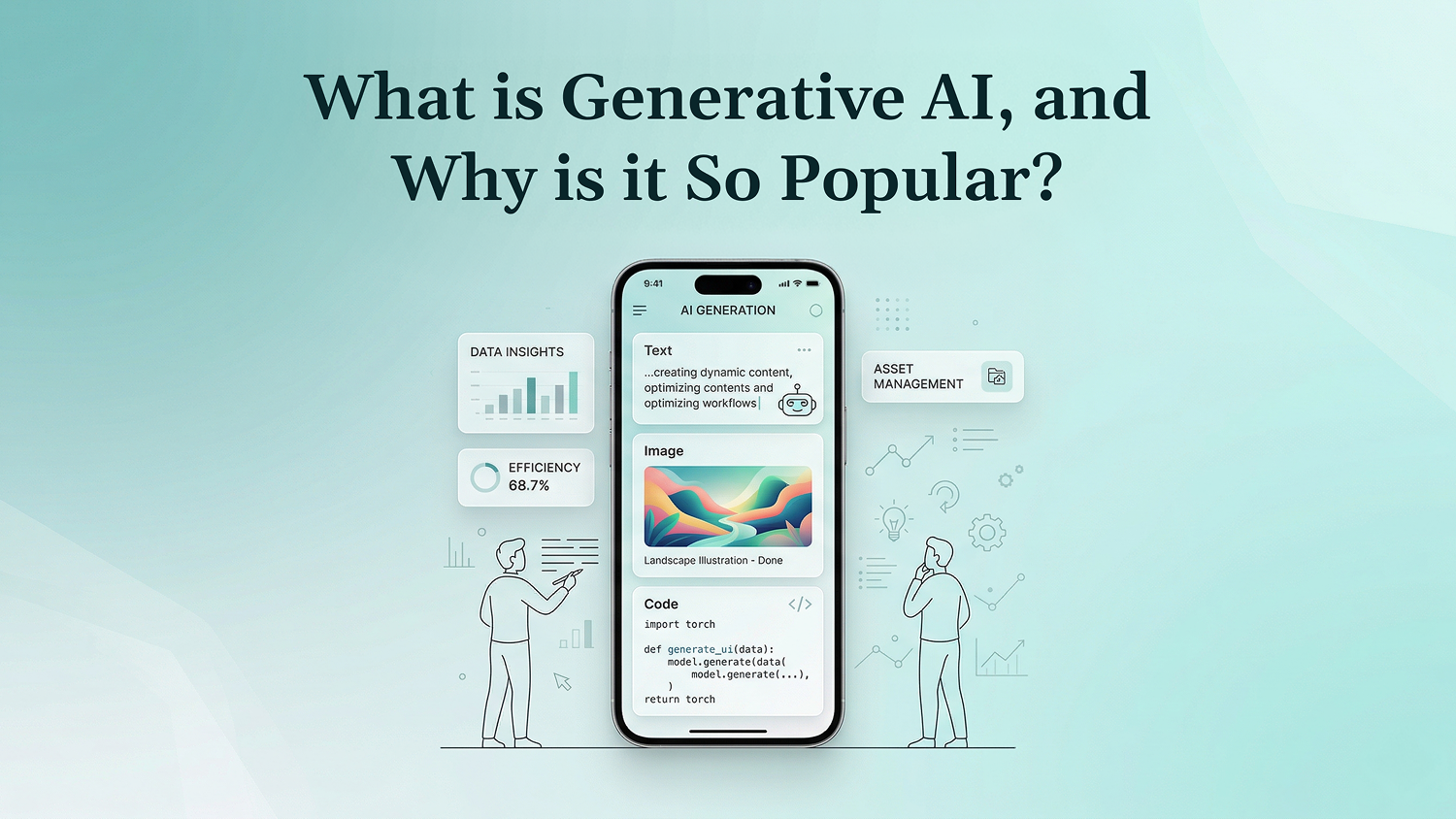
Generative AI is built to create new content by learning from large volumes of data. Instead of just analyzing information, it can produce things like text, images, and even code.
It uses data from sources such as documents, images, user input, and historical records. The system learns patterns from this data and generates relevant outputs when prompted.
For businesses, the result is faster execution, scalable operations, and reduced dependency on manual work.
What Is the Role of Generative AI in Business Operations?
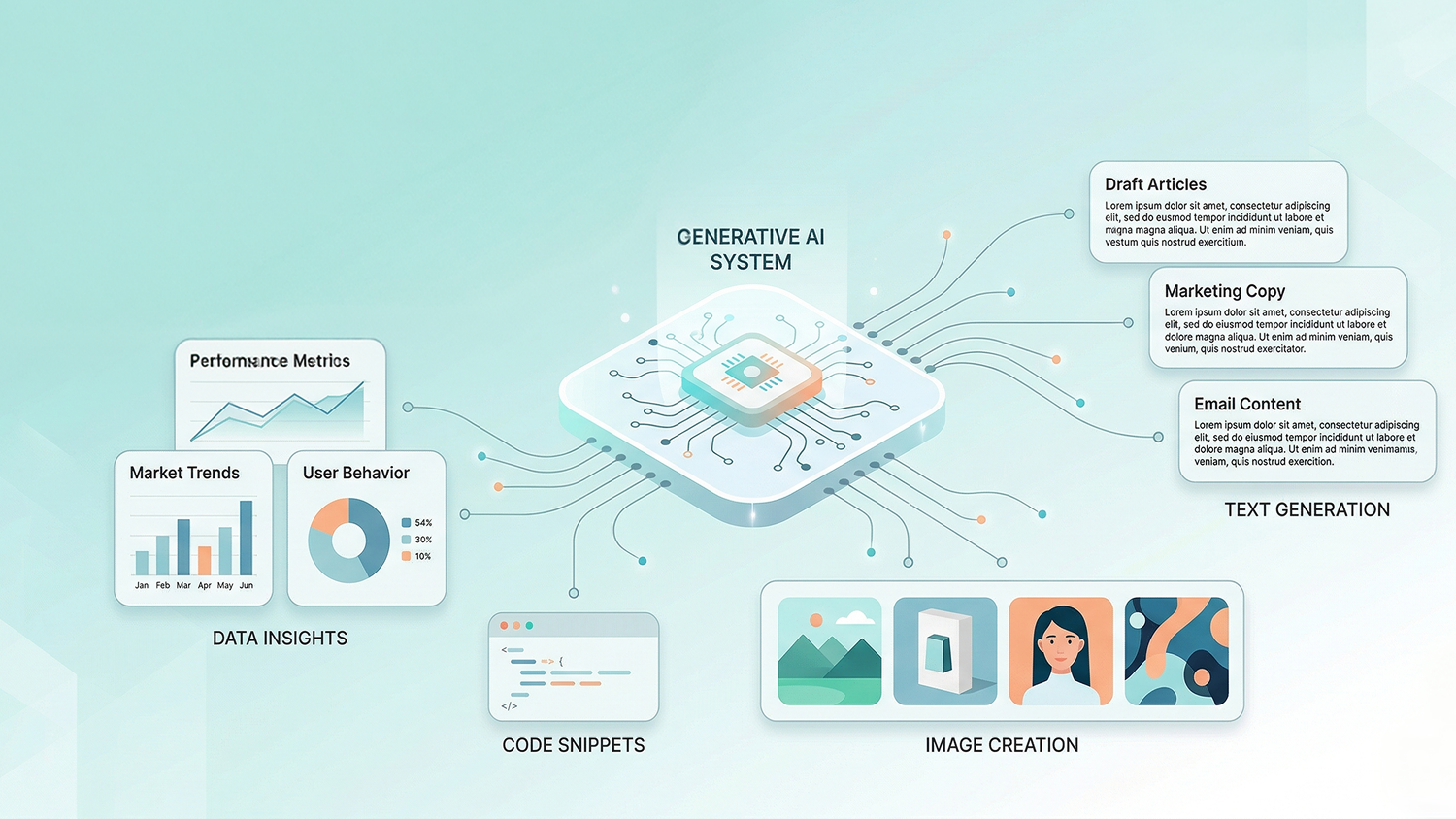
1. Content Creation
Generative AI creates blogs, emails, reports, and marketing content using existing data and context.
It processes language patterns and generates structured, readable content, helping teams reduce time spent on writing and editing.
2. Workflow Automation
AI automates repetitive tasks such as documentation, email drafting, and customer responses.
By relying on what it has learned, it can complete tasks quickly and free up teams to focus on work that needs more attention.
3. Personalization
Generative AI uses customer data and behavior patterns to create personalized experiences.
It generates tailored recommendations, messages, and content, which improves engagement and customer satisfaction.
4. Code Generation
AI supports developers by generating code snippets and assisting in debugging.
It understands programming patterns, speeding up development, and helping teams deliver projects faster.
5. Data Insights
Generative AI analyzes large datasets and generates summaries, reports, and insights.
It reduces the need for manual data review, helping businesses take quicker and more confident decisions.
Why Are Businesses Adopting Generative AI Now?
- Traditional systems cannot handle large-scale, real-time demands
- Businesses now have access to large volumes of usable data
- Technology has become more reliable and easier to implement
- Companies are seeing clear returns in efficiency and cost savings
- Customers expect faster responses and personalized experiences
Advanced Applications of Generative AI
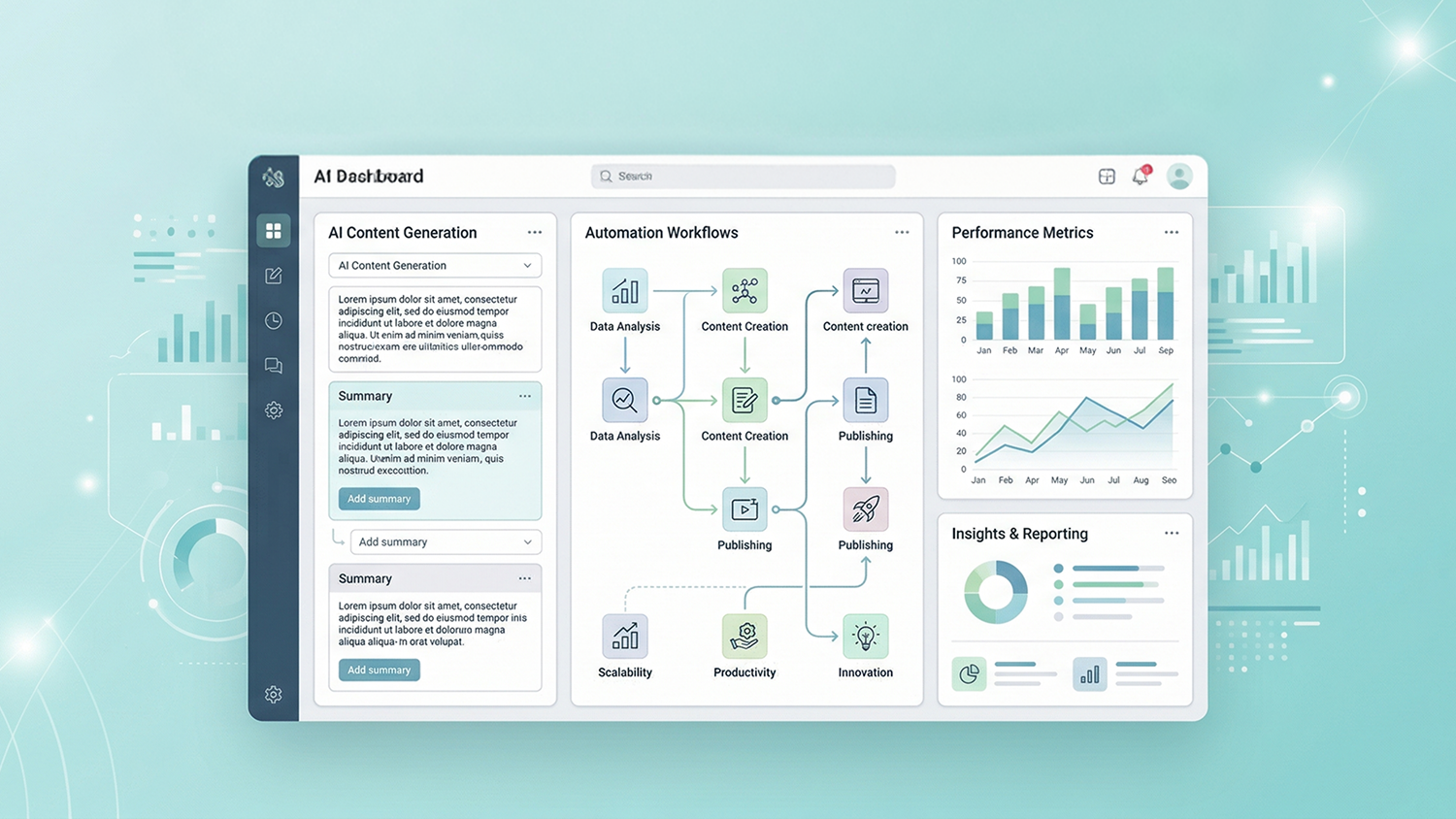
Modern enterprises manage diverse systems that must share data and workflows seamlessly. In this section, we explore key EAI use cases that drive operational efficiency and integration success.
1. Intelligent Document Processing
Generative AI reads and processes documents, such as invoices and reports, using both structured and unstructured data.
It extracts key information and generates organized outputs, reducing manual errors and saving time.
2. AI Chatbots and Virtual Assistants
AI-powered chatbots use conversation data to respond to customer queries.
They provide instant support, reduce team workload, and improve response time.
3. Predictive Content Generation
AI analyzes user behavior and past data to generate relevant recommendations and content.
This enables businesses to create content that aligns closely with user intent and behavior.
4. AI-Driven Platforms
Businesses are building platforms that use AI to automate workflows and generate insights.
These systems improve efficiency and help manage operations more effectively.
How Industry Leaders Are Using Generative AI
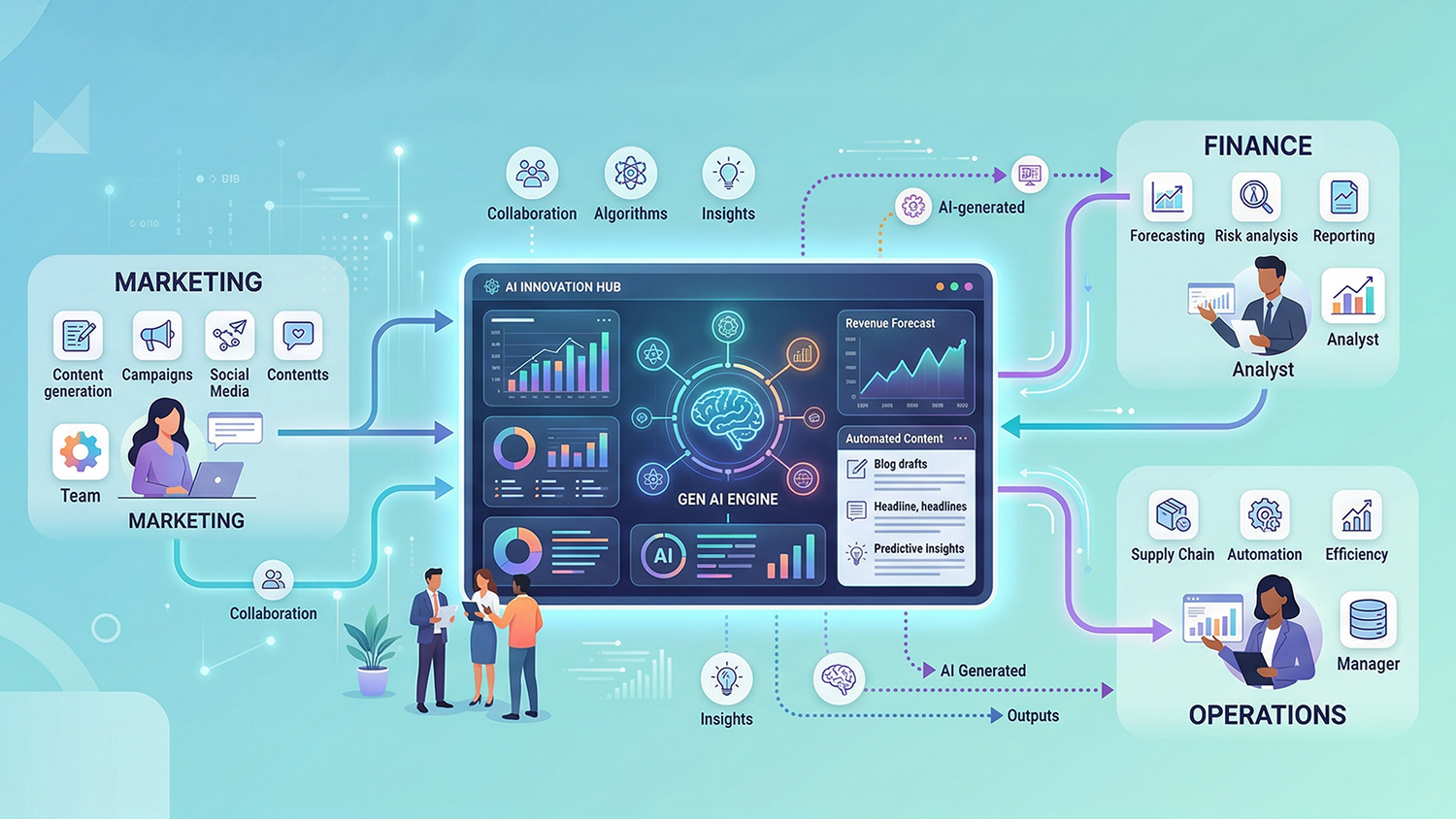
1. Google
Google uses generative AI across its products for search enhancements and content generation.
Its models improve the user experience by providing more accurate, contextually relevant results.
2. Microsoft
Microsoft integrates generative AI into tools like Office and Azure.
It helps users generate documents, automate workflows, and improve productivity across teams.
3. Amazon
Amazon uses generative AI for product descriptions, recommendations, and customer interactions.
This improves customer experience and increases operational efficiency.
Challenges of Generative AI Adoption
1. Data Accuracy
Problem: AI-generated outputs may sometimes be incorrect.
Solution: Use human review and validation processes.
2. Data Privacy
Problem: Sensitive data handling creates security concerns.
Solution: Apply strong data protection and compliance practices.
3. Skill Gap
Problem: Many teams lack expertise in AI implementation.
Solution: Work with experienced technology partners.
4. Integration Issues
Problem: Existing systems may not easily support AI.
Solution: Use scalable and flexible integration approaches.
What Is Next for Generative AI?
- AI will become a core part of business platform
- Teams will work alongside AI instead of replacing it
- Automation will expand across more functions
- Decision-making tools will become smarter and faster
- More industries will adopt AI-driven solutions
How DEVtrust Helps
DEVtrust helps businesses implement generative AI in a practical and result-driven way. We focus on building solutions that improve efficiency and support long-term growth.
Services
- Custom AI solution development
- Workflow automation tools
- AI integration
Conclusion
Generative AI is helping businesses rethink how they work by making processes faster and reducing dependence on manual effort.
As competition increases, relying on traditional processes can slow growth. Businesses that start using generative AI now will be better positioned to adapt, innovate, and stay ahead.
Taking the first step early can make a significant difference in long-term performance.
Ready to Transform Your Operations with Generative AI?
If you are planning to bring AI into your business, now is the right time to act.
DEVtrust can help you identify the right opportunities, build tailored solutions, and integrate AI into your existing systems without disruption.
Book a call with DEVtrust today and start building smarter, faster operations.
How Generative AI Is Transforming Business Operations
Generative AI helps businesses automate content creation, improve productivity, and deliver personalized experiences on a scale. It enables faster decision-making, reduces costs, and supports smarter operations across industries.