


Most software delays don’t happen because teams lack ideas; they happen because the right developers aren’t available at the right time. Hiring takes months. Senior talent is expensive. And internal teams are already stretched, maintaining existing systems while being asked to ship new features faster.
This is why outsourcing software development has shifted from a last-resort cost play to a core execution strategy. In fact, the software development outsourcing market is projected to grow from USD 564.22 billion in 2025 to USD 897.44 billion by 2030, reflecting how companies are actively using external teams to unblock delivery, access specialized skills, and scale without long-term hiring risk.
This guide is built for founders, CTOs, product leaders, and engineering managers who are making real build-vs-buy decisions. It breaks down what outsourcing actually is, which models fit different business stages, and how to avoid common pitfalls that quietly derail timelines, budgets, and product quality.
Overview
- Software development outsourcing offers flexibility, access to global talent, and scalability, making it a strategic choice for businesses in 2026.
- Different outsourcing models, onshore, nearshore, offshore, and hybrid, offer varying advantages based on project needs, cost, and proximity.
- Properly defining project scope and requirements upfront, along with selecting the right pricing model, is essential to avoid unexpected costs and delays.
- Communication and cultural alignment are essential to avoid misunderstandings and ensure seamless collaboration between teams.
- Focusing on cybersecurity and data privacy is a must when outsourcing, especially to ensure compliance with standards like GDPR and SOC 2.
What is Outsourcing Software Development?
Outsourcing software development involves partnering with external vendors to handle all or part of your software development needs. This can include everything from creating custom applications to integrating APIs or scaling existing systems. By choosing outsourcing, businesses can access global talent and technologies without the overhead of maintaining large in-house teams.
In 2026, outsourcing your development is a strategic move. While in-house development provides greater control, outsourcing offers businesses the flexibility to access specialized skills and scale rapidly. With advancements in cloud computing, AI, and communication tools, outsourcing enables seamless collaboration across borders. It allows companies to meet demands faster and innovate more efficiently.
Also Read: Guide to Healthcare Software Development in 2026 with Expert Insights
Key Outsourcing Models and Services
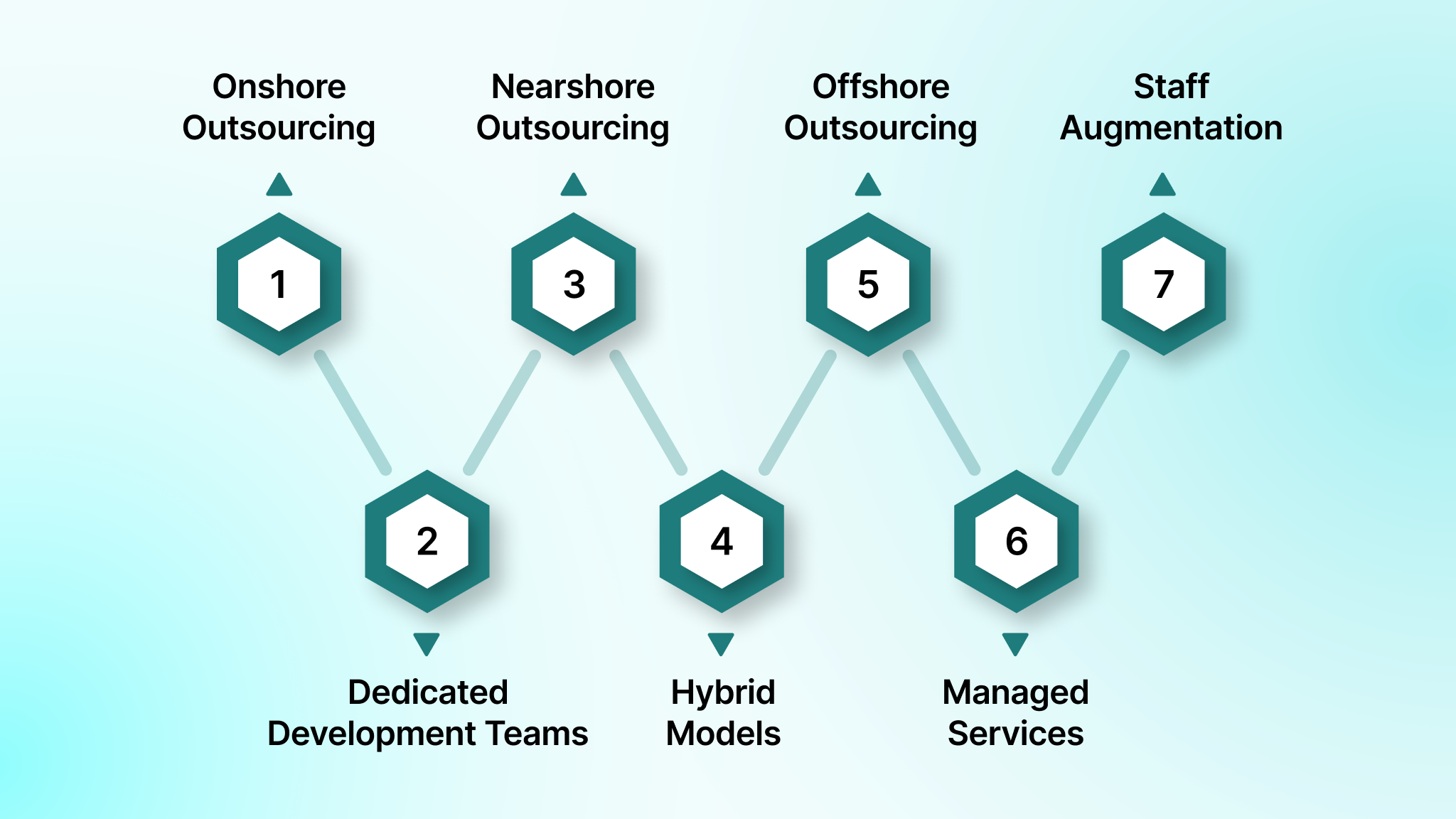
When considering software development outsourcing, businesses must select the right model based on cost, proximity, expertise, and scalability. Understanding each outsourcing approach helps tailor solutions for unique needs.
1. Onshore Outsourcing
Onshore outsourcing involves partnering with a provider in the same country. This model ensures direct communication, similar time zones, and adherence to local regulations, making it ideal for businesses requiring tight control and compliance.
2. Nearshore Outsourcing
Nearshore outsourcing refers to working with vendors in neighboring countries or regions. This approach offers proximity in time zones, cultural alignment, and often lower costs compared to onshore, making it a balanced option for many companies.
3. Offshore Outsourcing
Offshore outsourcing connects businesses with vendors in distant countries, typically for cost savings. While it may involve time zone differences, it opens access to a larger talent pool and specialized expertise, making it cost-effective for long-term projects.
4. Staff Augmentation
Staff augmentation is a model where companies hire external developers to supplement their in-house team. It’s ideal for businesses needing specialized skills for a short term, allowing flexibility without the commitment of full-time hires.
5. Dedicated Development Teams
Dedicated development teams are external teams fully committed to a company’s project for the long term. This model provides full control over the development process, with developers who integrate into the company’s culture and workflows.
6. Hybrid Models
Hybrid models combine the benefits of both onshore and offshore teams. By using onshore teams for high-level strategy and offshore teams for execution, businesses can balance cost-efficiency with quality and control in their projects.
7. Managed Services and Custom Solutions
Managed services focus on outsourcing entire business functions, such as IT or software management. Custom solutions, on the other hand, involve tailored software development that addresses specific business challenges, often using a mix of technologies and platforms.
Selecting the right outsourcing model is just the beginning. To ensure success, businesses must also carefully evaluate key factors such as project scope, budget, and communication needs, which we will explore next.
Also Read: Top 10 Custom Software Development Companies in 2026
Factors to Consider When Outsourcing Software Development
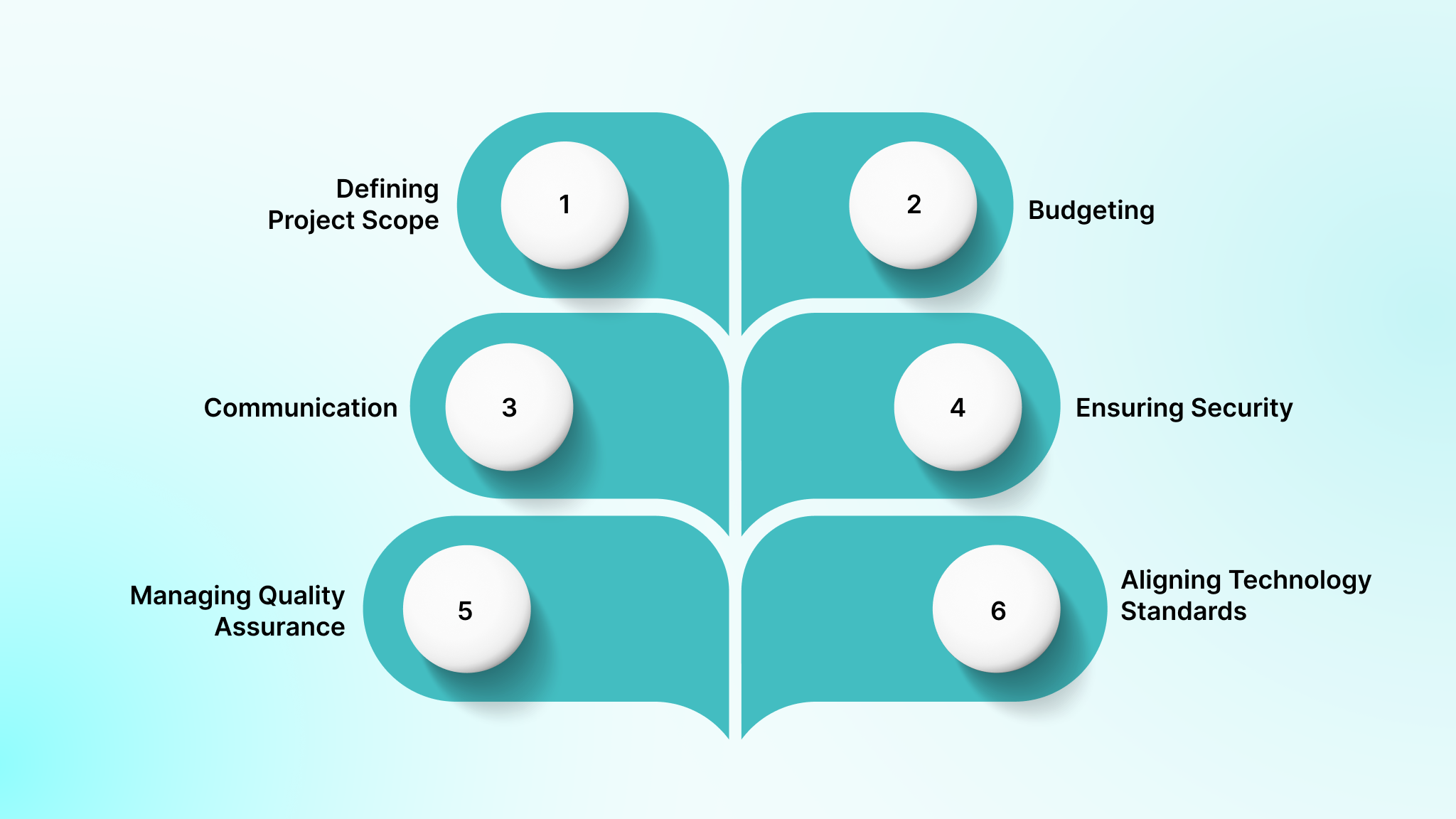
When outsourcing software development in 2026, businesses must assess several factors to ensure a smooth and successful collaboration with external vendors. Here’s what you must consider:
1. Defining Project Scope and Business Requirements
Clearly defining project scope and business requirements ensures both internal and external teams understand goals, timelines, and deliverables, minimizing scope creep. Aligning expectations from the outset helps guarantee project success, whether developing a mobile app or a complex system.
2. Budgeting for Software Development Outsourcing
Outsourcing can reduce costs, but hidden fees, such as setup charges, maintenance, third-party integrations, and time zone-related delays, can add up. Proper budgeting should account for these factors, preventing unforeseen financial burdens and ensuring your pricing agreement covers these costs.
3. Communication and Cultural Compatibility
Effective communication and cultural alignment are a must for successful outsourcing. Understanding your partner’s work style and communication preferences eliminates misunderstandings and creates a collaborative relationship. Regular check-ins and clear communication guidelines keep projects on track and partners aligned.
4. Ensuring Security and Compliance
Ensuring data security and compliance with regulations like GDPR, HIPAA, or SOC 2 is important. Verify that your outsourcing partner has strong security protocols, including encryption and non-disclosure agreements (NDAs), to safeguard sensitive business data and intellectual property.
5. Managing Quality Assurance and Risk Mitigation
Quality assurance (QA) should be embedded in each development phase. A proactive QA strategy helps identify issues early, ensuring the final product meets standards. Meanwhile, mitigating risks such as scope changes, delays, and resource shortages with a clear plan ensures project stability.
6. Aligning Technology Standards with Your Outsourcing Partner
Aligning technology standards with your outsourcing partner ensures consistency throughout development. Whether using Node.js, React, Django, or platforms like AWS and Google Cloud, consistency in tools simplifies collaboration and minimizes integration issues.
Once you’ve considered these factors, the next step is selecting the right outsourcing partner. This step is essential to ensure alignment with your goals and a partner capable of delivering the solution.
The Outsourcing Partner Selection Process
Choosing the right outsourcing partner requires evaluating the provider’s technical capabilities, industry expertise, pricing models, and transparency to ensure a smooth, long-term collaboration.
1. Evaluating Expertise and Experience
Look for a partner with experience in your specific industry and technology stack. For example, if you’re developing a FinTech app, ensure they have a track record of building secure, scalable systems using relevant technologies like Node.js, React, or AWS.
2. Reviewing Client Testimonials and Case Studies
Client testimonials and case studies provide insight into the partner’s reliability and ability to meet deadlines. Focus on examples that showcase how they solved challenges, adhered to timelines, and maintained quality throughout the project.
For example, at DEVtrust, we have a diverse range of client success case studies that you can check for yourself while deciding on an outsourced partner.
3. Pricing Models to Pick
Choose a pricing model that aligns with your project’s complexity. Fixed-price works for well-defined projects, time & material suits flexible scopes, and dedicated teams are best for long-term, ongoing development.
4. Ensuring Transparency
Ask about their development methodology, tools used for tracking progress, how they handle scope changes, reporting frequency, and risk management strategies. This information ensures clear timelines, expectations, and alignment throughout the project.
Now that you’ve selected your partner, it’s important to understand the costs involved in outsourcing software development. We’ll break down these factors in the next section.
Also Read: Top 15 Software Outsourcing Companies in 2025
The Costs of Outsourcing in Software Development
The average software development process costs between $50,000-$250,000. However, outsourcing costs vary significantly based on location. For example, hiring developers in Eastern Europe may cost 30-50% less than in Western Europe or the US, while Asia offers even lower rates but often comes with potential communication challenges. Thus, you must evaluate the trade-off between cost savings and quality.
Cost vs. Value: Prioritizing Long-Term ROI over Short-Term Savings
While outsourcing can reduce initial development costs, it prioritizes long-term ROI. Choosing the lowest-cost option may lead to delays, poor quality, or hidden maintenance costs. Investing in experienced developers ensures faster delivery, better product quality, and lower total cost over time, ultimately offering greater value.
Pricing Models: How Fixed Price, Time & Material, and Dedicated Teams Impact Costs
Fixed-price contracts provide clear budget expectations for defined projects but may limit flexibility. Time & material models are more adaptable for evolving projects, but can result in higher costs. Dedicated teams offer ongoing development, providing more control and efficiency, but at a higher monthly rate.
However, don’t just stop here; watch out for hidden costs and how to mitigate them. Hidden costs, such as integration fees, ongoing maintenance, or time zone-related delays, can inflate your budget. Mitigate these by negotiating clear terms, setting realistic expectations, and ensuring ongoing communication and support clauses are included.
Key Steps to Successfully Outsource Your Software Development Project
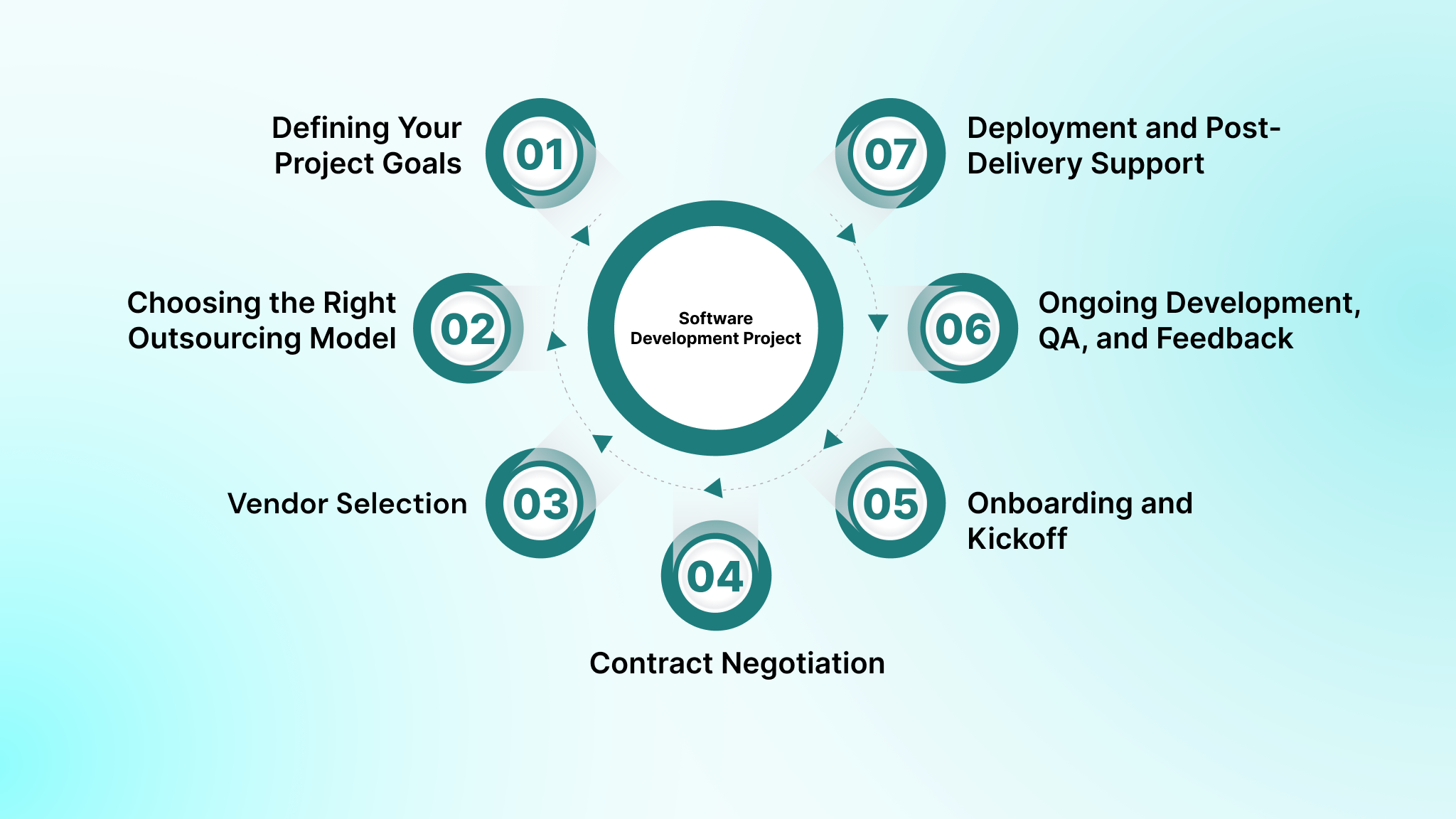
Successfully outsourcing software development requires a structured, step-by-step approach to ensure the project meets expectations. From defining clear goals to ongoing support, every step impacts your project’s outcome.
Step 1: Defining Your Project Goals and Requirements
Start by clearly defining your project goals and business requirements. Outline the technical specifications, functionalities, and timelines. A well-documented scope ensures alignment between internal teams and the outsourcing partner, avoiding confusion and scope creep.
Step 2: Choosing the Right Outsourcing Model for Your Needs
Select the right outsourcing model based on your project’s scope. For well-defined projects, a Fixed Price model works best, while Dedicated Teams are ideal for long-term development or evolving projects requiring constant collaboration and flexibility.
Step 3: Vendor Selection
Choose a partner with relevant industry expertise and experience with your required tech stack. Look for proven success in similar projects and assess their communication style and alignment with your company’s culture to ensure smooth collaboration.
Step 4: Contract Negotiation
Negotiate clear terms around deliverables, timelines, and payment. Establish security and confidentiality agreements and define performance metrics. Setting expectations upfront avoids future disputes and aligns your outsourcing partner with project goals.
Step 5: Onboarding and Kickoff
Align both teams with tools, communication channels, and workflows. During the kickoff, focus on project milestones, risk management strategies, and team roles. This ensures everyone is on the same page from day one.
Step 6: Ongoing Development, QA, and Feedback
Ensure continuous development by integrating regular QA practices. Set up feedback loops to evaluate progress and address issues early, ensuring the project stays on track and meets quality standards.
Step 7: Deployment and Post-Delivery Support
Once development is complete, focus on smooth deployment and system integration. Ensure your outsourcing partner provides post-delivery support, including bug fixes, maintenance, and updates to ensure the software remains functional and secure.
By following these key steps, you’ll be selecting the right partner and managing a successful outsourcing project. Next, let’s have a look at some common challenges that you may encounter while outsourcing your development work.
Common Outsourcing Challenges to Look for
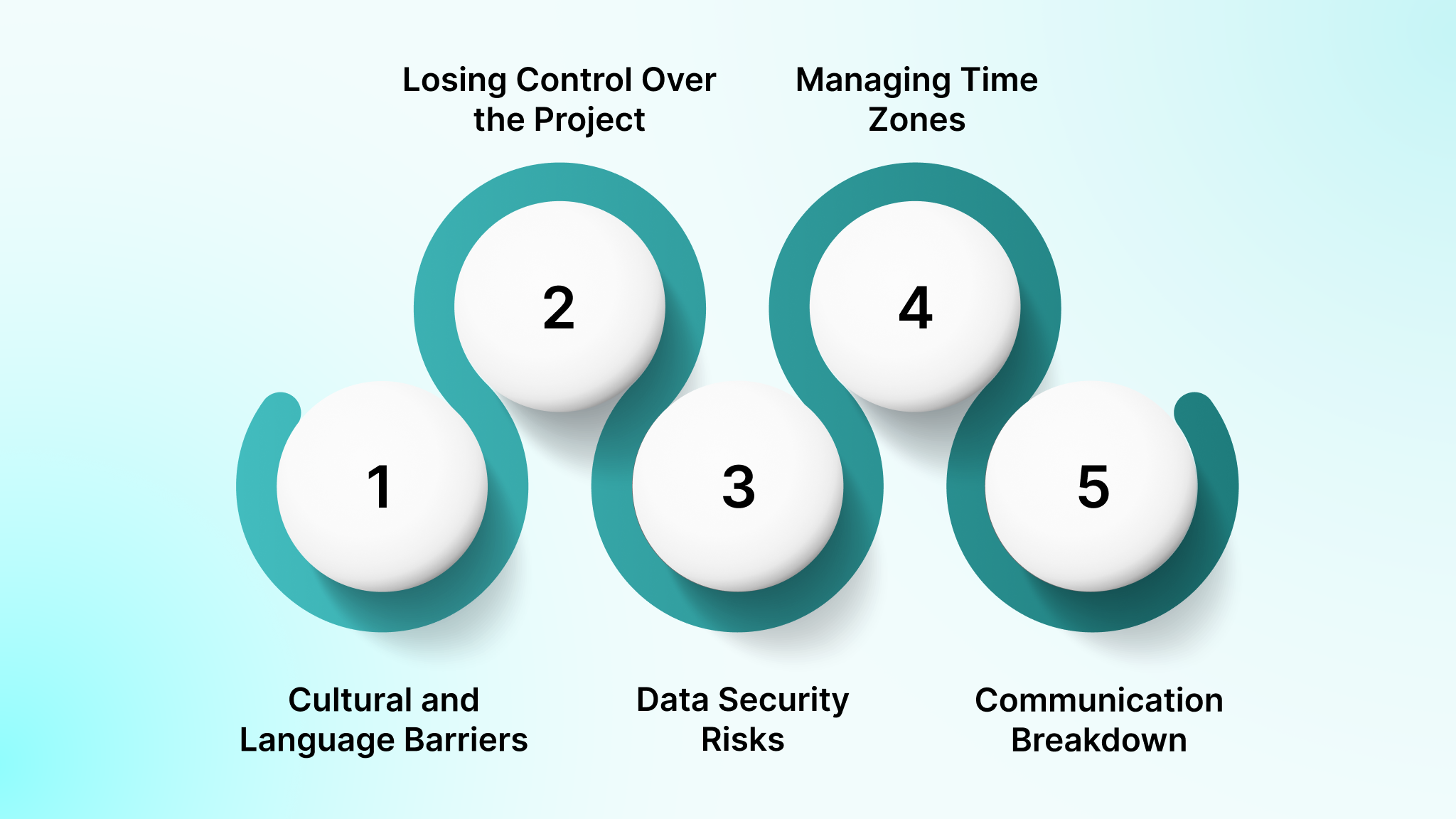
Outsourcing software development offers significant benefits, but it also brings challenges that can slow down your project’s success. Understanding these challenges upfront is a must for managing expectations and mitigating potential risks.
1. Cultural and Language Barriers
Cultural differences, such as varying work ethics, communication styles, and business practices, can lead to misunderstandings. Language barriers can also create confusion, especially when discussing technical requirements or project milestones. These issues can result in delays, misaligned objectives, and lower-quality outcomes if not addressed effectively.
2. Risk of Losing Control Over the Project
Outsourcing can lead to a loss of control over day-to-day operations, especially if you’re not closely managing external teams. This can result in unexpected delays, missed deadlines, or divergence from your original vision. Without proper oversight, ensuring that external teams remain aligned with your goals can become challenging.
3. Data Security Risks
Outsourcing involves sharing sensitive data with external vendors, which can increase the risk of data breaches. If an outsourcing partner doesn’t have robust security measures in place or fails to comply with regulations like GDPR or HIPAA, your data may be vulnerable to theft or misuse.
4. Managing Time Zones
Different time zones between your team and the outsourcing partner can slow down communication and project progress. Key tasks may be delayed due to the lack of real-time collaboration, making it difficult to resolve issues quickly and keep momentum going.
5. Communication Breakdown
Miscommunications due to differing communication styles, unclear instructions, or inconsistent feedback can lead to project setbacks. Lack of clarity on requirements, deadlines, or responsibilities often causes confusion, which in turn affects the overall progress and quality of the work.
These challenges are common, but being aware of them helps you plan effectively. Now, we’ll explore some best practices that can help address and overcome these common challenges.
Successful Software Development Outsourcing Tips and Best Practices
To achieve successful outsourcing outcomes, adopting these targeted best practices is essential. Below are clear, practical steps that will drive efficiency and keep your project aligned with goals.
- Setting Clear Goals and KPIs from Day 1: Set measurable KPIs, such as performance metrics, user engagement, and timelines to track project success and ensure both teams are aligned from day one.
- Managing Expectations: Document detailed project scope, milestones, and budget caps upfront, and review progress bi-weekly to ensure no unapproved changes affect timelines or costs.
- Regular Communication and Feedback Loops: Implement daily stand-ups, weekly progress reports, and bi-weekly retrospectives to address bottlenecks. It ensures continuous feedback and project alignment with all teams.
- Monitoring Progress: Use Jira for real-time tracking, Slack for instant updates, and establish weekly sprint reviews to ensure tasks stay on schedule and meet defined quality standards.
- Building Long-Term Relationships with Outsourcing Partners: Build ongoing collaboration with regular strategic planning meetings, clearly defined expectations, and performance reviews, focusing on building a lasting, transparent partnership.
- Ensuring Post-Delivery Support and Maintenance: Ensure an SLA for ongoing bug fixes, security patches, and system updates, with defined timelines and priorities for efficient post-launch support.
These best practices will guide your outsourcing efforts, ensuring that your project progresses smoothly and successfully.
Where to Outsource Software Development in 2026?
The U.S. IT services outsourcing market held a dominant position in 2024, reflecting the country’s increasing reliance on external talent to meet growing tech demands. Choosing the right outsourcing location remains key to optimizing cost, quality, and collaboration. In 2026, businesses worldwide will have access to skilled developers, each region offering unique advantages to match specific business needs.
1. Eastern Europe: A Rising Hub for High-Quality Software Development
Countries like Poland, Ukraine, and Romania offer developers highly skilled in AI, blockchain, and FinTech. With strong technical universities and lower labor costs than Western Europe, Eastern Europe provides reliable, high-quality software development solutions for businesses seeking secure and scalable technology at competitive prices.
2. Latin America: The Best Option for Nearshore Outsourcing
Brazil, Mexico, and Argentina are prime nearshore outsourcing locations for North American companies. Developers here excel in cloud computing, mobile apps, and DevOps while offering the advantage of similar time zones, reducing delays. Latin America’s growing talent pool, combined with cultural alignment, makes it an excellent choice for seamless collaboration and rapid delivery.
3. Asia: Affordable Talent, but What to Consider
India, Vietnam, and China remain key destinations due to their large, cost-effective talent pools. Specializing in machine learning, AI, and enterprise software, these countries offer low development costs but come with challenges such as time zone differences and potential language barriers. Despite these issues, Asia continues to be a leading choice for businesses seeking scalable solutions at a lower cost.
These destinations offer unique advantages depending on your project’s needs. Additionally, as outsourcing evolves, it’s important to stay updated on emerging trends that will shape the future of software development outsourcing, which we’ll explore next.
Trends in Software Development Outsourcing for 2026
Understanding the latest trends in software development outsourcing is essential for businesses to remain competitive. Here are the key trends to watch in 2026:
- AI-Powered Development: AI tools like GitHub Copilot and Codex automate code generation, improve debugging, and simplify project management, enabling faster and more efficient development while reducing manual effort.
- The Rise of Low-Code and No-Code Platforms: Platforms like OutSystems and Bubble enable non-developers to quickly build scalable applications. This reduces development time and reliance on specialized teams for SaaS solutions or internal tools.
- Increased Focus on Cybersecurity and Data Privacy: Outsourcing vendors must comply with GDPR, HIPAA, and SOC 2, ensuring end-to-end encryption, multi-factor authentication (MFA), and blockchain to safeguard data and meet strict privacy regulations.
- Sustainability in Outsourcing: In 2026, businesses are seeking partners with energy-efficient data centers, carbon-neutral operations, and sustainable development practices, aligning their outsourcing strategies with global environmental goals.
- The Shift Toward Nearshoring: Nearshoring to regions like Mexico, Poland, and Ukraine eliminates time zone issues and improves real-time collaboration. It provides cost-effective solutions with minimal cultural or communication challenges.
Overall, by adopting these trends, your outsourcing strategy will become more agile and effective. Now, let’s explore some common myths about outsourcing.
Also Read: Exploring Generative AI and Its Impact on the IT Industry
Common Myths About Software Development Outsourcing
There are several misconceptions surrounding software development outsourcing. Understanding and addressing these myths is key to making informed decisions and ensuring successful outsourcing partnerships.
Myth 1: “Outsourcing Equals Poor Quality”
Many believe that outsourcing leads to lower-quality results. However, when you select experienced, reliable partners like DEVtrust, with a proven track record, outsourcing can yield exceptional results that meet or exceed expectations.
Myth 2: “Outsourcing is Only About Cost-Cutting”
While cost savings are a significant benefit, outsourcing is about accessing specialized skills, increasing scalability, and boosting time-to-market. It’s a strategic decision that drives long-term business value beyond just financial savings.
Myth 3: “Freelancers Can Offer the Same Value as an Outsourcing Partner”
Freelancers may lack the resources, project management capabilities, and scalability that established outsourcing firms provide. Partnering with a dedicated team ensures structured development, ongoing support, and consistent quality.
Myth 4: “Outsourcing Means Losing Control Over Your Project”
Outsourcing doesn’t mean losing control. By using the right tools for project management and setting clear expectations, businesses can maintain full oversight, ensuring projects stay on track with timely updates and transparent communication.
By debunking these myths, businesses can make better decisions when outsourcing their projects.
Why DEVtrust Is the Ideal Partner for Seamless Software Development Outsourcing?
Outsourcing software development requires addressing challenges like ensuring quality control, managing diverse teams, and maintaining data security across borders. Many companies face difficulties in finding the right partners who understand industry-specific needs and compliance requirements.
At DEVtrust, we provide a comprehensive solution by offering end-to-end custom software development that integrates AI, cloud architecture, and security compliance to help businesses scale effectively. Our team works closely with you to ensure project goals are met, from initial discovery to post-delivery support, ensuring high-quality results while maintaining full control of the development process.
- Full-stack product development with expertise in Node.js, React, Django, and more
- Cloud architecture using AWS, Azure, and Google Cloud for scalable solutions
- Compliance with SOC 2, GDPR, and HIPAA for secure, regulated environments
- AI-driven capabilities for document processing, chatbots, and predictive analytics
- Seamless integration with third-party services like Stripe, Twilio, and Firebase
DEVtrust’s approach ensures that your software development projects stay on track, compliant, and secure while enabling future-proof, scalable solutions for long-term success.
Conclusion
Outsourcing software development offers significant benefits, from access to global talent to scalable solutions. However, choosing the right partner and managing challenges such as quality control, security, and communication are key to project success. By understanding these factors, businesses can make informed decisions and ensure smoother collaboration.
DEVtrust provides end-to-end custom software development services with expertise in AI, cloud solutions, and security compliance. We help businesses in HealthTech, FinTech, and SaaS achieve scalable success while maintaining full control over their projects. Our dedicated teams ensure high-quality outcomes, from development to deployment, with continuous support.
If you want to scale your business with expert outsourcing solutions, contact DEVtrusttoday to explore how we can help bring your vision to life.
Frequestly Asked Questions
Related Articles

Software Development Outsourcing
An Ultimate Guide to Python Software Development in 2026

Software Development Outsourcing
Outsource SaaS Development in 2026: Benefits and Risks
Software Development Outsourcing