

Smartphones have changed the way we shop. From groceries to gadgets, more purchases are happening through apps than ever before. Mobile e-commerce sales are projected to exceed $7.08 trillion globally by 2027, which means apps are no longer a luxury; they’re essential for growth.
If you’re a CTO, product leader, or founder and your mobile site struggles to convert or retain customers, an e-commerce app is no longer a “nice-to-have.” A well-designed app can drive sales, build loyalty, collect first-party data, and give you direct control over the customer experience instead of relying on marketplaces and paid ads.
This guide will show you how to plan, build, and scale a mobile app that actually grows your business. You’ll see the key trends shaping mobile commerce in 2026, the features that matter, how the development process works, what it will cost, and where the real ROI comes from, plus what to look for in a development partner.
Key Takeaways
- Mobile commerce growth: Global mobile e-commerce sales will exceed $7 trillion by 2027, making e-commerce mobile app development critical for higher retention, repeat purchases, and conversions.
- App models and MVP: Choose the right app type, B2C, B2B, multi-vendor, subscription, or C2C, and build a focused MVP.
- Tech stack essentials: Frontend options include React Native, Flutter, and native iOS/Android; backends commonly use Node.js, Python/Django/FastAPI, or .NET Core; data is typically managed via PostgreSQL, MongoDB, and Redis with integrations into ERP, WMS, OMS, CRM, analytics, and payment gateways.
- Features for scaling: AI personalization, AR/VR try-ons, voice commerce, social or live shopping, omnichannel experiences, and fast, one-tap checkout drive higher engagement, retention, and revenue.
- Execution and partners: Working with experienced e-commerce app developers who understand scalable architecture, security, and analytics ensures you launch faster, avoid rework, and actually see ROI from your app investment.
What is an E-commerce Mobile App?
An e-commerce mobile app is a dedicated application for smartphones and tablets that lets you browse products, add items to your cart, complete purchases, and manage orders directly on your device.
Unlike mobile websites, e-commerce apps offer:
- Faster loading speeds.
- Personalized shopping experiences.
- Push notifications.
- Access to native features like the camera, GPS, biometric login, and digital wallets.
Because everything runs within an optimized, installed application, users get a smoother, more engaging shopping experience, which typically results in higher conversion and retention rates.
Why Should Your Business Invest in Mobile Apps Right Now?
If digital growth is a priority and your customer experience still relies on a mobile site or third-party platforms, you are falling behind. Mobile usage continues to evolve, particularly as Gen Z, comprising 40% of global consumers, expects mobile-first experiences by default. They grew up with smartphones, and brands that do not offer app-level speed, personalization, and control are already losing ground.
The question is not “Do apps perform better?” They do. The real question is: What specific signs in your business performance indicate it is time to build one?
Here are a few scenarios worth paying attention to:
- Users visit your store but rarely return. If repeat traffic or purchase frequency is dropping, it is likely that you lack a direct retention channel that keeps your brand top of mind between purchases.
- You are reaching the limits of third-party platforms. Depending solely on marketplaces or paid ads for growth means you do not fully own your customer journey or your margins.
- Your roadmap includes features that browsers can not support well. If your vision includes features such as subscription logic, offline use, reward systems, or custom product flows, these require a native app infrastructure.
If any of this reflects your current challenges, building an app becomes less about future readiness and more about solving what is already holding your growth back.
What are the Latest Trends that will Shape Mobile Commerce in 2026?
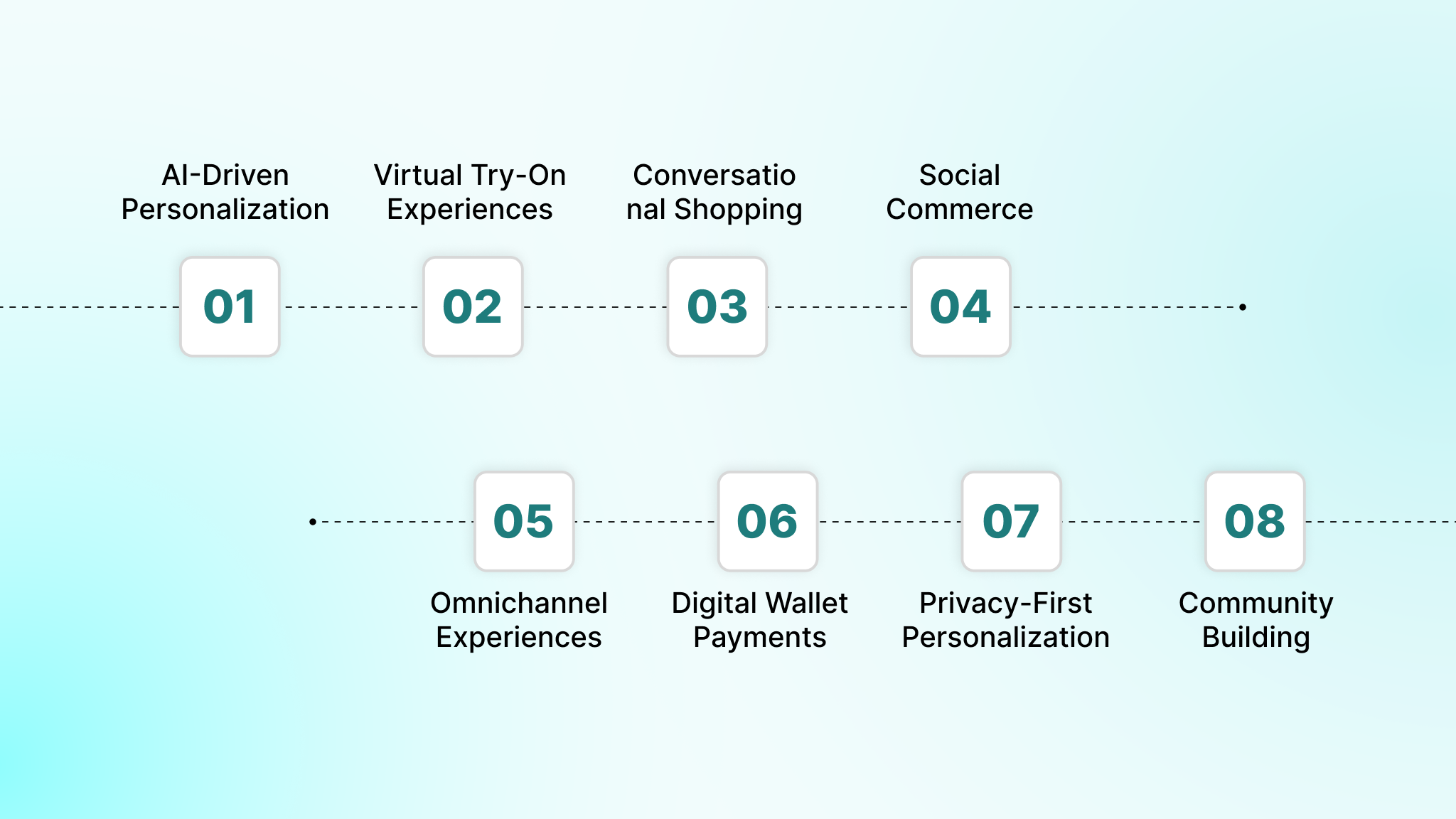
Mobile commerce in 2026 will be highly shaped by advancements in AI, user expectations, and the demand for faster, more personalized shopping experiences. Understanding these trends will help you build an app that stays relevant and competitive.
1. AI-Driven Personalization (Next-Gen Recommendations)
Modern e-commerce apps now use AI models to understand micro-behaviors, swipe speed, dwell time, and browsing intent to deliver hyper-personalized product suggestions.
Why it matters:
- Higher AOV
- Better retention
- Rich first-party insights
2. AR & Virtual Try-On Experiences
Augmented Reality is now standard for brands selling fashion, furniture, and beauty products. It reduces purchase hesitation and lowers return rates.
Why it matters:
- Increases purchase confidence
- Improves product discovery
3. Voice Commerce & Conversational Shopping
Apps now support hands-free product search, reordering, and personalized suggestions through voice assistants.
Why it matters:
- Faster checkouts
- Improved accessibility
- Great for repeat orders
4. Social Commerce & Live Shopping
Users discover and purchase products without leaving Instagram, TikTok, or inside-app live streams. Live commerce continues to outperform static product pages.
Why it matters:
- Higher engagement
- Trust through creator-led shopping
- 10x conversion during live events
5. Unified Omnichannel Experiences
Brands connect in-store and in-app experiences, real-time inventory, store pickup, in-app loyalty, and seamless returns.
Why it matters:
- Consistent brand experience
- Stronger loyalty
- Higher customer lifetime value
6. Fast Checkout & Digital Wallet Payments
Apple Pay, Google Pay, UPI, and one-tap checkout are no longer optional.
Why it matters:
- Massive drop in cart abandonment
- Faster buying cycles
7. Zero-Party Data & Privacy-First Personalization
As cookies disappear, apps leverage user-consented data, quizzes, preferences, and behavioral patterns.
Why it matters:
- Better personalization
- Legal compliance
- Higher trust
8. Gamification & Community Building
Badges, challenges, streaks, and in-app communities drive long-term retention, especially among Gen Z.
Why it matters:
- Higher engagement
- Strong brand affinity
- Increased repeat purchases
To sum it up, if you want to succeed in mobile commerce, you should think ahead, turn your insights into intuitive, memorable experiences that keep your customers engaged and ahead of the competition.
Types of E-commerce App Models
Before you invest in e-commerce mobile app development, you need clarity on which app model supports your revenue strategy. The wrong model leads to high costs and low ROI. The right model helps you acquire customers faster, improve retention, and scale efficiently.
To guide your decision, here’s a breakdown of the standard e-commerce app types and what they are best suited for.
| App Type | Best For | Key Features | Impact on Growth |
| B2C Retail App | Direct-to-consumer brands | Catalog, recommendations, fast checkout, loyalty | Higher conversions, repeat orders |
| Multi-Vendor Marketplace | Platforms with multiple sellers | Vendor tools, payouts, reviews | Scalability, diversified revenue |
| Subscription App | Brands offering recurring products | Auto-ship, billing, reorders | Predictable recurring revenue |
| B2B Commerce App | Wholesalers, manufacturers | Custom pricing, bulk orders, ERP sync | High-value orders, efficiency |
| C2C App | Peer marketplaces | Listings, messaging, verification | Community-led transactions |
| C2B App | Freelance/service marketplaces | Portfolios, bidding, payments | Service scalability |
Each model changes how your e-commerce app developer designs flows, pricing, and user roles. Now with the models defined, let’s look at how popular brands applied these strategies and what you can learn from their success.
Top 3 E-commerce Mobile App Success Stories
Studying successful e-commerce apps helps you understand what actually moves revenue, retention, and customer engagement. Below are three brands that made a massive turnaround by doing e-commerce app development.
Nike

Before focusing on mobile, Nike relied heavily on retail partners and had limited visibility into customer behavior. The Nike App changed this by shifting customers into a direct, personalized ecosystem where every interaction strengthens loyalty and lifetime value.
What Nike Did Right
- Built a mobile-first shopping experience centered on speed and personalization.
- Connected loyalty with shopping by integrating Nike Membership directly into the app.
- Used real-time behavior data to personalize recommendations and product drops.
- Added omnichannel features, including Buy Online Pickup In Store and in-store scanning.
- Released app-exclusive collections that encouraged frequent visits.
The Results
- More than half of Nike’s DTC revenue now comes from digital, led by mobile.
- Nike Membership passed 300 million users, with most sign-ups happening inside the app.
- App users exhibit higher average order value and stronger repeat-purchase behavior.
- The app contributed significantly to Nike’s multibillion-dollar DTC growth.
Why this helps you: Nike proves that your app can become the center of your DTC strategy when you combine personalization, loyalty, and exclusive experiences.
Amazon
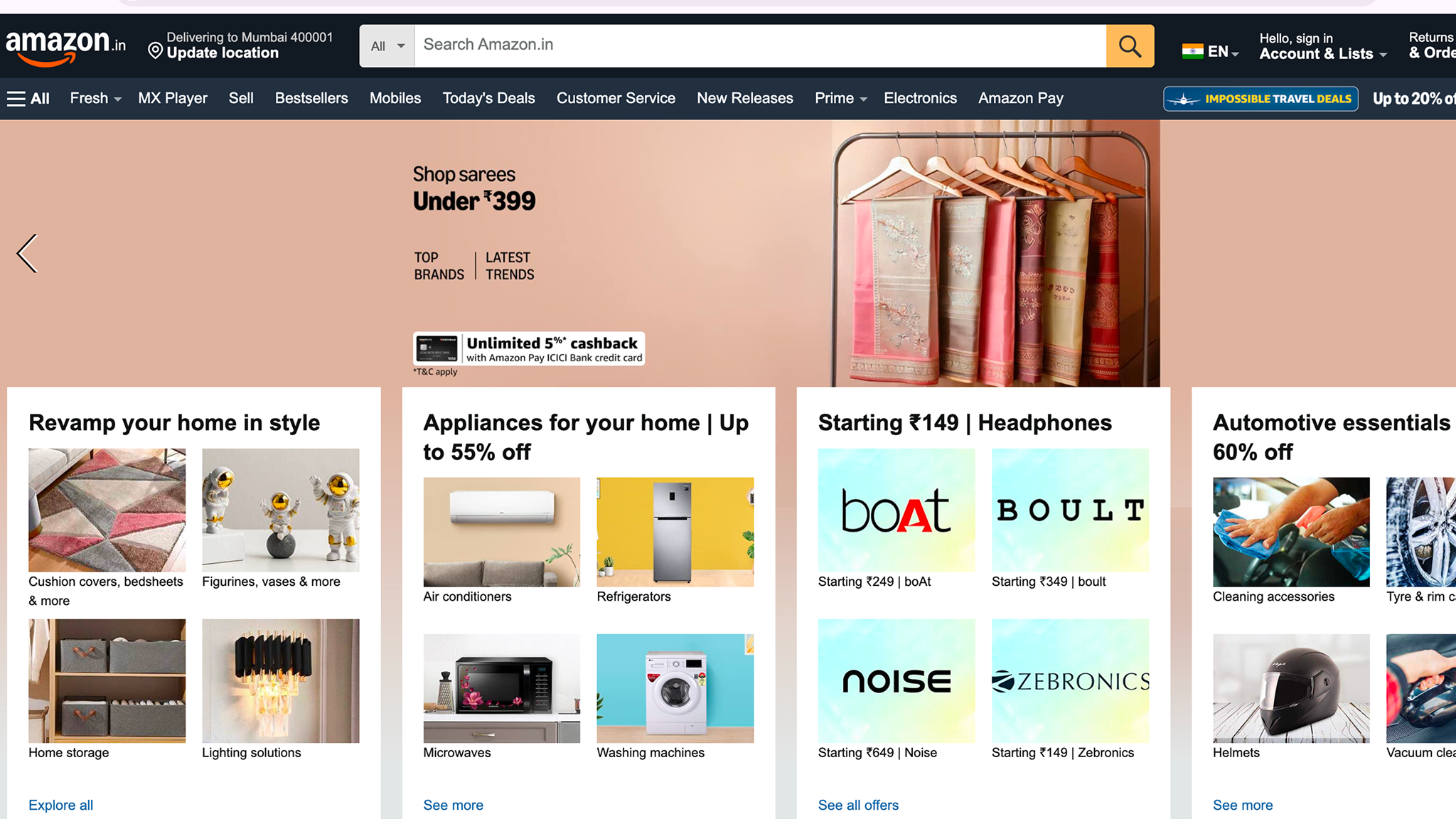
Amazon set the standard for mobile commerce by eliminating unnecessary steps, simplifying discovery, and focusing on trust. The result is an app that converts faster and keeps customers deeply engaged.
What Amazon Did Right
- Designed a one-click checkout to shorten the buying journey.
- Used machine learning to personalize product suggestions in real time.
- Added visual search to help users find products instantly.
- Strengthened trust through verified reviews and buyer protection.
- Positioned Prime benefits as mobile-first to improve retention.
The Results
- More than 60 percent of Amazon’s US purchases now take place in the app.
- App users convert up to 3 times more than mobile web users.
- Prime engagement increased due to app-first offers and reminders.
Why this helps you: Amazon shows that when you reduce friction and reinforce trust, your app can outperform all other channels in conversion rate and purchase frequency.
Target
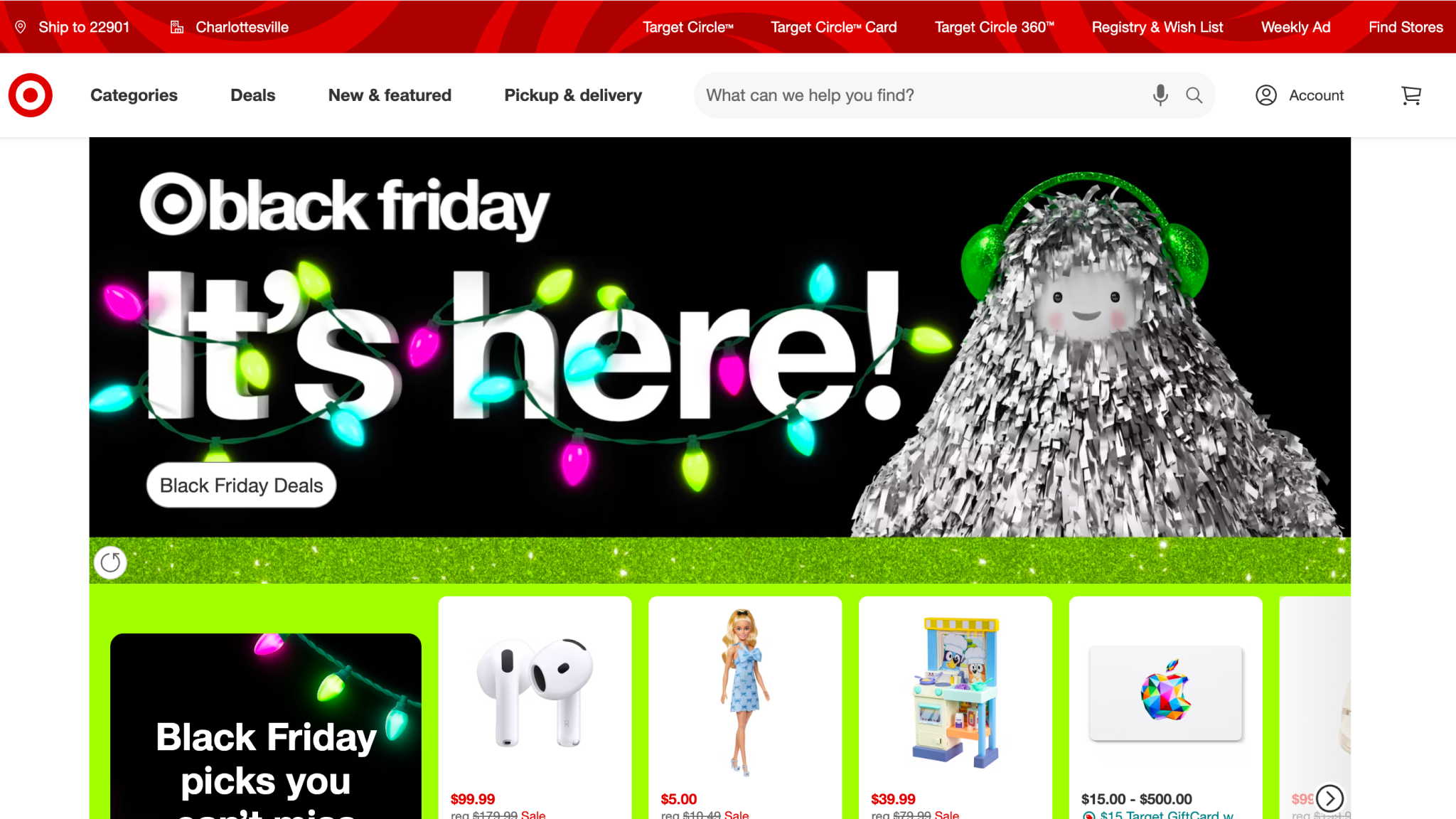
Target used its mobile app to unify online and in-store shopping. By giving customers inventory visibility, fast pickup, and consistent rewards, the app became the foundation of its omnichannel strategy.
What Target Did Right
- Added real-time store inventory so users always know what is available.
- Created Drive Up Pickup for a fast curbside fulfillment experience.
- Centralized rewards through Target Circle to encourage repeat use.
- Enabled Order Pickup, Ship to Home, and Same-Day Delivery within the same app.
The Results
- The Target App drives more than 70 percent of the brand’s digital revenue.
- Drive Up orders increased more than 500 percent year over year during peak adoption.
- Target App users spend significantly more per year than non-app customers.
Why this helps you: Target demonstrates how a well-built app can increase retention and annual spend by making it effortless for customers to move between digital and physical shopping.
These examples from Nike, Amazon, and Target highlight how powerful a well-designed app can be in driving engagement, loyalty, and revenue. But before you jump into development, it’s crucial to align your app strategy with clear business goals, because the features you build should serve the outcomes you want to achieve.
What Should You Consider Before Starting Development?
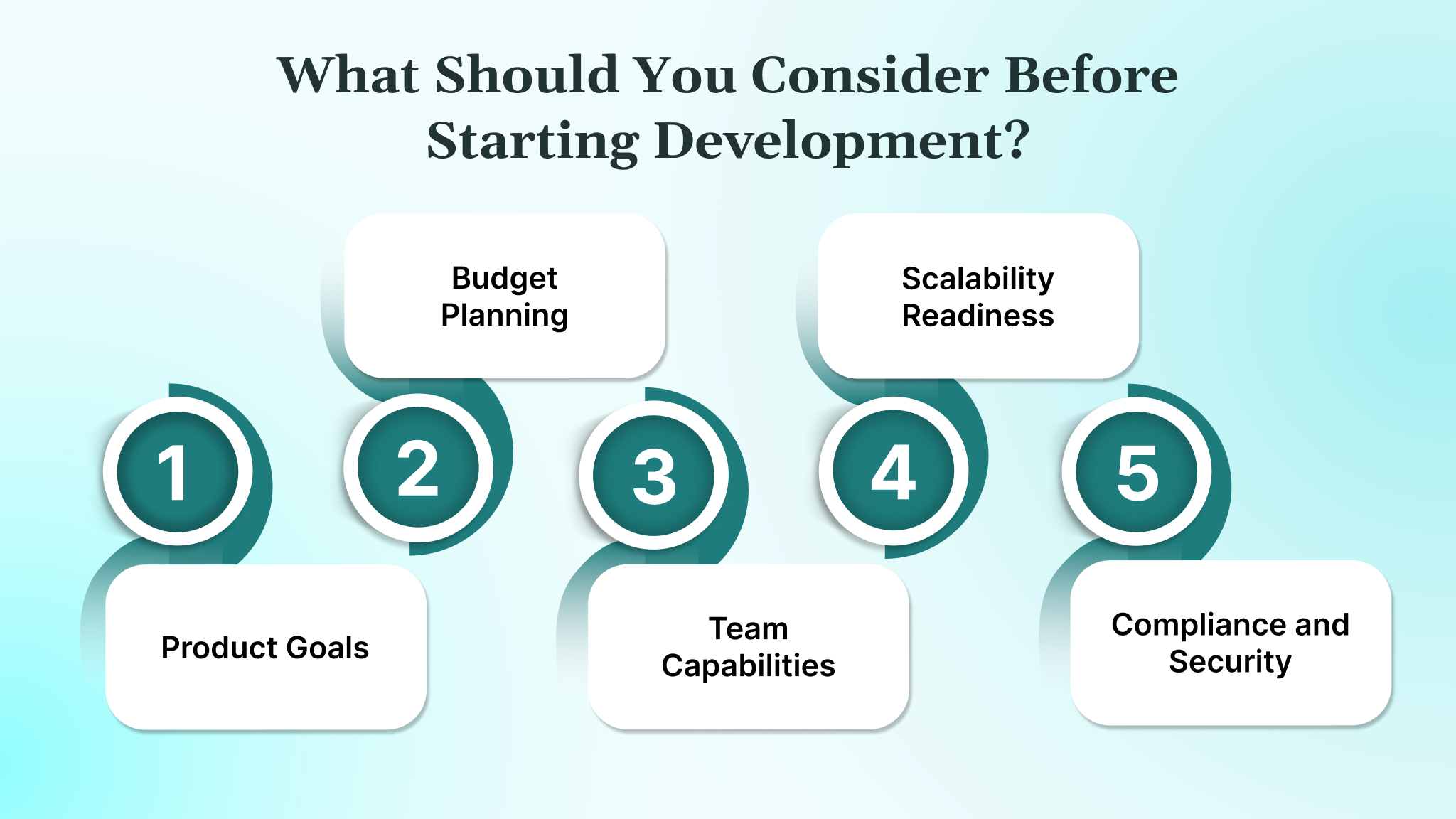
Business objectives must align with technical decisions from day one. Define whether you are prioritizing customer acquisition, increasing purchase frequency, or expanding into new markets. These goals influence everything from feature prioritization to technology selection.
Consider defining:
- Product Goals: Define success, user growth, revenue per user, and market expansion. Your goals drive core feature sets, user flows, and monetization models.
- Budget Planning: Go beyond development costs. Account for hosting, third-party services, compliance, app store fees, and ongoing maintenance. Set aside 15–20% of the build cost annually for updates and support.
- Team Capabilities: Assess internal bandwidth and expertise. Can your in-house team deliver on time? If not, external partners or dedicated teams may offer better speed and predictability.
- Scalability Readiness: Plan for user and data growth from the start. Architecture decisions should accommodate future catalog size, traffic spikes, and regional rollouts without expensive rework.
- Compliance and Security: Understand regulatory obligations early, PCI-DSS for payments, GDPR, or CCPA for data, and accessibility standards. Building with these in mind avoids legal risk and late-stage changes.
By carefully defining your goals, budget, team capabilities, scalability, and compliance needs, you lay a solid foundation for success. With these considerations in place, you’re ready to move into the step-by-step process of turning your e-commerce app concept into a fully functional, market-ready application.
How Do You Develop an E-commerce Mobile Application: Step-by-Step?
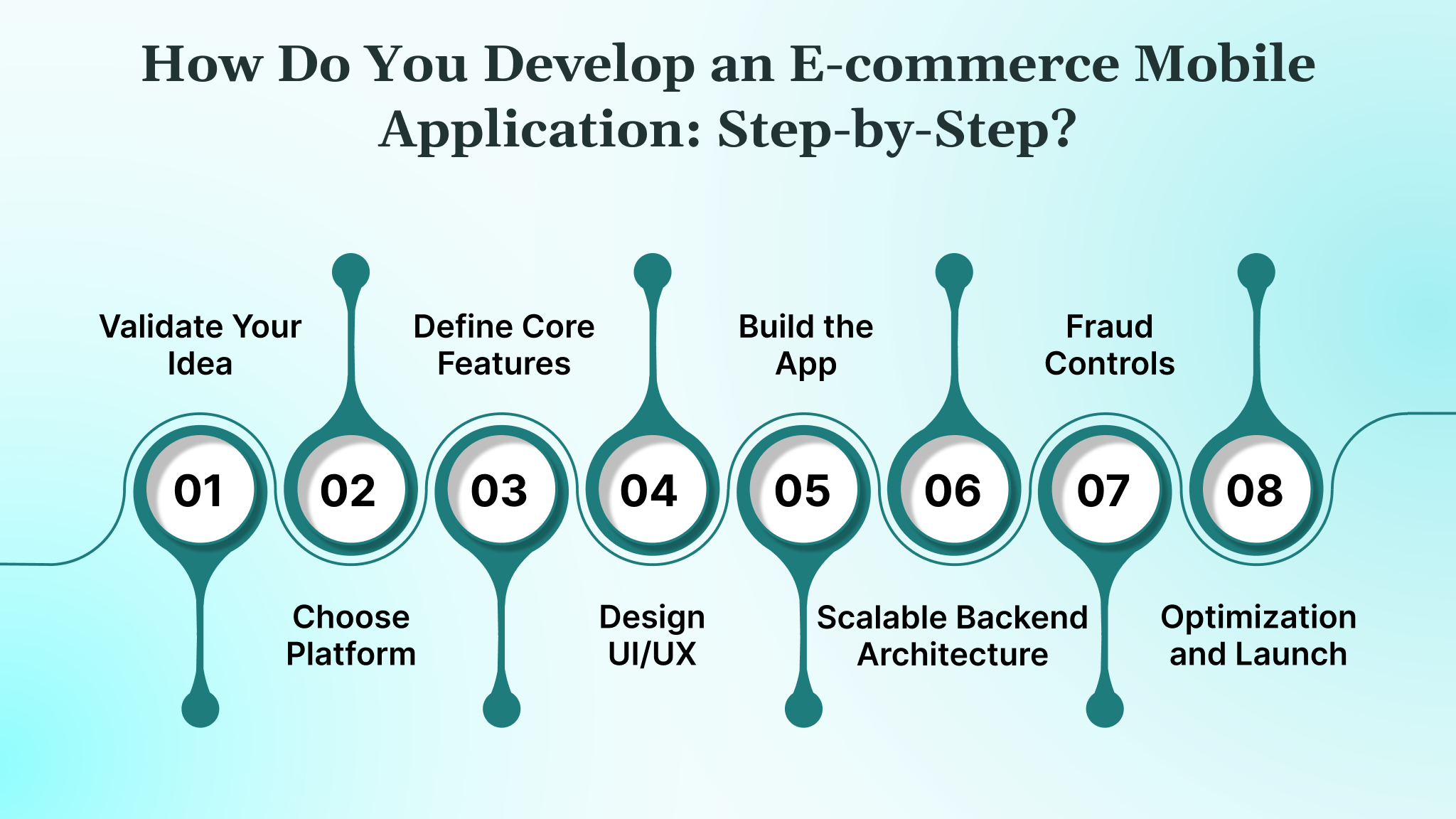
This eight-step process transforms your concept into a market-ready application. Each step builds upon the previous one, creating a systematic approach that minimizes risk and maximizes the probability of success.
Step 1: Validate Your Idea and Define Goals (2–4 weeks)
Before writing a single line of code, you need clarity on what users expect and how your app will outperform competitors. This ensures your budget is used effectively.
What this stage includes:
- User interviews: Understand buying behavior, checkout habits, and what frustrates them in existing apps.
- Competitor teardown: Compare search speeds, filter logic, navigation structure, and performance benchmarks.
- Persona definition: Map demographics, spending power, motivations, and obstacles.
- Business KPIs: CAC, retention rate, repeat purchase %, conversion uplift goals.
- Value gap analysis: Identify features competitors lack—faster search, richer product metadata, or more accurate recommendations.
Step 2: Choose Platform and Technology Stack (1–2 weeks)
Your tech stack impacts scalability, maintenance effort, performance, and long-term cost. Choose tools that match your roadmap, not hype.
Key decisions:
Frontend:
- React Native / Flutter: Faster cross-platform delivery, near-native UX.
- Native iOS + Android: Best for high-scale apps that need device-level optimizations.
Backend:
- Node.js: Best for real-time carts, live pricing, and fast I/O operations.
- Python/Django or FastAPI: Great for ML-driven recommendations.
- .NET Core: Enterprise-grade, stable, compliance-friendly.
Databases:
- PostgreSQL: Structured data, strong ACID guarantees, great for orders.
- MongoDB: Flexible product schema if you handle varied SKUs.
- Redis: In-memory caching for blazing-fast reads.
Integrations to plan early:
- ERP, WMS, OMS
- CRM
- Inventory sync
- Payment gateway
- Analytics stack (Mixpanel, GA4, Amplitude)
Step 3: Define Core Features and MVP Scope (1–2 weeks)
Your MVP should prove the idea, generate early revenue, and help you test real user behavior without overbuilding.
MVP essentials:
- Onboarding and authentication
- Catalog, search, and intelligent filters
- Product detail pages with variant logic
- Cart, checkout, coupons, taxes
- Order tracking and notifications
- Payment integration (cards, wallets, BNPL)
Advanced features you can add later:
- AI recommendations with collaborative filtering
- RFM-based personalization for returning users
- Wishlist, loyalty programs, subscriptions
- In-app chat support
- Content-driven commerce (UGC, videos)
Reasoning: A smaller, precise MVP accelerates launch while keeping engineering hours predictable.
Step 4: Design UI/UX for Performance and Conversion (3–5 weeks)
Your design needs to reduce friction, support fast decision-making, and feel intuitive across devices.
Focus areas:
- Information architecture: Clear navigation and predictable flows.
- Microinteractions: Improve perceived speed and trust (loading states, progress bars).
- Product imagery optimization: Use WebP, lazy loading, and dynamic resizing.
- Mobile-first layouts: Thumb-friendly CTA placement, minimal text, clean spacing.
- Checkout optimization: Fewer fields, address auto-fill, transparent pricing.
Technical UX considerations:
- Image CDN for dynamic resizing.
- Edge caching via Cloudflare/Akamai.
- Split payloads to reduce initial load time.
Step 5: Build the App Using Agile Development (8–14 weeks)
Work is divided into small sprints, giving you visibility and reducing the risk of rework.
Typical sprint deliverables:
- Sprint 1 → Auth, user profiles, JWT or OAuth2 setup.
- Sprint 2 → Catalog APIs, product schema, search endpoints.
- Sprint 3 → Cart logic, promo rules engine, tax API.
- Sprint 4 → Checkout, payments, order placement flow.
- Sprint 5 → Notifications (FCM/APNs), push logic.
- Sprint 6 → Performance tuning, edge-case handling.
- Sprint 7 → Admin panel, role permissions, reporting.
Engineering best practices:
- Code reviews.
- CI/CD pipelines.
- Automated API tests.
- Feature flagging to roll out updates safely.
Step 6: Build a Scalable Backend Architecture (parallel to development)
This layer determines how well your app performs during peak sales and future growth.
Key architectural decisions:
- API style:
- REST → Easy, predictable, widely adopted.
- GraphQL → Efficient for mobile; reduces over-fetching.
- Caching strategy:
- Redis for product lists, user sessions, cart data
- CDN for media delivery
- Architecture choice:
- Start monolithic for speed.
- Gradually break out microservices (search, checkout) as traffic grows.
- Load handling:
- Horizontal scaling with Kubernetes
- Auto-scaling groups on AWS/GCP
- Observability stack:
- Logging (ELK, Loki)
- Monitoring (Prometheus, Datadog)
- Tracing (Jaeger)
Reasoning: This ensures fast response times even during spikes like Black Friday.
Step 7: Implement Secure Payments and Fraud Controls (2–3 weeks)
Payment experience impacts trust, conversions, and revenue stability.
Core components:
- PCI-compliant flows.
- Tokenization to avoid storing card data.
- Integration with Stripe, Braintree, PayPal, or Razorpay.
- 3DS authentication.
- Fraud detection using velocity checks, device fingerprinting, and IP analysis.
Business impact: Fewer failed transactions → higher conversion → more revenue.
Step 8: Testing, Optimization, and Launch (4–6 weeks)
Testing ensures your app is stable, fast, and safe across devices and conditions.
Testing layers:
- Unit tests, API tests, regression tests.
- Device compatibility tests (low-end to high-end).
- Load testing for peak sales.
- Security testing for vulnerabilities.
Final steps before launch:
- Beta release for real-market feedback.
- Crash analytics setup.
- Performance targets (load under 3s, crash-free > 99.5%).
- ASO metadata for both app stores.
Realistic Timeline Summary
Building a solid, scalable e-commerce app typically takes:
- 16–24 weeks for MVP
- An additional 8–12 weeks for advanced features like personalization, loyalty, or ML-driven recommendations.
All eight steps matter, but the real difficulty is executing them without delays, rewrites, or architectural mistakes. You need sharp technical decisions, tight coordination, and people who have actually built e-commerce apps that scale.
You can hire in-house, but it means assembling multiple specialists and stretching timelines. The smoother path is to work with an expert e-commerce application development company with proven experience and the ability to handle the build end-to-end. If you are exploring that route, DEVtrust is one option you can consider, especially if you want a team that understands speed, stability, and clean execution with tangible results.
With the process and trade-offs in mind, the next question is whether you are better off building internally or partnering with a dedicated e-commerce app development team.
How Much Will E-commerce Mobile App Development Cost in 2026?
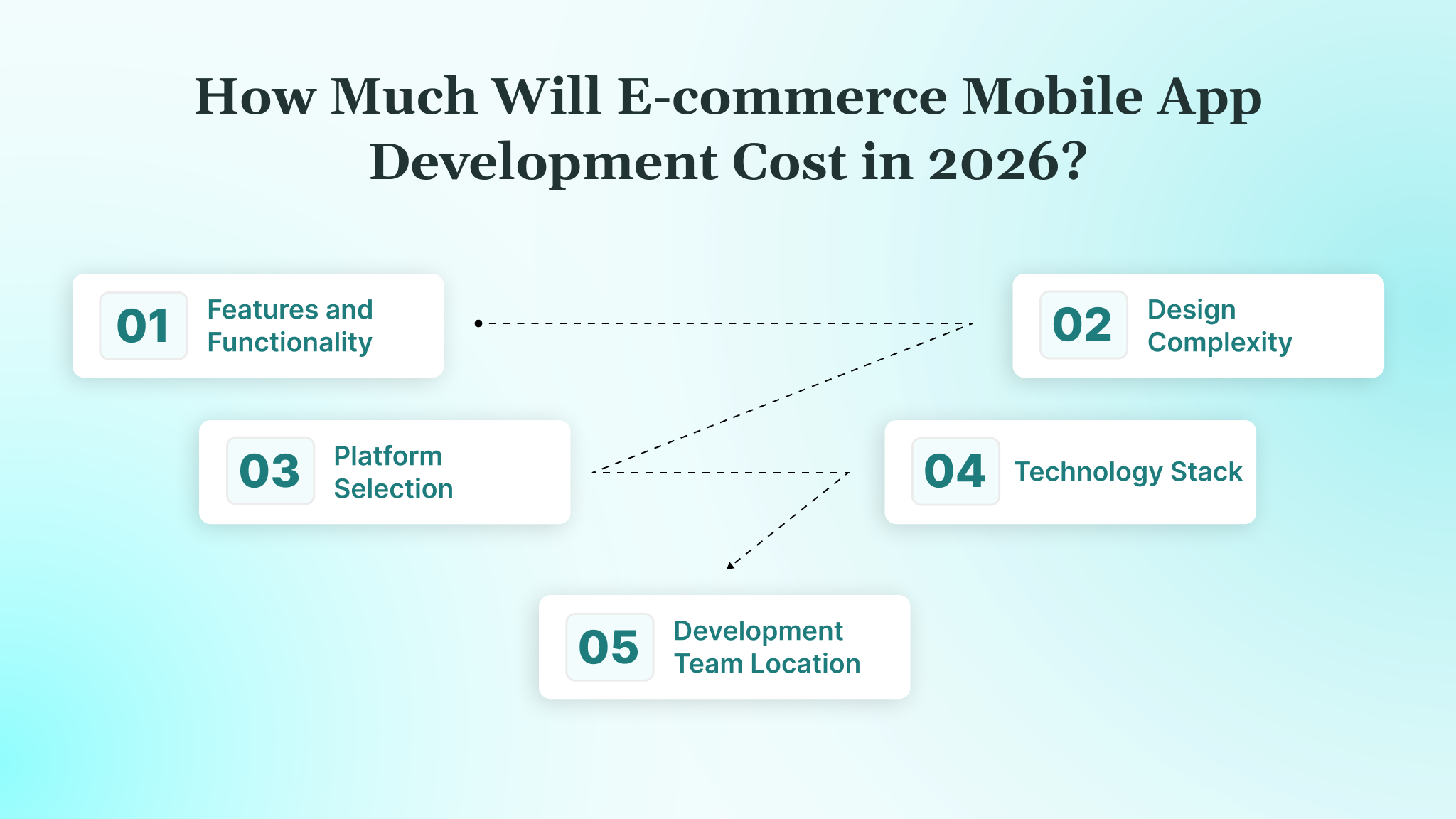
Understanding the cost upfront helps you budget correctly and choose the right development approach. Your final investment depends on the complexity of your app, the features you include, the tech stack you choose, and the expertise of your development team.
Below is a clear breakdown to help you set realistic expectations.
Cost by Project Complexity
Different business needs require different levels of investment. Here’s how e-commerce apps break down by complexity:
| App Complexity | Estimated Cost | Timeline | Example Apps |
| Basic MVP | $30,000 – $60,000 | 3-4 months | Single-brand stores with a standard catalog and checkout |
| Mid-Complexity | $60,000 – $120,000 | 4-6 months | Sephora, Nike, IKEA – featuring personalization and loyalty programs |
| Advanced Platform | $120,000 – $300,000+ | 6-10 months | Amazon, Walmart, Target – multi-vendor marketplaces with complex workflows |
Key Factors That Influence Development Cost
1. Features and Functionality
The more advanced your app becomes, the higher the investment. Core features include catalog, search, cart, checkout, and user profiles. Advanced features like AI recommendations, AR try-ons, dynamic pricing, subscription billing, and real-time inventory push costs higher.
2. Design Complexity
Your design investment increases based on:
- number of screens
- custom UI/UX requirements
- animations or micro-interactions
- mobile-first optimization
- accessibility compliance
3. Platform Selection
Building for a single platform (iOS or Android) requires less investment than developing for both platforms simultaneously. Cross-platform frameworks like React Native or Flutter offer cost efficiency while reaching users on both iOS and Android.
4. Technology Stack
Your choice of backend technologies, database architecture, cloud infrastructure, and third-party integrations influences both initial development cost and long-term scalability.
5. Development Team Location
Geographic location significantly impacts hourly rates and total project cost:
| Region | Hourly Rate | Cost Considerations |
| United States & Canada | $120 – $200 | Premium quality, smooth communication, same timezone collaboration |
| Western Europe | $80 – $150 | High technical standards, strong English proficiency, and GDPR expertise |
| Eastern Europe | $50 – $100 | Solid technical skills, competitive rates, and established tech hubs |
| Latin America | $40 – $90 | Nearshore advantage, minimal timezone differences, growing talent pool |
| Asia | $25 – $70 | Cost-effective options, large developer community, significant timezone gaps |
How to Optimize Your Investment
Several strategies can help maximize the value of your development budget:
- Start with a focused MVP: Build only what proves traction.
- Use cross-platform frameworks such as React Native / Flutter to cut costs by 30–40%.
- Leverage battle-tested third-party tools: Payments, analytics, auth, notifications.
- Plan scalable architecture early: Saves thousands in future rebuilds.
- Roll out features in phases: Prioritize based on real usage data.
Your exact cost depends on your industry niche, integration needs, compliance standards, and growth roadmap.
It’s essential to get clarity on cost early so your scope, stack, and timeline are realistic. Teams like DEVTrust do this every day and can help you translate your roadmap into a phased e-commerce app development plan and budget that match your growth targets.
With the right guidance, you define a focused scope, choose an optimal tech stack, and build a cost model that supports your business goals without sacrificing quality or scalability.
Should You Build In-House or Partner with Experts?
Building an e-commerce mobile app in 2026 directly impacts revenue, retention, and how fast your business scales. And while many teams start with the idea of developing in-house, the reality is very different once the work begins.
Hiring a full team means months spent on recruitment, onboarding, aligning workflows, and building technical foundations from scratch. For most SMBs, this slows down momentum when speed and execution matter the most.
Partnering with an experienced development team removes these barriers. Instead of dealing with hiring delays or fragmented expertise, you get specialists who’ve already solved the performance, scalability, security, and integration challenges you’re about to face.
Why partnering often becomes the smarter approach:
- Execution-ready skill sets: Engineers, designers, architects, and QA already aligned to build e-commerce apps end-to-end.
- Faster delivery with fewer bottlenecks: Proven workflows, clear documentation, and teams who know what breaks and how to prevent them.
- Lower long-term risk: Better architecture decisions, cleaner builds, and fewer expensive fixes after launch.
- Predictable timelines and outcomes: Benchmarks, transparent progress, and no dependency on new hires or internal bandwidth.
If your internal team is already stretched or you need a predictable, fast, and technically sound build, partnering gives you a cleaner path to launch while keeping your roadmap intact.
Why DEVtrust Is a Strong Partner for Your E-commerce App Build?
Once you decide to work with a development partner, the real question becomes: who can actually deliver a stable, revenue-driving app without constant hand-holding and rework? That’s where DEVtrust fits in.
At DEVtrust, we work as an extension of your product and engineering team. We bring product strategy, engineering depth, and industry experience together so you can launch with confidence instead of guessing your way through stack and architecture decisions.
Why teams choose DEVtrust for e-commerce builds:
- We cover the full stack: Backend architecture, mobile development, cloud setup, DevOps, third-party integrations, and security, all handled by specialists who’ve done it before.
- We understand industry context across FinTech, HealthTech, Real Estate, SaaS, and e-commerce—including how payments, compliance, and data flows affect your app’s UX and performance.
- We execute with a product-first mindset, aligning features with your revenue model, conversion goals, and customer journeys instead of just “shipping tickets.”
- We focus on outcomes: Clear milestones, transparent communication, measurable improvements in speed, stability, and conversion, and architecture built to scale without painful rewrites.
What DEVtrust Delivers in Practice
Take Aimly, for example, a fundraising + e-commerce platform. DEVtrust handled the product end-to-end, from architecture to integrations like Stripe, Plaid, and Dwolla, ensuring secure payments, seamless fund transfers, and a frictionless buying flow.
The results were tangible:
- 55% increase in user trust.
- 75% smoother navigation.
- 45% faster delivery workflows.
- Automated fund transfers that removed operational overhead.
These are the type of outcomes the team is structured to deliver: stable builds, predictable timelines, and solutions that hold up under real-world usage.
Conclusion
Mobile commerce continues to reshape how businesses reach customers and generate revenue. Apps deliver superior user experiences, higher conversion rates, and stronger customer relationships than traditional web platforms. Companies that invest strategically in e-commerce mobile app development will capture a disproportionate market share as consumer behavior continues to evolve.
Success requires more than technical execution; you need partners who understand the intersection of technology, user experience, and business strategy. Focus on partners who understand your industry, have proven track records, and can provide ongoing support after launch. The decisions you make now will impact your business for years to come.
DEVtrust specializes in handling exactly these kinds of requirements. Share your goals, and we will deliver. If you are still on the fence about e-commerce mobile app development, you are already falling behind. The market is moving fast, and your competitors are not waiting.
It is now or never.
Get on a call with us today and take the first step toward launching an app that drives real results for your business.
Frequestly Asked Questions
Related Articles
Mobile App Development
A Step-by-Step Framework for Business Mobile App Development

Mobile App Development
Machine Learning App Development: A Comprehensive Guide

Mobile App Development