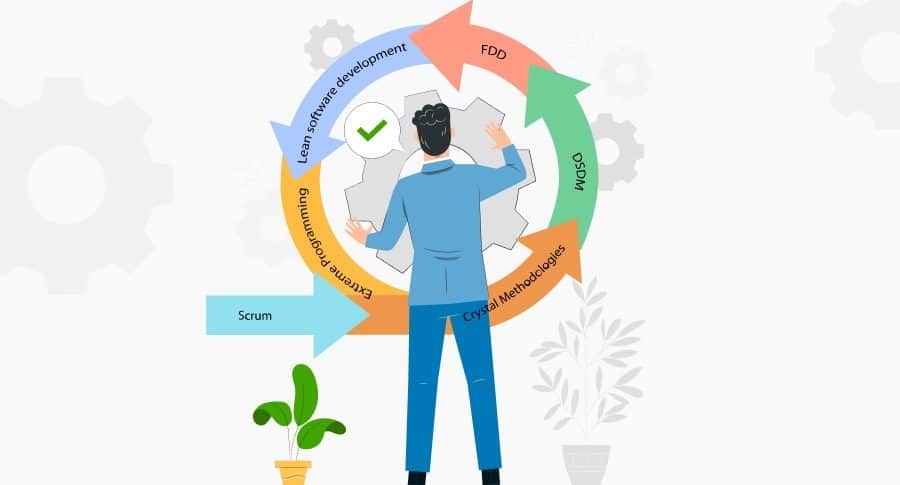
Agile Methodology
An agile methodology is an approach to designing and building the software in incremental and iterative techniques. The Agile method is a way much better approach to the waterfall model which overheads all the limitations of the waterfall model and allows the user with more features. This will allow every phase to have the testing process so that the errors are resolved at the beginning only.
In this approach, the agile process is broken into smaller pieces and will be combined after the complete designing and testing process.
Agile Methodology follows the following process:
Scrum: Scrum methodology mainly focuses on “How to manage the team-based development”. Agile and Scrum contain major three roles with the responsibilities explained as follows:
Scrum Master which will allow for the team meeting
The product owner will be responsible for preparing for the backlogs
Task organises task
Moreover, the scrum follows the following process to execute:
Sprint aka iteration
End products are where all the product backlogs are listed in detail.
In the sprint process, in the product backlog, a top user story is selected and converted into the sprint backlog.
The team works with the defined sprint backlog
The team reports on the daily work
The team delivers the functionality of the product in the end.
Crystal Methodology: There are 3 main highlights of this:
Chartering: In this phase, there are different activities are involved i.e.,
Creation of the development team
Feasibility Analysis
Preparing Initial Plan
Conversion of the development methodology
Cyclic delivery: This is the main development phase which has 2 or 3 more delivery phases:
Update and release the plan by the team
A subset of the requirements is implemented through a series of program tests and iterations
Customers receive a real-time integrated product
Developing a project plan and reviewing the development methodology
Wrap Up: The activities performed in this phase will be deployed into the user environment, and post-deployment reviews and reflections are performed.
Dynamic Software Development Method (DSDM)
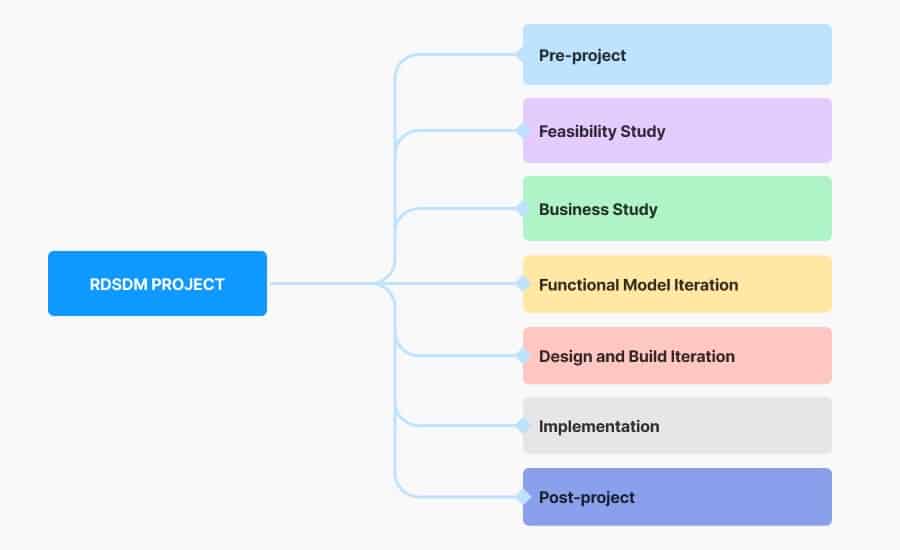
This is an approach that provides the software development and agile delivery framework. It will actively focus on the frequent delivery with DSDM.
The techniques used in DSDM are
Time Boxing
MoSCoW Rules
Prototyping
The DSDM project consists of 7 phases
Pre-project
Feasibility Study
Business Study
Functional Model Iteration
Design and Build Iteration
Implementation
Post-project
Benefits of Agile Methodology
This will have various benefits which are listed and will provide the gist of it concerning the following:
Customer
It will provide high responsiveness with multiple numbers of features available in the process.
Increase in the delivery process with the Short cycle.
Development Team
Makes the working methodology easier
Decreases the non-productive easily.
Scrum Master
It makes the planning and task tracking straightforward for the daily meeting
Complete report generation with the project status.
Tracking and debugging the issues quickly.
Vendor
Increase the efficiency of the team
Reduces wastage and overheads
Product Owner
Alignment of the work with the customer’s specifications
Chances to re-prioritize the work, frequently.
Here the delivery value will be at the max
PMOS and c-Level Executive
Reports on the work on a daily basis.
Planning and scheduling of the work
Related Articles
Custom Software Development
Enterprise Application Integration: What It Is and How It Works
Custom Software Development
How to Build a CRM in 2026: Step-by-Step Guide

Custom Software Development