Introduction
Most software delays don’t happen because teams lack ideas; they happen because the right developers aren’t available at the right time. Hiring takes months. Senior talent is expensive. Internal teams are already stretched as they maintain existing systems while delivering new features faster.
Companies have shifted outsourcing software development from a last-resort cost strategy to a core execution approach. In fact, the market is projected to grow from USD 564.22 billion in 2025 to USD 897.44 billion by 2030, reflecting how organizations actively use external teams to unblock delivery, access specialized skills, and scale without long-term hiring risk.
This guide is for founders, CTOs, product leaders, and engineering managers making real build-vs-buy decisions. It breaks down what outsourcing is, which models fit different business stages, and how to avoid common pitfalls that quietly derail timelines, budgets, and product quality.
Overview
- Software development outsourcing offers flexibility, access to global talent, and scalability.
- Multiple outsourcing models exist depending on cost, proximity, and expertize.
- Clear scope and pricing models prevent delays and hidden costs.
- Communication and cultural alignment are critical for success.
- Cybersecurity and compliance must be prioritized.
What is Outsourcing Software Development?
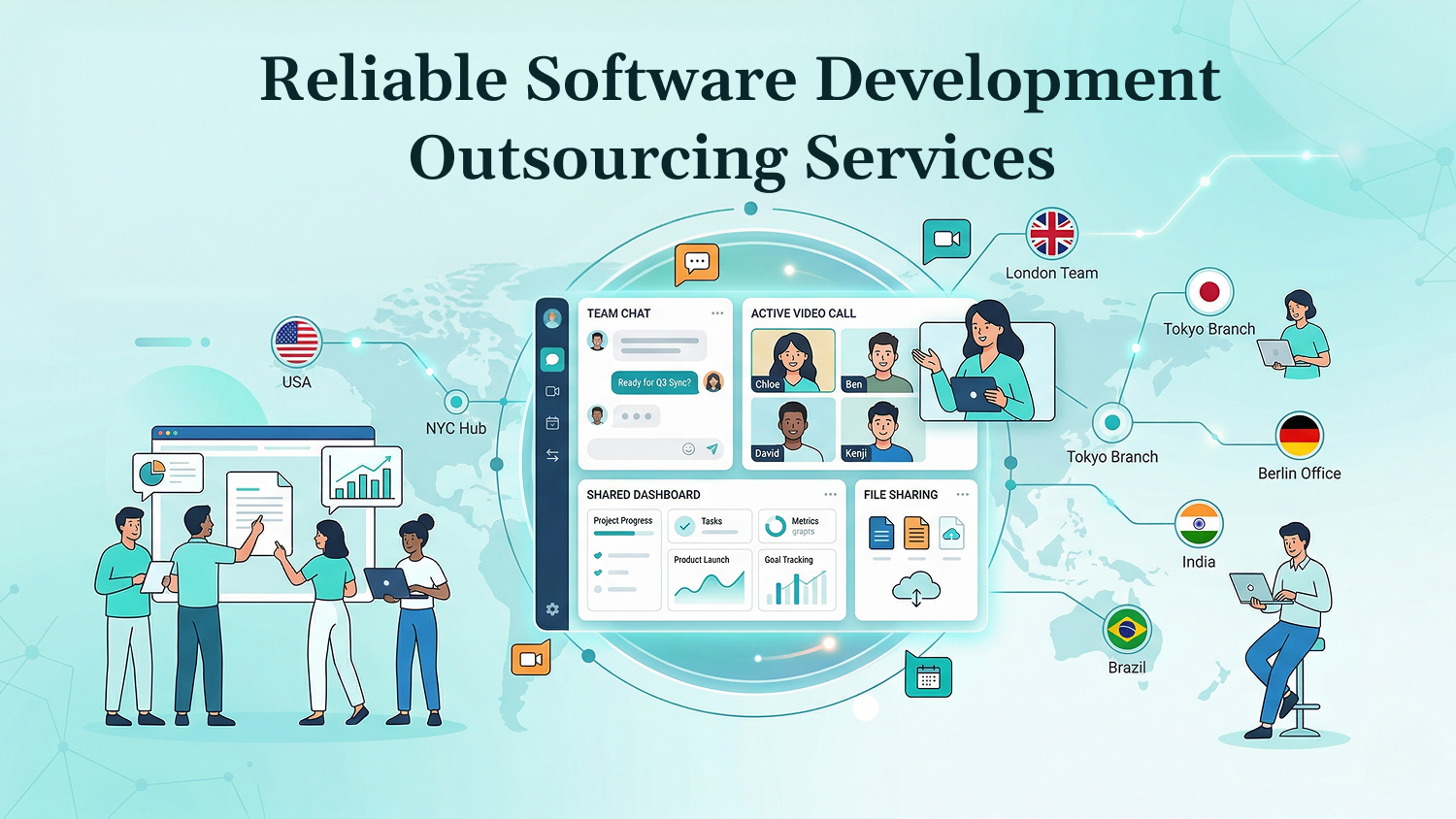
Outsourcing software development involves partnering with external vendors to handle all or part of your software development needs. This includes building custom platforms, scaling infrastructure, integrating APIs, and maintaining systems.
In 2026, outsourcing is a strategic growth lever, not just a cost-saving tactic. With cloud computing, AI, and real-time collaboration tools, businesses can now work seamlessly with distributed teams across the globe.
Key Outsourcing Models and Services
1. Onshore Outsourcing
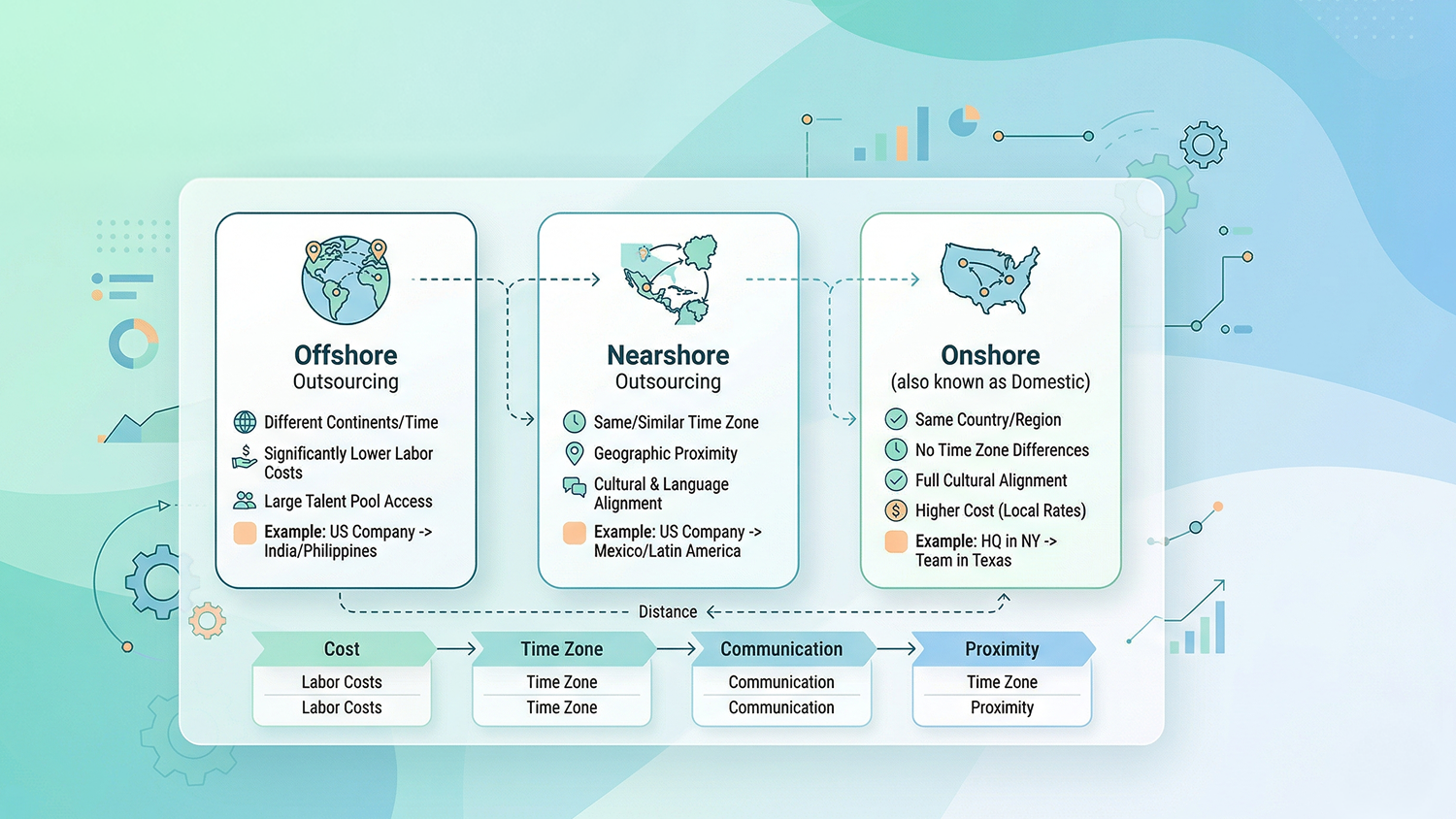
Organizations partner with development teams located within the same country. This model ensures strong alignment in terms of legal frameworks, language, and business culture.
Best suited for:
Industries with strict regulatory and compliance requirements, such as FinTech and healthcare, where data security and governance are critical.
2. Nearshore Outsourcing
Companies collaborate with teams in neighboring or nearby countries, enabling easier coordination due to similar time zones and cultural proximity.
Best suited for:
Businesses looking to balance cost efficiency with real-time collaboration and smoother communication workflows.
3. Offshore Outsourcing
Organizations engage with development teams in distant countries such as India, Vietnam, or Eastern Europe to leverage cost advantages and a larger talent pool.
Best suited for:
Companies aiming for maximum cost efficiency, rapid scalability, and access to specialized technical expertise.
4. Staff Augmentation
Businesses temporarily extend their in-house teams by adding external professionals to fill specific skill gaps or handle increased workloads.
Best suited for:
Short- to mid-term projects where flexibility is required without committing to long-term hiring.
5. Dedicated Development Teams
Organizations work with a fully aligned external team that operates as an extension of their internal team, focusing exclusively on their product or project over the long term.
Best suited for:
Ongoing product development, startups, or companies seeking consistent collaboration and deeper team integration.
6. Hybrid Models
Companies combine multiple outsourcing approaches, for example, maintaining onshore strategy and management while leveraging offshore teams for execution.
Best suited for:
Organizations that want to optimize both control and cost while maintaining strategic oversight.
7. Managed Services
Businesses outsource entire IT functions, systems, or processes to an external provider who takes full responsibility for delivery, maintenance, and performance.
Best suited for:
Organizations aiming to reduce operational overhead and focus on core business priorities while ensuring reliable system management.
Model Selection Comparison Table
| Model | Cost | Control | Scalability | Best Use Case |
|---|---|---|---|---|
| Onshore | High | High | Medium | Compliance-heavy projects |
| Nearshore | Medium | Medium | High | Balanced collaboration |
| Offshore | Low | Medium | Very High | Long-term scaling |
| Dedicated Team | Medium | High | Very High | Product development |
| Staff Augmentation | Medium | Medium | High | Skill gaps |
Factors to Consider When Outsourcing Software Development
1. Defining Project Scope
Clear requirements reduce confusion and scope creep.
2. Budget Planning
Include hidden costs like integration, maintenance, and delays.
3. Communication & Culture
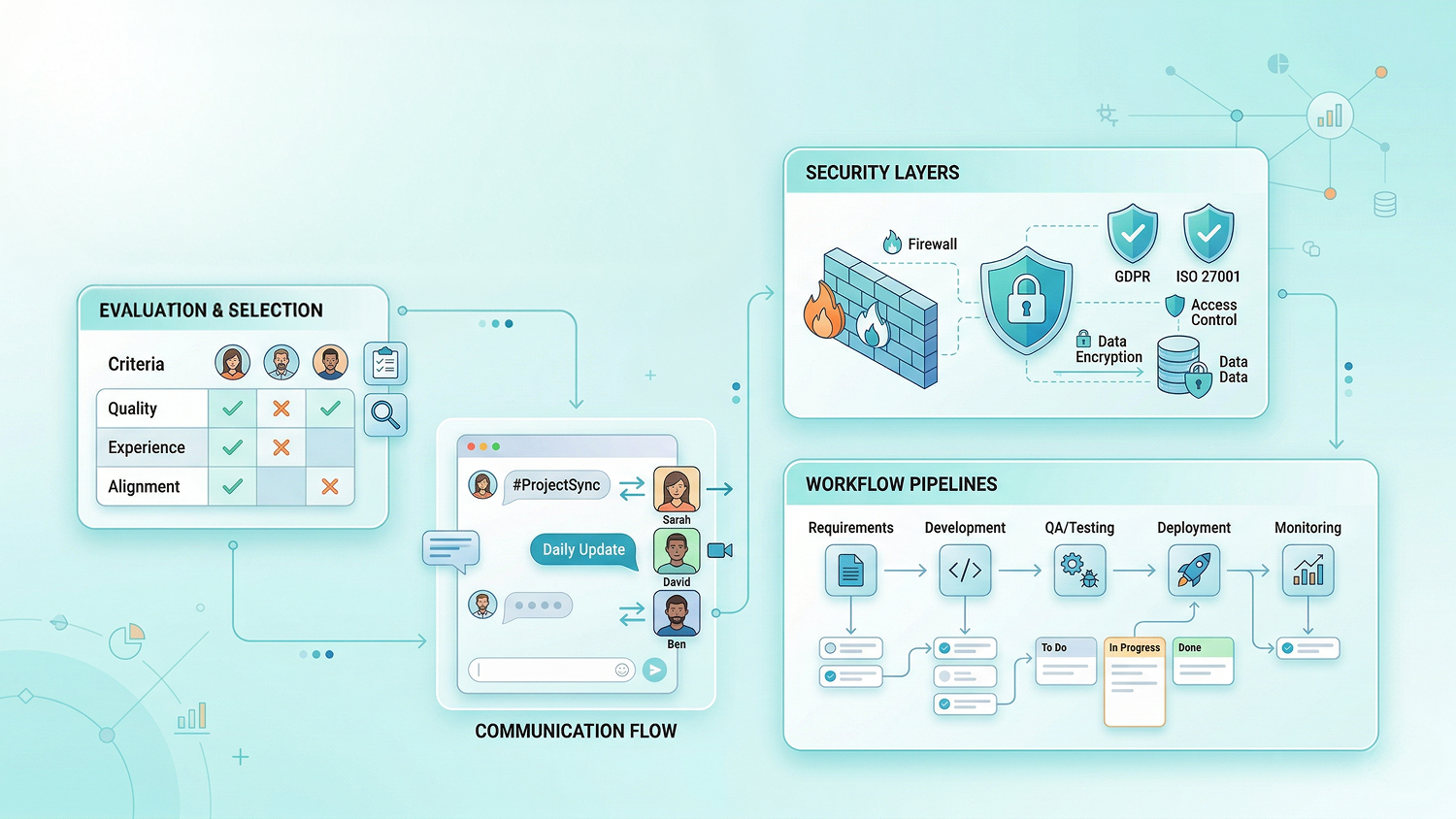
Daily syncs + shared tools = smooth collaboration.
4. Security & Compliance
Ensure compliance with GDPR, HIPAA, and SOC 2.
5. Quality Assurance
Embed QA in every development phase.
6. Tech Stack Alignment
Ensure both teams use compatible technologies.
Outsourcing Risk Mitigation Flow
Clear Scope → Strong Communication → Continuous QA → Risk Reduction → Successful Delivery
The Outsourcing Partner Selection Process
1. Evaluate Expertise
Check tech stack and industry experience.
2. Review Case Studies
Look for real results and scalability.
3. Choose Pricing Model
- Fixed Price
- Time & Material
- Dedicated Team
4. Ensure Transparency
Use tools like Jira, Slack, and GitHub.
DEVtrust Case Studies
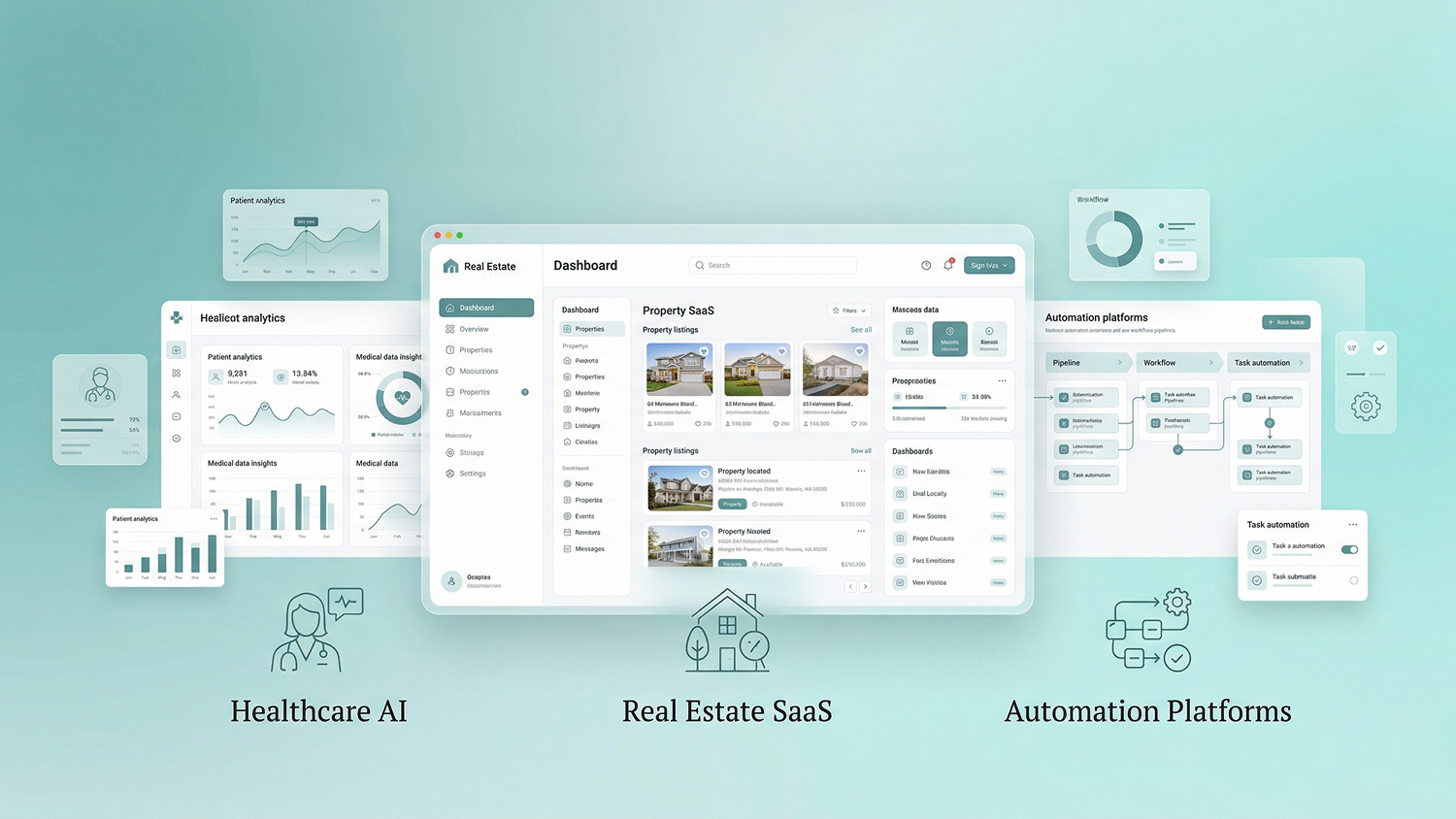
1. Healthcare AI Platform
- Mental health scoring (PHQ-9 / GAD-7)
- AI-driven insights
- EHR integrations
Impact: Faster clinical decisions + reduced workload
2. SOAP Notes Automation System
- Voice-to-text transcription
- AI-generated clinical notes
Impact: 60% reduction in documentation time
3. Coachability Group Marketplace
- Booking + payments + scheduling
Impact: Scalable UK-based sports marketplace
4. Employee AI Chatbot
- Real-time voice AI
- Policy-trained responses
Impact: Reduced HR workload significantly
Cost of Outsourcing Software Development
Average Cost Range
| Project Type | Cost Range |
|---|---|
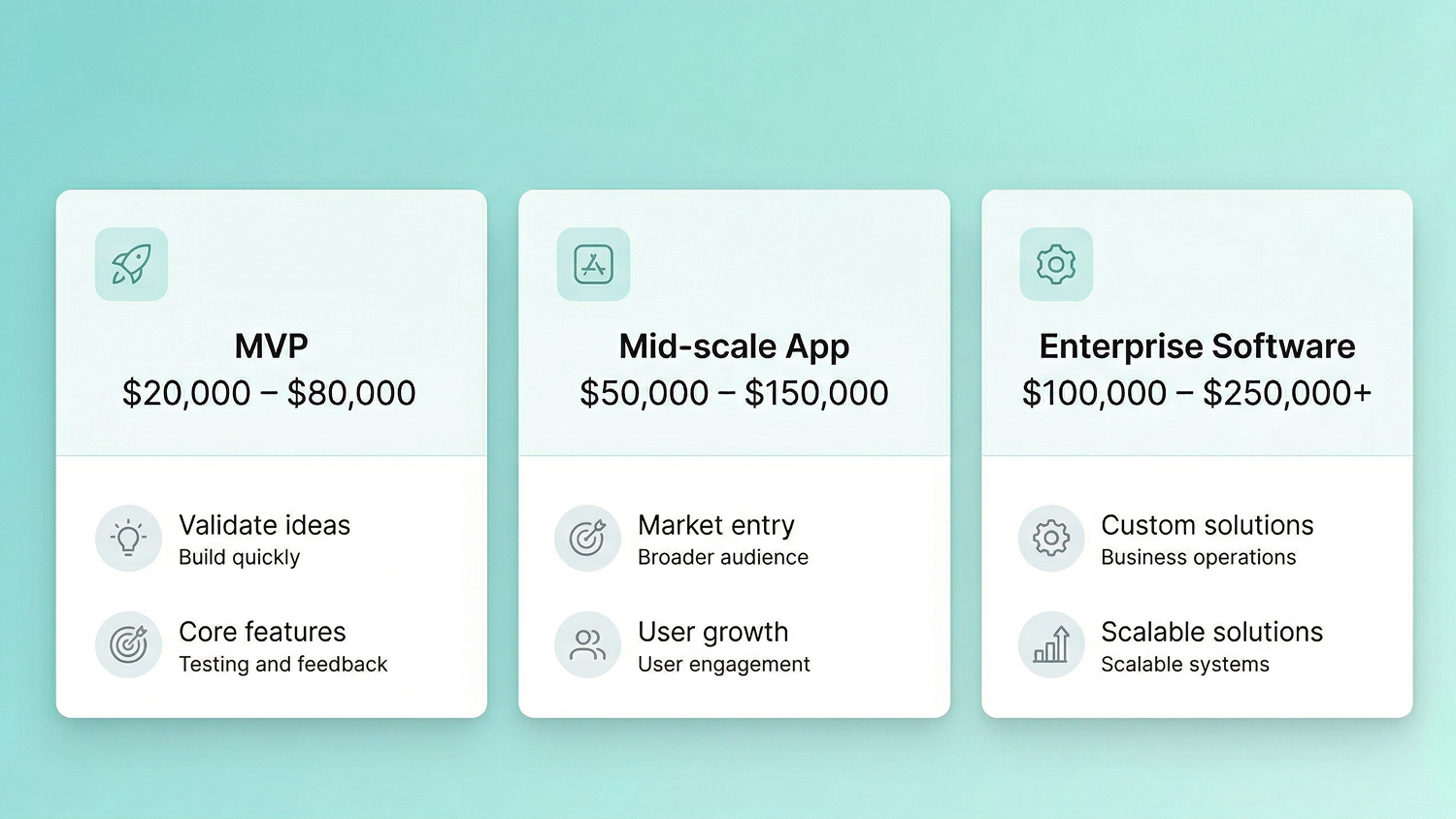
| MVP | $20,000 – $80,000 |
| Mid-scale App | $50,000 – $150,000 |
| Enterprise Software | $100,000 – $250,000+ |
Cost vs ROI Diagram
Low-Cost Vendor → Poor Quality → Delays → Higher Cost Later
Reliable Partner → Better Code → Faster Launch → Higher ROI
Key Steps to Successfully Outsource
Step-by-Step Process
Define Goals → Choose Model → Select Vendor → Contract → Kickoff → Develop → Deploy → Support
Common Outsourcing Challenges
| Challenge | Impact |
|---|---|
| Communication gaps | Delays |
| Time zone issues | Slower feedback |
| Security risks | Data exposure + |
| Quality issues | Rework |
Best Practices for Successful Outsourcing
- Set KPIs from Day 1
- Use Agile methodology
- Weekly sprint reviews
- Continuous feedback loops
- Strong documentation
Where to Outsource in 2026?
| Region | Strength |
|---|---|
| Eastern Europe | High-quality engineering |
| Latin America | Time-zone alignment |
| Asia (India) | Cost-effective + scalable+ |
Trends in Software Outsourcing, 2026
- AI-powered development
- Low-code platforms
- Cybersecurity-first approach
- Nearshoring growth
- Sustainable development
Common Myths
| Myth | Reality |
|---|---|
| Outsourcing = Low Quality | Depends on partner |
| Only for cost saving | Strategic advantage |
| Freelancers = Same | Lack of scalability |
Why DEVtrust?
DEVtrust delivers reliable outsourcing through:
- Full-stack development (React, Node, Django)
- AI/ML capabilities
- Cloud (AWS, Azure, GCP)
- Compliance (HIPAA, GDPR)
- Scalable SaaS architecture
Conclusion
Software outsourcing in 2026 is no longer optional; it is essential for scaling fast, reducing risk, and accessing global expertize.
Ready to Build with MLaaS?
Partner with DEVtrust to build secure, scalable, AI-powered applications.
Let’s turn your idea into a reliable product.
Frequestly Asked Questions
Related Articles

Software Development Outsourcing
An Ultimate Guide to Python Software Development in 2026

Software Development Outsourcing
Outsource SaaS Development in 2026: Benefits and Risks
Software Development Outsourcing