Outsourcing software development can be a daunting decision. Companies face the challenge of balancing cost, quality, and efficiency when seeking the right partner. If you’re considering outsourcing to India, you’re not alone in seeking solutions to these complex problems.
India dominates the global IT outsourcing market, capturing a 40-50% share. This reflects India’s strong reputation for delivering quality software development services at a much lower cost than what’s typical in the US and Europe. Many companies are turning to India for skilled talent and affordable pricing.
In this blog, we’ll explore the key benefits of outsourcing to India, how to select the right partner, common challenges to watch out for, and tips for a successful collaboration. You’ll also find insights on outsourcing models and how to mitigate risks effectively.
Key Takeaways:
- Cost Savings: Outsourcing software development to India can reduce labor costs, offering significant savings for US businesses.
- Skilled Talent: India has over 5 million IT professionals, providing access to a vast and highly skilled workforce.
- Flexible Models: There are several outsourcing models to choose from, including project-based, dedicated teams, and staff augmentation.
- Security & Compliance: Ensuring SOC 2/PCI-DSS-compliant partners reduces breach and penalty risk when you outsource to India.
- Effective Collaboration: Clear communication and a good cultural fit are key to a successful partnership when outsourcing to India.
Why Outsource Software Development to India?
Outsourcing software development to India is a smart choice for companies looking to optimize costs while maintaining access to a highly skilled talent pool. India’s outsourcing industry has been growing for years, providing US-based companies with top-tier developers at a fraction of the cost of hiring locally.
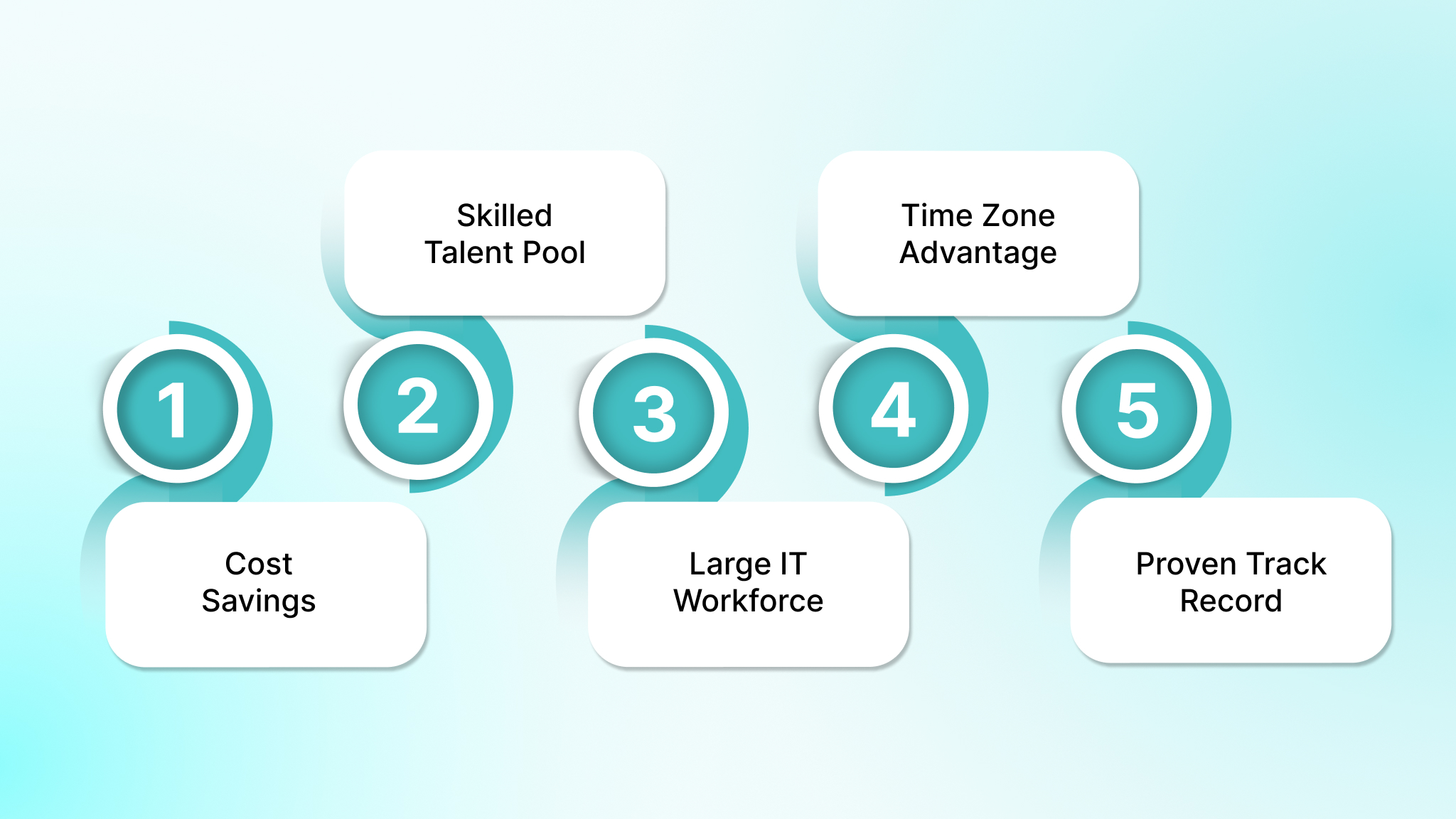
Here’s why outsourcing to India makes sense:
- Cost Savings: Outsourcing to India can save up to 70% on labor costs compared to hiring in the US. This makes it a clear choice for companies that need to maximize their budgets without sacrificing quality.
- Skilled Talent Pool: India produces around 1.5 million engineering graduates annually. This ensures a steady supply of qualified developers who are well-versed in a wide range of programming languages and frameworks. Whether you’re working with Java, Python, or React, there’s no shortage of expertise.
- Large IT Workforce: India is home to over 5.1 million IT professionals, offering access to a diverse pool of talent. This extensive workforce allows companies to find developers with the precise skill set they need, whether for specialized tasks or scaling up development quickly.
- Time Zone Advantage: India’s time zone allows for round-the-clock development. By outsourcing, you can keep your project moving while your US-based team sleeps. This “follow-the-sun” model ensures faster turnaround times and continuous productivity, leading to quicker time-to-market.
- Proven Track Record: India has been a leader in IT outsourcing for decades, with companies worldwide relying on Indian developers for their expertise and reliability. With this track record, you can trust India to handle both the scalability of your project and the integrations required to build complex systems.
Once you’ve decided that India is the right destination, it’s crucial to pick the outsourcing model that fits your needs.
Best Outsourcing Models for Software Development
Different models offer flexibility depending on the scale and complexity of your project. Understanding these models will guide you in choosing the right model that meet your unique needs and achieve your objectives.
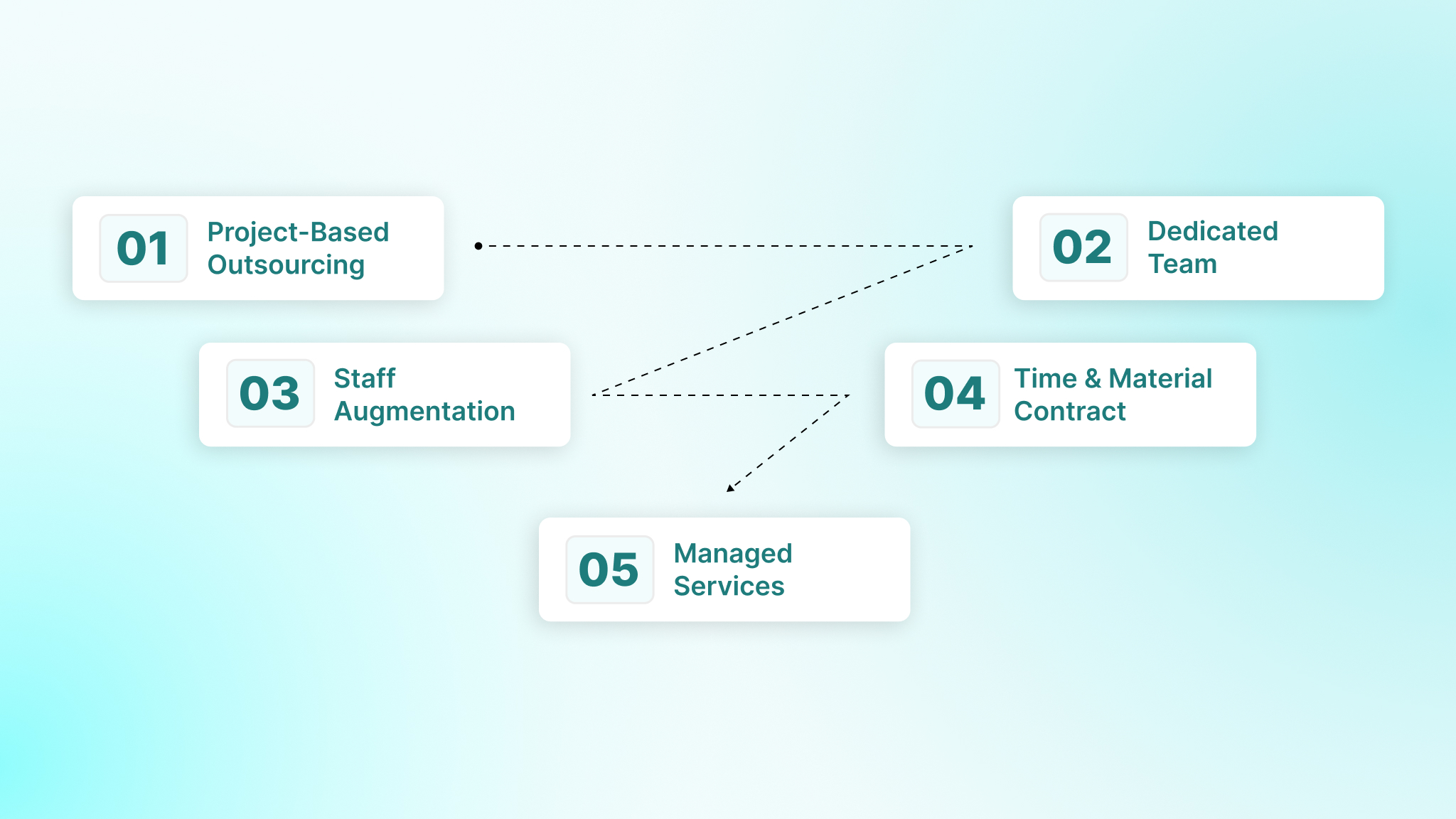
Here are the standard outsourcing models to consider:
Project-Based Outsourcing:
This model is ideal for short-term, well-defined projects. If you have a clear set of deliverables and a fixed timeline, project-based outsourcing is a cost-effective option. With this model, your outsourcing partner focuses on achieving specific milestones within the agreed timeframe. This works well for MVPs, web apps, or software tools with defined features.
Example: A startup wants to build a customer-facing portal with limited features and a set deadline.
Dedicated Development Team:
A dedicated team model is best suited to long-term projects. Your outsourcing partner assigns a team that works exclusively on your product. This model offers flexibility in terms of scaling the team and adjusting the scope as needed. It’s particularly useful for projects that require consistent, ongoing attention, such as enterprise software or complex platforms.
Example: A fintech company needing continuous updates and new features for their trading platform over several months.
Staff Augmentation:
When your internal team needs to expand temporarily, staff augmentation allows you to hire specific developers for short-term needs or specialized skills. This model is excellent if you already have a team but need additional expertise, whether it’s front-end development, backend engineering, or database management.
Example: A SaaS company needing additional backend developers for a specific module or feature but already having a core team in place.
Time and Material Contract:
This model is ideal for projects where requirements are flexible, and timelines may change. Payment is based on the actual time and resources used. It’s suitable for projects that evolve with the product or have a shifting scope, such as a beta version of a product that requires iterative development based on user feedback.
Example: An e-commerce platform that needs ongoing updates based on market trends, with constantly changing feature requirements.
Managed Services:
In this model, the outsourcing partner handles everything from development to deployment, ensuring you receive a complete, end-to-end solution. Managed services are well-suited for projects that require close oversight, strong security, and long-term maintenance. Your partner will manage scalability, integrations, and future updates as part of the overall service package.
Example: A healthcare company outsourcing the development and ongoing support of a secure, HIPAA-compliant patient management system.
With the right model in place, it’s time to consider the other essential aspects that will impact your outsourcing success.
Key Factors to Keep in Mind When Outsourcing
Before finalizing your outsourcing decision, consider several important factors. These considerations ensure your project is completed successfully while maintaining control over key elements, including quality, security, and legal requirements.
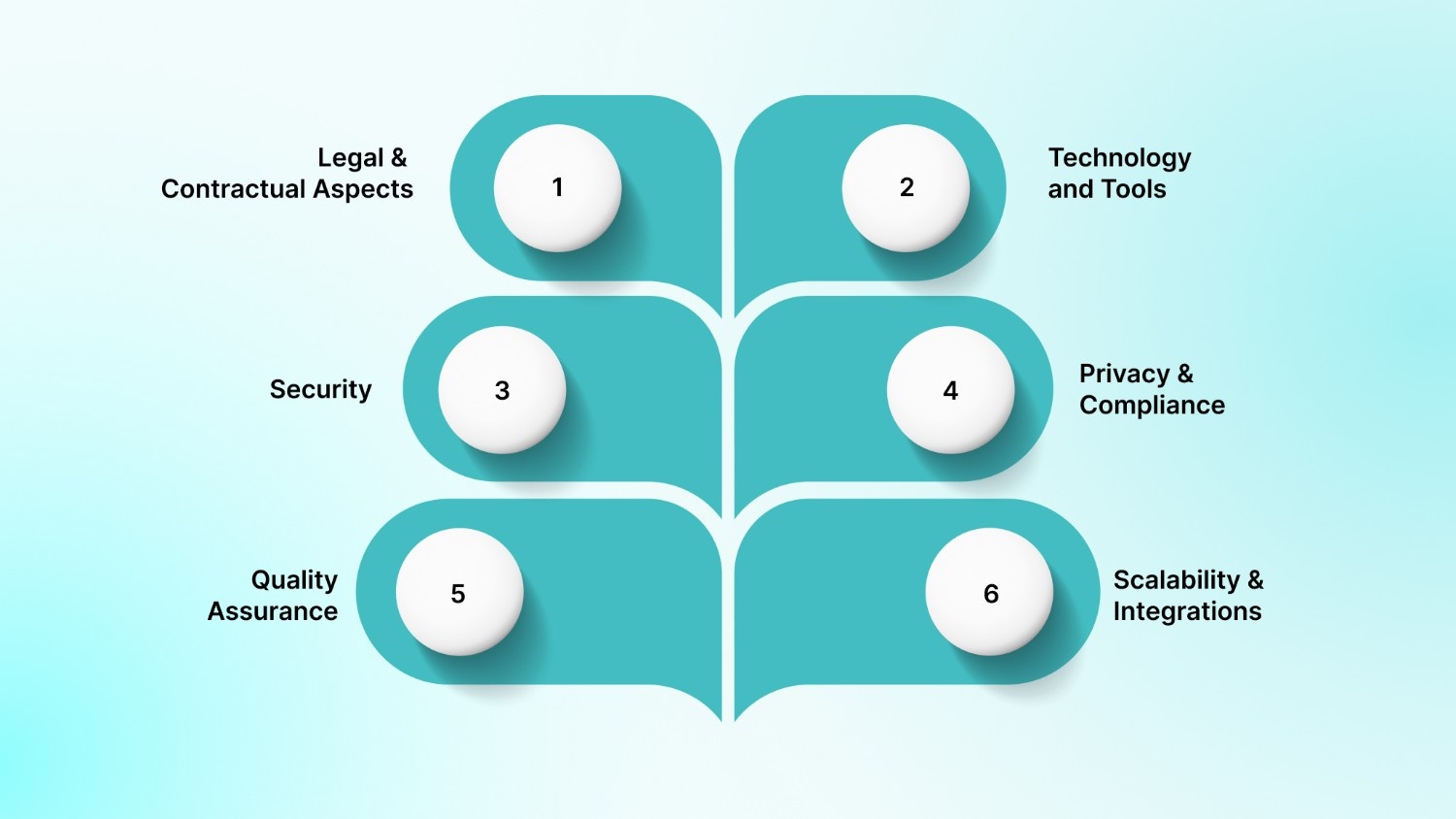
Here are the key considerations when outsourcing software development to India:
- Legal and Contractual Aspects:
Ensure the master services agreement (MSA) defines full IP transfer and includes source code escrow clauses for missed milestones. Set Service Level Agreements (SLAs) for 99.9% API uptime during peak usage. Choose arbitration in neutral jurisdictions like New York or London for resolving cross-border disputes.
- Technology and Tools:
Your outsourcing partner should be proficient in scalable architectures. Containerized deployments (e.g., Docker and Kubernetes) are essential for managing user spikes, especially if you’re expecting rapid growth or need to handle large-scale traffic. Ensure your partner can deploy solutions on AWS, Azure, or Google Cloud Platform (GCP) to scale efficiently.
For integrations, check for experience with OAuth2 for secure login, Plaid for financial transactions, Twilio for SMS alerts, Stripe for payment processing, and Salesforce for CRM hooks. If your project involves AI or mobile development, confirm their expertise in tools like TensorFlow, PyTorch, React Native, or Flutter, depending on your app’s specifications.
- Security:
Security is non-negotiable when outsourcing software development. Ensure your partner holds SOC 2 Type II certification for SaaS applications and PCI-DSS Level 1 validation if handling card payment data. Mandate AES-256 encryption for data both in transit and at rest.
Your partner should also perform regular penetration testing using tools like Burp Suite, OWASP ZAP, or Snyk to identify and address vulnerabilities. In addition, inquire about their use of zero-trust security models, which can protect sensitive AI training data from being exposed to production environments.
- Privacy and Compliance:
Data privacy regulations vary by region, so ensure your outsourcing partner aligns with relevant laws. If the project involves Indian data processors handling US data, they must comply with the Digital Personal Data Protection Act (DPDP).
For projects with EU traffic, verify that your partner adheres to GDPR Article 28 processor agreements and conducts Data Protection Impact Assessments (DPIAs). For US healthcare projects, confirm that the partner meets HIPAA requirements, and for California users, ensure that CCPA opt-out mechanisms are integrated into your backend.
- Quality Assurance:
Demand automated testing pipelines using Jenkins or CircleCI, with a minimum of 85% test coverage. For mobile apps, request testing across multiple device types and OS versions. For AI models, ensure bias audits and A/B testing are performed before release.
- Scalability and Integrations
Scalability is crucial for any project, especially as user demands grow. Ensure your outsourcing partner is prepared to handle horizontal scaling with load balancers, distributed databases (e.g., MongoDB, Cassandra), and caching layers (e.g., Redis).
For seamless operation, verify that your partner has experience integrating with Enterprise Resource Planning (ERP) systems like SAP, data analytics platforms like Snowflake or Power BI, and key FinTech APIs such as Plaid and Stripe.
As you evaluate these considerations, it’s crucial to know how to find the right partner to bring your vision to life.
How to Select the Right Outsourcing Partner in India
Choosing the right outsourcing partner is essential for the success of your software development project. By focusing on key factors, you can make a well-informed decision and ensure effective collaboration.
Here are some tips for choosing the right software development partner:
- Audit Their Engineering Culture:
Ask for internal code review guidelines to assess their standards for quality and consistency. Request a walkthrough from their Lead Architect to understand their approach to scalability and concurrency in high-traffic projects. Check their GitHub maturity by reviewing their commit messages for clarity and detail.
- Check their reputation and delivery history:
Review client testimonials, case studies, and ratings on review platforms such as Clutch and G2. Use those data points to verify on‑time delivery records, quality of output, and long-term client retention.
- Direct Developer Access for Clear Communication:
Ensure you have direct access to developers via Slack or Teams. This helps eliminate communication delays. Require Loom videos for asynchronous updates to avoid misunderstandings and ensure clarity.
- Ensure Operational Overlap and “Follow the Sun” Model:
Define a mandatory overlap window (e.g., 8:00 AM – 11:30 AM EST) to ensure real-time collaboration during your business hours. Make sure they have an on-call rotation system in place for handling critical issues outside of their regular working hours.
- Clear IP and Legal Protections in Contracts:
Ensure the contract specifies immediate IP transfer to your company upon creation. This avoids the risk of the outsourcing partner holding the code hostage. The contract should also include indemnification provisions in case of IP infringement claims.
- Look for Pushback, Not Just “Yes” Men:
Test their ability to push back on unrealistic or bad architectural suggestions. If they agree to every idea without concern, it may indicate they are not invested in the best possible solution for your project.
- Scalability and Post-Launch Support:
Ensure that the partner is capable of scaling infrastructure with tools like Terraform for Infrastructure-as-Code, and ensure you have full access to your own servers from Day 1. Confirm that they implement QA automation (e.g., Cypress or Playwright) throughout the development process to ensure consistent quality.
With a clearer picture of how to choose a partner, let’s take a closer look at how DEVtrust can assist you.
How DEVtrust Can Ensure Your Project’s Success
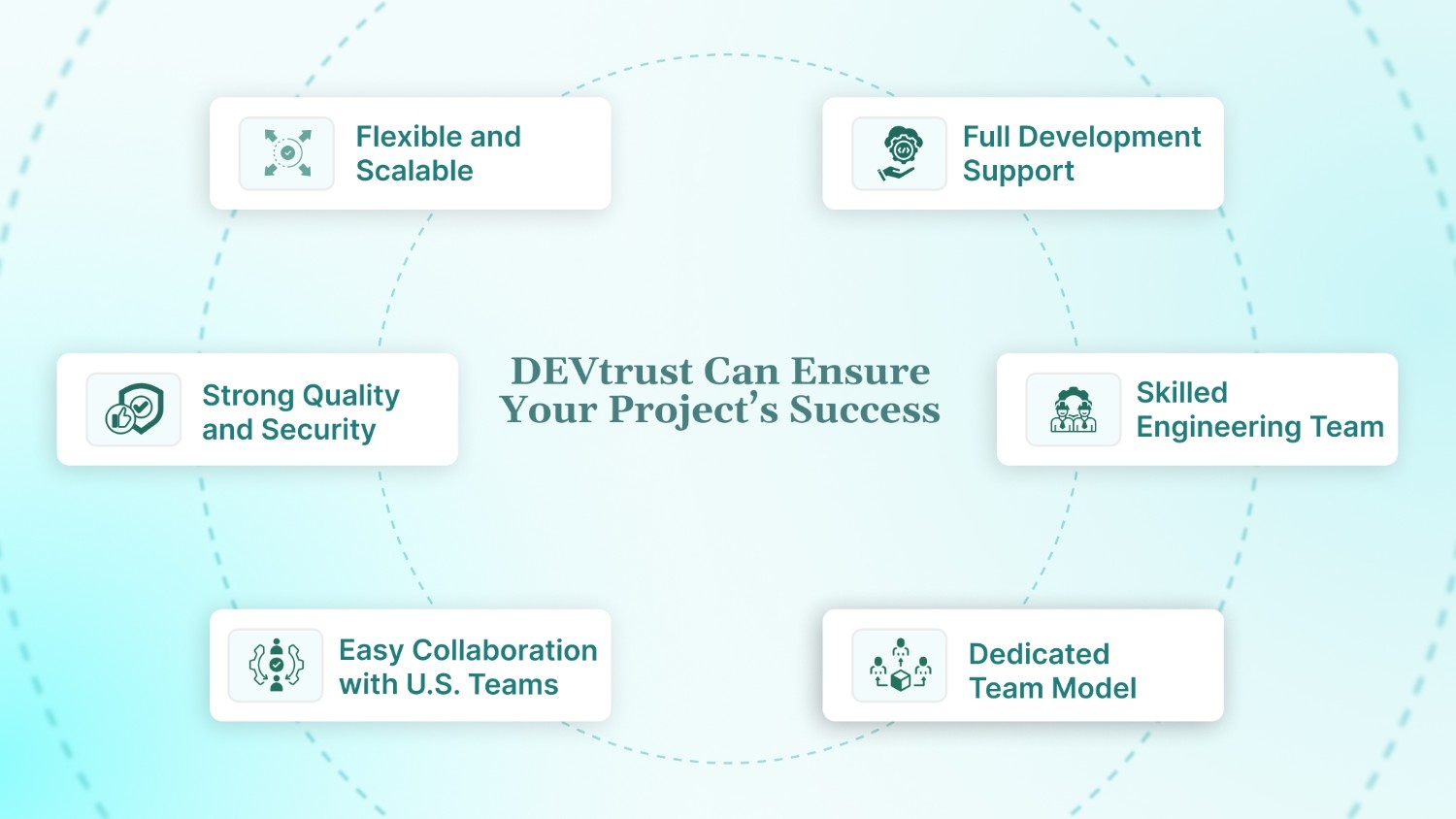
At DEVtrust, we help businesses like yours manage the complexities of outsourcing software development by offering structured, transparent support throughout the project lifecycle.
Whether you’re building a FinTech platform, a cloud app, or a mobile solution, we ensure your project is secure, scalable, and aligned with your business goals. Here’s how DEVtrust can assist you in achieving your software development goals:
- Full Development Support:
We cover every aspect of software development, from product discovery to UX/UI design, architecture, development, testing, and CI/CD pipeline setup. Our teams use modern tech like React Native, Node.js, and AWS to deliver reliable, scalable applications.
- Skilled Engineering Team:
Our engineers specialize in building microservices, cloud architectures, and handling complex integrations, including payment gateways, AI/ML models, and cloud services for seamless app deployment.
- Dedicated Team Model:
You’ll have a consistent team focused solely on your project. Our developers, QA engineers, and project managers work with you through every iteration, ensuring deep understanding and continuity across releases.
- Easy Collaboration with U.S. Teams:
We follow agile delivery, using tools like Jira and Slack for clear communication. Our overlapping hours with U.S. teams ensure quick feedback, progress tracking, and flexible task reprioritization.
- Strong Quality and Security:
We prioritize secure coding practices, peer reviews, and automated testing. For industries like FinTech and HealthTech, we ensure compliance with SOC 2 and PCI-DSS standards, protecting your data from the start.
- Flexible and Scalable:
DEVtrust lets you start with a small core team to validate an MVP and scale quickly as your product grows, minimizing the need for re-hiring or re-onboarding talent.
Ready to see how we’ve helped other businesses? Explore our case studies to learn more about our successful projects.
Conclusion
Outsourcing software development to India offers significant benefits, including lower costs and access to highly skilled professionals. By selecting the right partner, you can ensure your project stays on track, within budget, and meets all quality expectations.
If you’re ready to start your outsourcing journey, DEVtrust is here to help. Our skilled team is here to create personalized solutions that address the specific needs of your business, ensuring success at every step.
Frequestly Asked Questions
Related Articles
Software Development Outsourcing
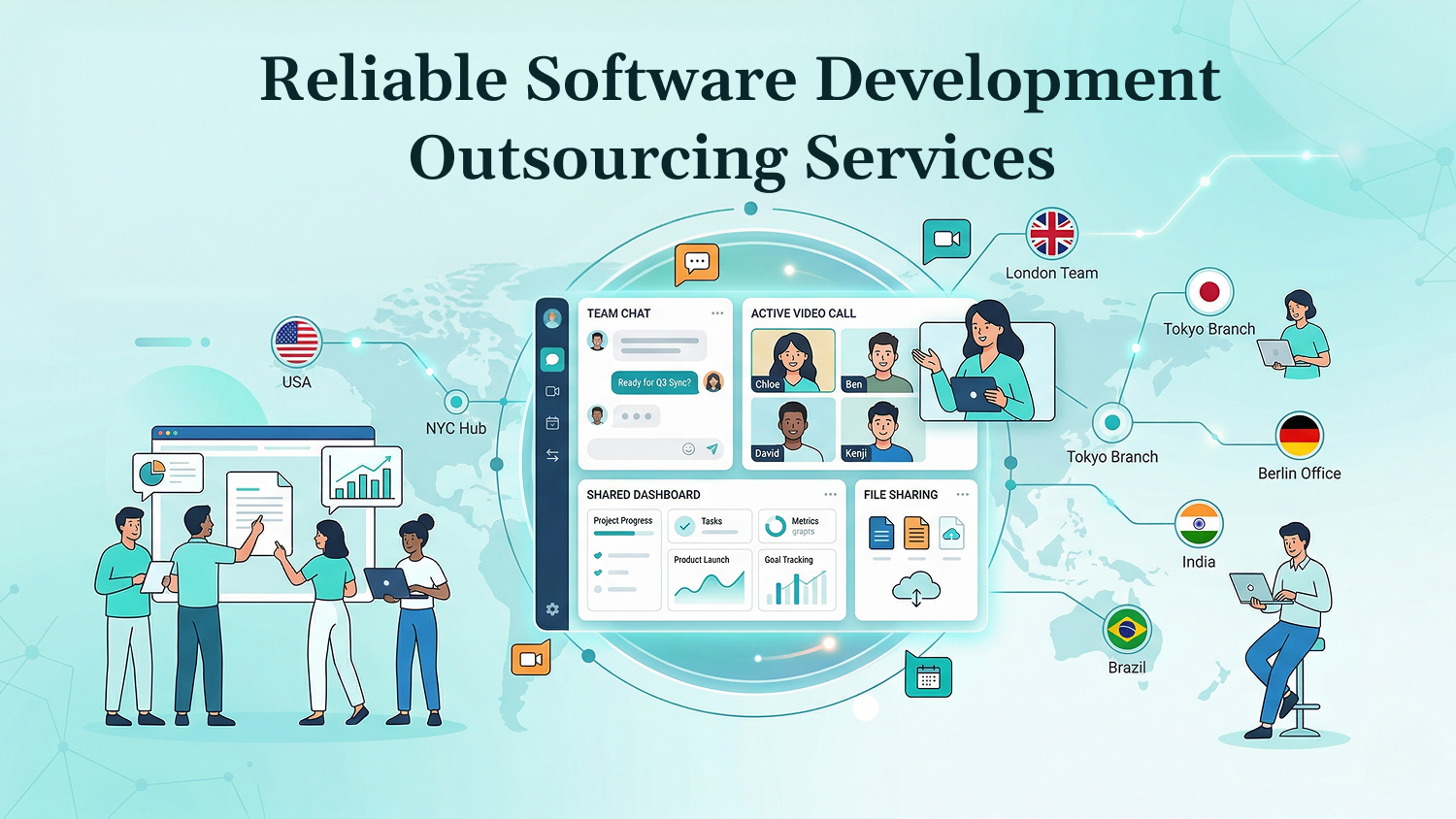
Reliable Software Development Outsourcing Services

Software Development Outsourcing
An Ultimate Guide to Python Software Development in 2026
Software Development Outsourcing