In the early stage of a startup, every resource feels stretched. You are shaping the product, speaking to users, refining your model, and preparing for investor conversations. But at some point, ideas and mockups are not enough. You need a working MVP that real users can interact with.
Hiring a full engineering team may seem ideal, but the salaries, benefits, onboarding, and long hiring cycles make it unrealistic for most early-stage companies.
Outsourcing software development for startups fills this gap. It gives you fast access to skilled developers without the operational load of building an internal team. When handled well, it helps you move quickly, stay lean, and keep your focus on the business and your users.
This blog walks through how startups can effectively outsource software development, the models to consider, the benefits to expect, and how to choose the right partner.
Key Takeaways
- Startups use outsourcing software development to move faster, reduce costs, and access skilled engineers without building a full in-house team.
- The right outsourcing model, whether fixed-price, dedicated team, or staff augmentation, depends on your startup’s stage, scope, and budget.
- Outsourcing helps deliver MVPs quickly, scale teams on demand, and fill domain or technical gaps while keeping founders focused on the business.
- Choosing a strong partner like DEVtrust ensures reliable processes, clear communication, solid engineering practices, and long-term support from MVP to launch.
What Is Software Development Outsourcing?
Software development outsourcing refers to hiring an external team to handle part or all of your product’s engineering work. This can involve bringing in a few developers for specific tasks or partnering with a full-service company that manages architecture, design, development, testing, and post-launch support.
For startups, outsourcing is often the most practical way to gain technical capability. It eliminates long hiring cycles, training costs, infrastructure needs, and permanent payroll. Instead, you get immediate access to engineers who understand modern technologies and product workflows.
Companies like Alibaba, GitHub, Slack, and Upwork accelerated their growth by strategically outsourcing. Their results show that the right partner can speed up delivery, improve product quality, and keep development budgets under control.
This is why choosing a partner with strong experience and startup-ready processes matters. A team like DEVtrust, skilled in mobile, web, backend, and cloud development, can help early-stage startups move faster with far more clarity.
Before moving forward, the question becomes: Is outsourcing the right fit for your startup?
How to Know if Outsourcing Is Right for Your Startup
Outsourcing becomes a smart choice when your startup needs speed and flexibility without expanding permanent headcount. It is often the right fit if:
- You need an MVP built in eight to twelve weeks.
- Your team lacks the technical expertise required for the next stage.
- You want predictable project-based or monthly costs.
- You require development help for a specific phase rather than long-term headcount.
- You have a clear roadmap, but not enough internal capacity to deliver it.
If these situations feel familiar, outsourcing can help you move faster, maintain quality, and stay focused on growing the business. Let’s see why so many startups lean on it, especially in their early build phase.
Why Startups Choose to Outsource Software Development
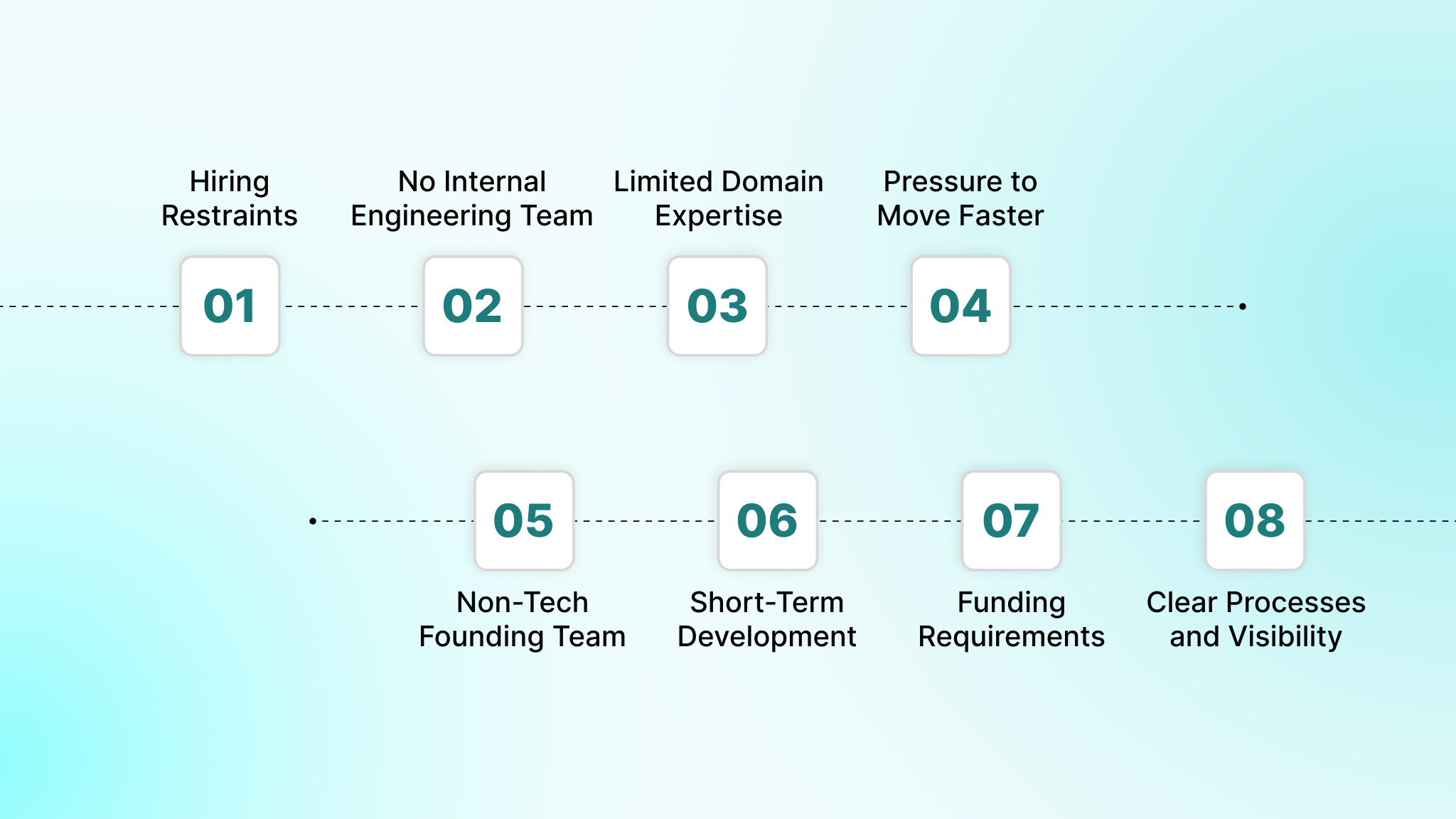
Startups outsource for reasons that go well beyond cost savings. Outsourcing gives them speed, flexibility, and access to talent they wouldn’t otherwise have. Here are the factors that make it a strong choice for early-stage companies.
- Hiring Restraints: Building an in-house engineering team is expensive and time-consuming. Recruiting specialists, offering competitive salaries, and setting up infrastructure can drain resources quickly. Outsourcing gives you instant access to skilled developers without long-term commitments.
- No Internal Engineering Team: Most young startups cannot afford to hire, train, and manage a complete development team. Outsourcing fills this gap immediately and allows founders to start building without waiting months for hiring cycles to finish.
- Limited Domain Expertise: Some industries, like fintech, healthcare, or logistics, require specific technical and regulatory knowledge. Partnering with vendors experienced in these domains ensures accurate execution without lengthy talent searches.
- Pressure to Move Faster Than Competitors: Nearly 19% of startups fail because competitors reach the market sooner. Outsourcing accelerates development with ready-to-go teams, established workflows, and efficient delivery practices that help you ship faster.
- Non-Tech Founding Team: Founders without engineering backgrounds often struggle to manage development. Outsourcing provides both technical leadership and day-to-day execution so founders can focus on strategy and growth.
- Short-Term Development Needs: Startups often need help for a specific phase, like a prototype or MVP. Outsourcing offers flexible, short-term support without the cost of full-time hires.
- Funding Requirements: Outsourcing reduces expenses tied to hiring, onboarding, turnover, and infrastructure. Models like dedicated teams or hourly billing also make budgets easier to plan and manage.
- Clear Processes and Visibility: Strong outsourcing partners use structured methods such as Agile, sprint reviews, dashboards, and regular updates. This gives you clear visibility into progress at every stage.
These reasons explain why many startups turn to outsourcing, but the real impact becomes even clearer once development begins.
Key Benefits of Outsourcing Software Development for Startups
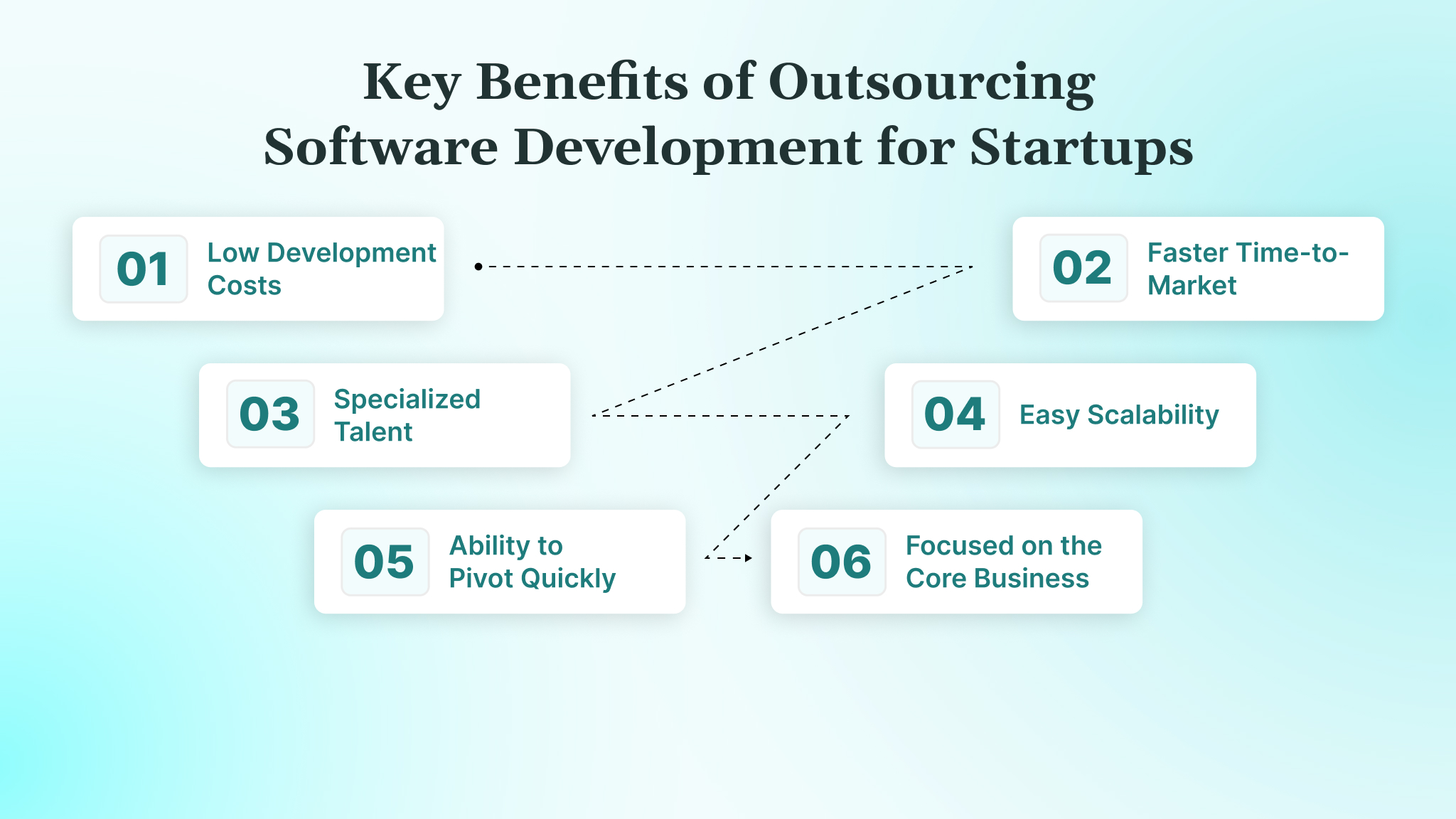
Outsourcing gives startups the speed, flexibility, and expertise needed to build strong products without stretching budgets. Here are the advantages that make it such a practical choice.
- Lower Development Costs
Startups run on tight budgets, and outsourcing helps those funds stretch much further. By replacing full-time salaries with project-based or monthly engagements, overall expenses can drop significantly. You avoid recruitment, onboarding, infrastructure, and long-term payroll costs, while benefiting from lower global labor rates. It is no surprise that a Deloitte survey found 70% of companies outsource primarily to reduce development costs.
- Faster Time-to-Market
Speed matters in competitive markets. Outsourced teams already have the tools, workflows, and experience needed to start quickly. With no hiring delays, startups can build prototypes, MVPs, and full products faster and reach users or investors sooner.
- Access to Specialized Talent
Modern products require skills in cloud systems, cybersecurity, AI, mobile, and more. Outsourcing gives startups direct access to senior engineers, architects, designers, QA specialists, and DevOps experts without long recruitment cycles. This ensures your product is built with the right technical foundation.
- Easy Scalability
Startup needs change rapidly. You may need a larger team during MVP development and a smaller team after launch. Outsourcing makes it easy to scale resources up or down without layoffs or added overhead, keeping your burn rate under control.
- Ability to Pivot Quickly
Markets shift fast, and startups often adjust features, positioning, or even entire product directions. Outsourced teams can adapt to new priorities more easily than fixed in-house teams. This agility helps you respond to user feedback and refine the product without slowing down.
- Stronger Focus on the Core Business
Delegating engineering work frees founders to focus on customers, strategy, fundraising, and growth. Instead of getting pulled into technical management, you stay focused on building the business.
With these benefits in place, it becomes easier to see how outsourcing compares to building a full in-house team, especially when budgets and timelines are tight.
In-House vs. Outsourcing Software Development for Startups
How does outsourcing compare to building an in-house team? This simple side-by-side view highlights the key differences.
| Hiring model | Price | Time | Expertise | Experience |
| In-house | Higher due to salaries, benefits, tools, and infrastructure | Slower because team growth depends on local hiring | Limited to your internal team and local talent pool | Deep understanding of your culture and workflows |
| Outsourcing | Lower since overhead and labor costs are reduced | Faster because you can scale resources immediately | Access to a global pool of specialized talent | Depends on the vendor’s experience with similar projects |
In practical terms, outsourcing gives startups a flexible and scalable development team with broader expertise at a much lower cost than hiring internally. The main tradeoff is that outsourced teams won’t have the same cultural familiarity as in-house staff. Still, for early-stage companies, this is rarely a major concern compared to the speed and cost advantages.
If outsourcing feels like the better fit, the next step is choosing the right engagement model for your product and budget.
Outsourcing Models Every Startup Should Understand
Choosing the right outsourcing model is just as important as selecting the partner. Startups typically use one of the following approaches depending on their stage, budget, and product goals.
Engagement Models (Based on Work Structure)
| Model | Best For | Pros | Cons |
| Fixed Price | Small, well-defined MVPs or clearly scoped features | Predictable cost and timeline | Not ideal for evolving or research-heavy projects |
| Time and Materials | Projects where the scope may change | High flexibility and transparent billing | Requires active involvement and clear backlog priorities |
| Dedicated Team | Long-term product development | Strong ownership, consistent velocity, predictable monthly cost | Needs steady direction and communication |
| Staff Augmentation | Adding specialists to an existing team | Quick access to niche expertise without full-time hiring | Still requires internal leadership to guide work |
Engagement Models (Based on Location)
Engagement models can also differ based on geography:
| Model | Best For | Pros | Cons |
| Onshore | Projects needing tight collaboration | Strong cultural alignment and easy communication | Highest cost |
| Nearshore | Teams in nearby regions with overlapping hours | Smooth communication at a moderate cost | Talent availability differs by region |
| Offshore | Cost-efficient, scalable development | Most affordable and widely used | Requires structured processes and clear communication |
Each model comes with its own strengths, making it useful at different stages of your startup journey. Understanding where you stand helps you choose the approach that aligns best with your product and budget.
When Startups Typically Outsource Development
Startups turn to outsourcing at key moments in their growth. These are the stages where bringing in external development support creates the most value.
1. Proof of Concept and Prototype Development
In the earliest phase, speed and validation matter more than anything else. Startups often need quick prototypes to test assumptions and gather early feedback.
Why outsource?
- Fast delivery of mockups or clickable prototypes
- Immediate access to UI, UX, and engineering talent
- Early validation without hiring a full team
2. MVP Development
Launching an MVP is a major milestone. The goal is to ship a lean, functional version of the product that real users can try.
Why outsource?
- Faster execution with experienced, ready-to-start teams
- No need to hire full-time developers too early
- Access to full-stack talent, QA, and DevOps support
3. Full End-to-End Product Development
Some startups need complete development support across architecture, frontend, backend, QA, DevOps, and deployment.
Why outsource?
- One partner handling the entire product lifecycle
- Clear timelines and agile delivery processes
- Ideal for non-technical founders or lean teams
4. Technical Consulting and Strategy
Sometimes you need direction before execution, especially around technology choices, architecture, and scaling.
Why outsource?
- Guidance from experts who have built and scaled multiple products
- Strategic advice on stack selection, integrations, and cost-efficient solutions
- Better early decisions that prevent costly rework
Outsourcing is not tied to a single phase of the startup journey. It is a flexible resource you can lean on from idea to launch and beyond.
Knowing when to outsource is helpful, but knowing how to approach it is what protects your timeline, budget, and product quality.
A Practical Step-by-Step Strategy for Successful Outsourcing
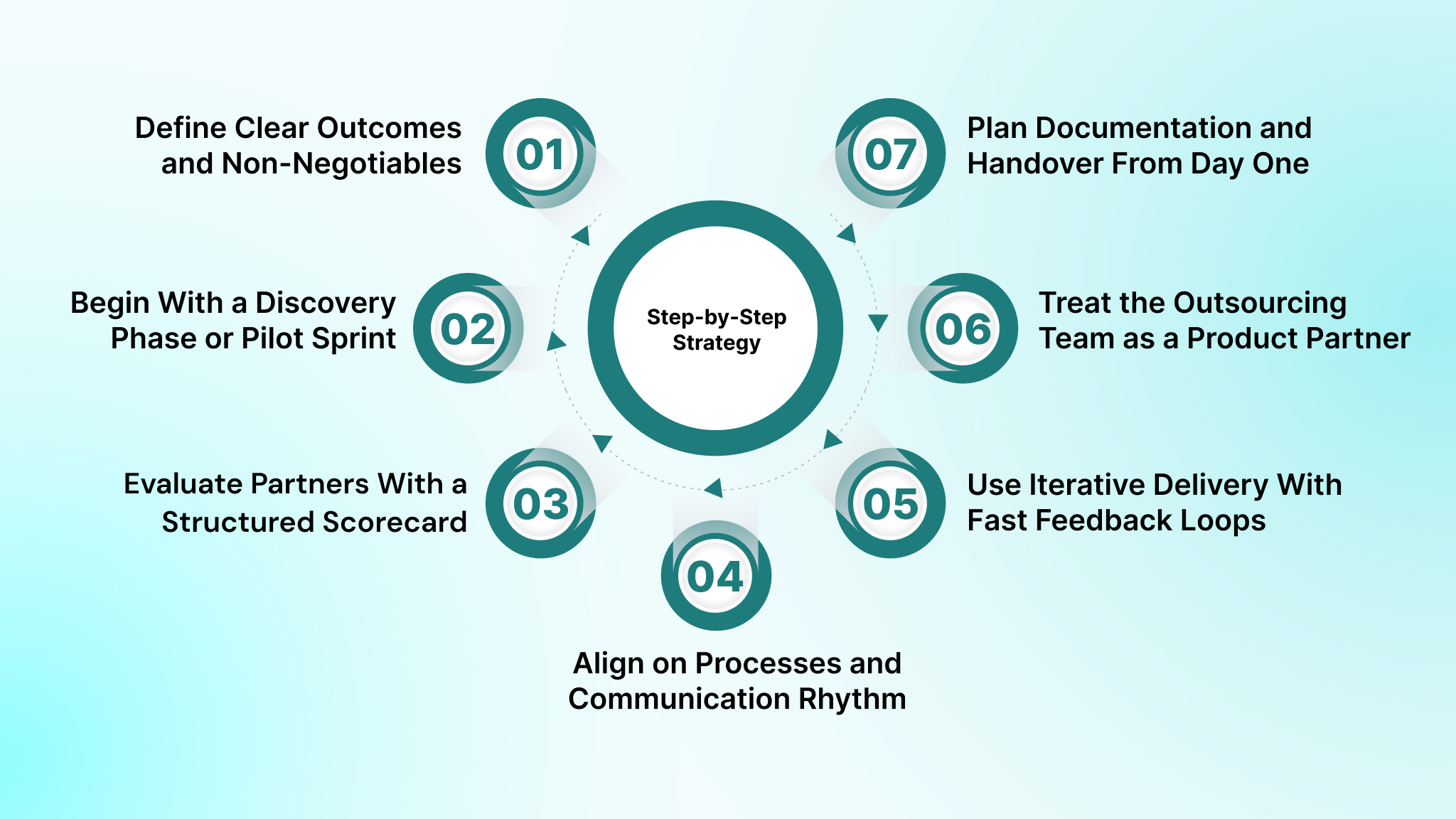
Outsourcing works best when startups approach it with structure and clarity. When your external team feels like a true partner, you get faster delivery, fewer risks, and stronger product outcomes. Here is a practical process founders can follow.
Step 1: Define Clear Outcomes and Non-Negotiables
Start by outlining what success looks like. Document core features, deadlines, KPIs, performance expectations, and the must-have scope for your MVP or next phase. Clear goals prevent rework and keep everyone aligned.
Step 2: Begin With a Discovery Phase or Pilot Sprint
Before signing a long-term contract, test the partnership through a short engagement. A discovery sprint clarifies requirements and architecture decisions. A pilot sprint shows how the team communicates, estimates, and delivers under real conditions.
Step 3: Evaluate Partners With a Structured Scorecard
Assess vendors on:
- Technical depth and domain experience
- Architecture and problem-solving ability
- Communication clarity
- Project management practices
- Cultural alignment
- References and track record
Focus on how the team explains decisions and handles uncertainties; this reveals their true capability.
Step 4: Align on Processes and Communication Rhythm
Set collaboration rules early. Establish weekly rituals such as sprint planning, standups, async updates, demos, and retros. Use shared tools for tracking work and documenting decisions. A predictable rhythm keeps progress visible.
Step 5: Use Iterative Delivery With Fast Feedback Loops
Break work into small increments and release it often. Each sprint should include testing and a demo. Frequent reviews help you spot issues early and refine features based on real user insights.
Step 6: Treat the Outsourcing Team as a Product Partner
You guide the roadmap and priorities; the external team handles execution. Expect them to flag risks, suggest improvements, and offer strategic input. Strong partnerships rely on shared ownership, not siloed work.
Step 7: Plan Documentation and Handover From Day One
Organize access controls, repositories, credentials, QA processes, and documentation templates early. Good documentation protects your codebase, reduces dependency on individuals, and makes future scaling easier.
Partners like DEVtrust follow structured sprint cycles, transparent reporting, and precise documentation, making the onboarding and delivery process smoother for startups.
A structured approach solves most operational challenges, but it is still important to understand the risks and how to manage them effectively.
Risks to Watch For When Outsourcing Development
Outsourcing can speed up development and reduce costs, but it also introduces challenges founders should plan for. Most of these risks are easy to manage when you set clear expectations and choose the right partner.
1. Communication and Time Zone Gaps: Working across regions can slow feedback or create misunderstandings.
How to avoid it: Establish fixed check-ins, use shared tools for updates, agree on overlapping hours, and define escalation rules for urgent issues.
2. Limited Visibility Into Daily Work: Because the team operates externally, it is harder to monitor progress.
How to avoid it: Rely on sprint reviews, weekly progress reports, shared dashboards, and well-documented tasks to keep everyone aligned.
3. Uneven Code Quality: Weak coding standards or missing documentation can lead to technical debt later.
How to avoid it: Set coding guidelines upfront, schedule regular code reviews, use automated testing, and make documentation part of the definition of done.
4. Security and IP Concerns: External access increases the need for strong data protection and clear IP ownership.
How to avoid it: Sign NDAs early, define IP rights in the contract, restrict access permissions, and confirm the vendor follows solid security practices.
5. Scope-Related Cost Surprises: Costs can rise if the scope is unclear or changes frequently.
How to avoid it: Create a detailed scope document, define how changes will be managed, and insist on transparent pricing.
6. Over-Reliance on a Single Vendor: Depending entirely on one partner can become a bottleneck if they face internal issues.
How to avoid it: Keep essential knowledge in-house, diversify vendors when needed, and review performance consistently.
7. Differences in Work Style or Culture: Varying approaches to decision-making or communication can slow progress.
How to avoid it: Choose vendors who have worked with startups like yours and align expectations from the start.
With the right partner and clear processes, these risks become manageable, allowing you to focus on building a strong product instead of firefighting issues.
How to Pick the Right Outsourcing Partner
Choosing the right outsourcing partner has a direct impact on the quality, speed, and stability of your product. Keep these factors in mind as you evaluate potential vendors:
- Technical Expertise That Matches Your Needs: Pick a team with experience in the technologies and product types you’re building. Review similar projects to see if they truly understand your space.
- A Portfolio and References You Can Trust: Look at their past work to judge quality and consistency. Speaking with former clients gives you real insight into how the team communicates and delivers.
- Clear and Consistent Communication: Good communication is essential when teams work remotely. Choose a partner that provides regular updates, follows structured sprint reviews, and responds quickly.
- Strong Processes and Project Management: A reliable partner works with a defined plan: discovery, sprint cycles, testing, and release schedules. Ask how they manage risks, deadlines, and changes.
- Reliable QA and Documentation: Quality assurance should be built into every sprint. Make sure they follow test-driven practices, conduct code reviews, and maintain proper documentation.
- Proper Security and IP Protection: Your code and data must stay protected. Check their security policies, access controls, and contract terms to ensure you retain full ownership of your product.
With these criteria in place, it becomes easier to identify a partner who fits your product vision and growth plans. That’s where DEVtrust stands out.
Why DEVtrust Is a Strong Choice for Startup Development
Startups need a development partner who understands the pressure to move fast, stay lean, and deliver a product that works from day one. DEVtrust is built for that kind of pace.
They provide a complete development setup, from discovery and architecture to UI/UX, engineering, QA, and post-launch support, so you don’t have to coordinate with multiple vendors or spend time managing technical details.
Here’s why DEVtrust works well for early-stage companies:
- End-to-end product development covering everything from planning to maintenance.
- A workflow designed for startups with quick iterations, lean planning, and clear priorities.
- Skilled engineers who work with modern tech stacks, cloud platforms, and custom product builds.
- Transparent processes with defined sprints, consistent updates, and visibility into progress.
- Flexible engagement options that let you scale your team up or down based on your roadmap.
- Experience across key domains such as fintech, healthcare, SaaS, education, and retail.
- A long-term partnership approach focused on helping startups launch, refine, and grow their products.
If your goal is to build an MVP or strengthen an existing product, DEVtrust offers the technical depth and dependable execution that help you move forward with confidence.
Final Thoughts
Outsourcing software development for startups is one of the most practical ways to build a strong product without slowing down. It helps you control costs, speed up delivery, and tap into skilled engineers who know how to ship reliably. With the right partner and a clear structure, early-stage teams can move from idea to MVP to market with confidence.
With the right partner and a clear structure in place, you can move from idea to MVP to market with far more confidence and far fewer roadblocks.
If you’re looking for a dependable team to help plan, build, or scale your product, DEVtrust is a solid place to start. Ready to take your product from concept to launch? Get in touch with DEVtrust and start building smarter.

Frequestly Asked Questions
Related Articles
Software Development Outsourcing
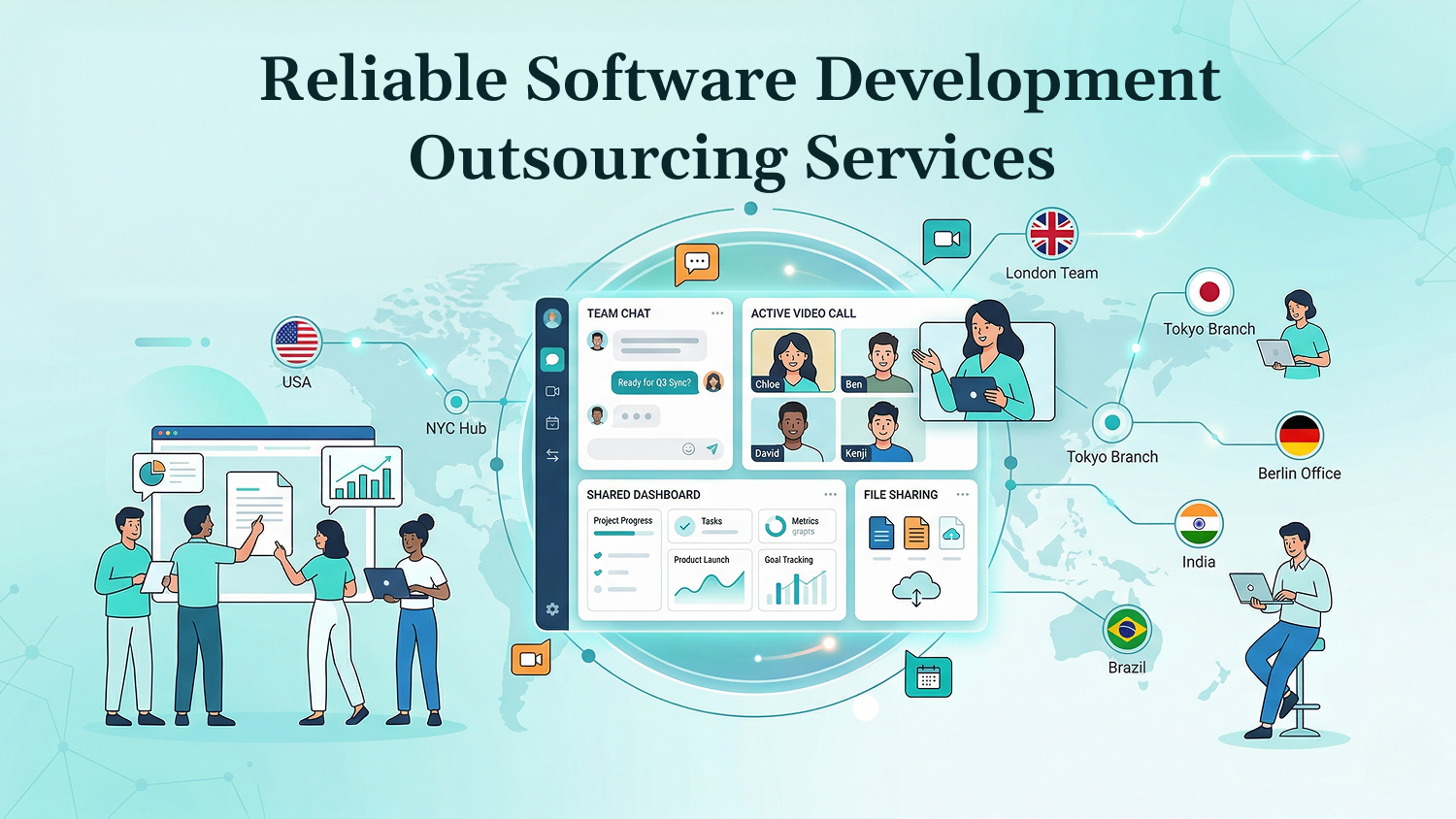
Reliable Software Development Outsourcing Services

Software Development Outsourcing
An Ultimate Guide to Python Software Development in 2026

Software Development Outsourcing